








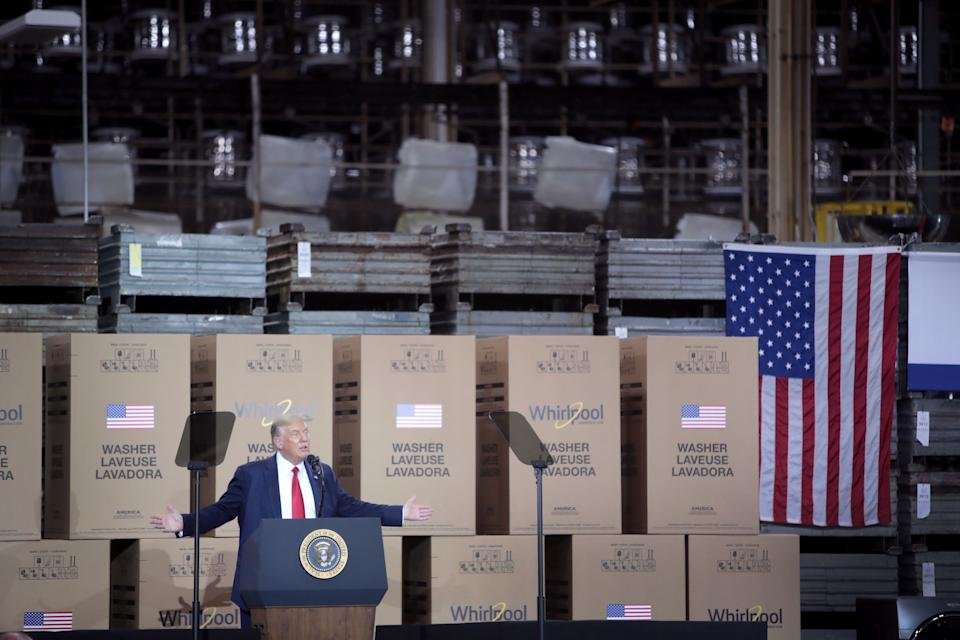
Whirlpool (WHR) said demand for major appliances like dishwashers and refrigerators in the US and Canada “reached recession-level lows” in the first quarter, as historically low consumer confidence led to fewer big-ticket discretionary purchases.
Whirlpool CFO Roxanne Warner told Yahoo Finance that a “perfect storm” of low consumer sentiment “fueled by the impact of the Iran war” and winter weather hit the company’s North America business in March.
“The industry contracted about 7.4%,” Warner said. ”These are levels that last time you’ve seen was in the great financial crisis.”
The appliance maker behind brands like Maytag and KitchenAid posted first quarter results that missed Wall Street’s expectations. In the first quarter, Whirlpool reported revenue declined nearly 10% year over year to $3.27 billion, below estimates of $3.42 billion. Whirlpool’s adjusted loss per share was $1.43, while the Street forecast a $0.36 loss per share, per Bloomberg consensus data.
Whirlpool stock fell about 20% in premarket trading on Thursday.
Revenue for major appliances in its North America business fell 7.5% year over year to $2.24 billion, while revenue in Latin America grew 5% to $774 million. Both were below Wall Street’s expectations.
One bright spot was Whirlpool’s small domestic appliance business, which grew 13.4% to $222 million in the quarter, driven by new product launches. That was above the $214 million Wall Street expected.
“The consumer isn’t doing these discretionary, big ticket purchases,” she said, “but [they are] continuing to buy the small items … the feel good items” like automatic espresso machines and KitchenAid stand mixers.
Read more: What is consumer confidence, and why does it matter?
To offset the business declines, Warner said the team was implementing the “most aggressive actions that we’ve taken in a decade to restore profitability in North America.”
The company announced its largest price increase in April, at 10%, and Warner said it will increase list prices by 4% again in July. Warner said that the double-digit price increases are in line with competitors that are also raising prices and that it is necessary after many years of inflation.
Warner noted that Whirlpool still has pricing power, given the industry is “driven mainly by replacement demand.”

Another element in the quarter, Warner said, was the Supreme Court’s ruling on President Trump’s blanket tariffs that drove “an intense promotional environment.” When the court struck down blanket tariffs and ruled that the government would have to issue tariff refunds, competitors dropped prices, putting pressure on the entire industry.