






The hard right BJP party ramped up Islamophobia, but the left must also share some of the blame
Downloading PDF. Please wait…
Thursday 07 May 2026

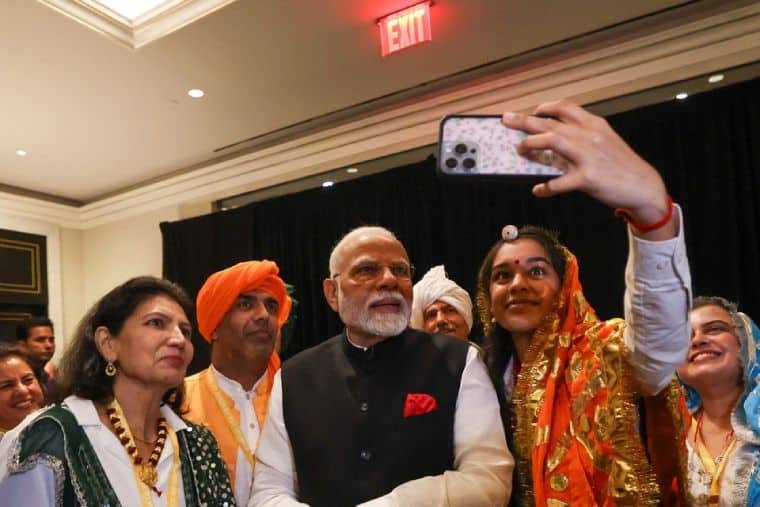
Narendra Modi (Pic: Wikimedia commons)
India’s state-wide elections have been a disaster for the left.
Some 154 million people across four states and one territory voted in April, with ballots counted on Monday this week.
The results saw Narendra Modi’s hard right BJP party sweep all before it. Not only did it return to office in Assam, but it also smashed the opposition in West Bengal—once the jewel in the crown of the Indian left.
Mamata Banerjee, the chief minister of West Bengal since 2011—a liberal secularist and fierce opponent of Modi—even lost her seat.
But Banerjee is refusing to go quietly.
“Why should I step down? We have not lost,” she said. “The mandate has been looted. Where does the question of resignation arise?” She said her TMC party had been “defeated not by public mandate but by conspiracy.”
With ample justification, Banerjee accuses Modi of rigging the polls by using India’s electoral commission to wipe millions of voters—most of them Muslim—from the electoral rolls.
The Congress party, once the traditional party of government across India, also had a tough election. It now runs just four out of India’s 28 states, while 21 are controlled by Modi’s allies.
The one consolation for Congress came in Kerala, where the Left Front of the two main communist parties had been in power for a decade.
Here Congress’s UDF alliance won 102 seats to the Left Front’s 35 seats. Worryingly, the BJP’s NDA grouping captured three seats for the first time in what had been India’s most resolutely secular state.
The left’s loss of Kerala means that for the first time since 1977, communists do not run a single state in India. Ironically, this news comes not long after the communist movement there marked its centenary.
In the neighbouring southern state of Tamil Nadu, a new party led by a superstar actor known as Vijay appears on the cusp of victory against the regional social democratic party, the DMK.
Polls suggest that this was a victory based on personality rather than politics—few voters said they have any idea whether Vijay’s policies are left or right wing.
The combined state results mean that Modi is at the helm of an India in which his opponents hold virtually no parliamentary or state political power.
While it is true that the right manipulated the electoral roll, that alone cannot explain the scale of its victory—especially in the light of Modi’s poor showing in India’s 2024 election. Then, the BJP was humiliated by losing its outright parliamentary majority.
There is some evidence that, in the wake of the election, the right decided to double down on its anti-Muslim hate. The US-based research group India Hate Lab reports that hate speech against minorities jumped by 74 percent in 2024.
Muslims were targeted most, with 98.5 percent of recorded instances directed against them. Modi regularly refers to Muslims as “infiltrators.”
In a 2024 speech, he accused the Congress party of saying Muslims have the first right over resources. He said, “They will gather all your wealth and distribute it among those who have more children. They will distribute among infiltrators. Do you think your hard-earned money should be given to infiltrators? Would you accept this?”
Muslims have lived in what is now modern India for centuries. However, in a South Asian twist of the far right “Great Replacement Theory”, Modi says that they are part of a conspiracy to displace India’s Hindu population.
In West Bengal, the BJP made a significant effort to present itself as the party of Hindu interests, contrasting itself with Banerjee, who they described as only caring about her Muslim voters.
“The BJP combined an aggressive welfare pitch with sharper polarisation. It promised to double cash benefits, while visible communalisation consolidated sections of the Bengali Hindu vote behind the party,” says Maidul Islam, a political scientist at Kolkata’s Centre for Studies in Social Sciences.
India’s left must also accept its share of the blame for the right’s success.
Mass struggles, including those of farmers and striking workers, have offered a chance for radical politics to overcome communal division.
In 2020-21 and again in 2024, farmers protesting against government free market agricultural reforms led massive rebellions against the state.
And unions organised mass strikes involving between 200 and 300 million workers in 2020, 2025 and 2026. But the union leaderships restricted all of these to one-day affairs, refusing to extend the actions or reach out to unorganised workers and informal labourers.
Despite slogans to the contrary, the main left parties never took seriously the possibility of combining a prolonged mass strike with the farmers’ rebellions. They feared doing so would make them appear “unfit to govern.”
Instead, they chose to focus on first the 2024 general election and then the ongoing state elections. But the left’s record in states where it had political control was one of compromise with big business and of seeking investment deals with multinational firms—and turning on those who resisted.
The record of left state governments alienated many poor voters, making the communists appear as “just another party” and leaving them vulnerable to the right’s Islamophobia.
Nevertheless, Rajarshi Dasgupta, from Jawaharlal Nehru University in New Delhi, sees a possible left revival if it can relearn the traditions that made it a force in India in the 1970s.
“The problems of wealth inequality and jobless growth are getting worse by the day, which no mainstream parties are keen to address—besides the left,” he said.
“The persistence of these problems makes a comeback of the left very much possible,” he added.