









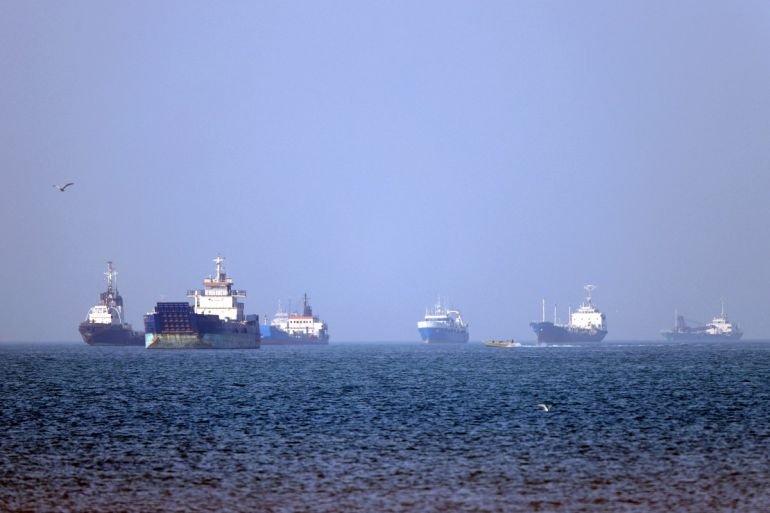
Iran is considering a US ceasefire proposal as military tensions escalate in the Strait of Hormuz, with both sides showing reluctance to compromise.
Iran has yet to formally issue a response regarding a proposal from the United States aimed at ending hostilities, although officials have indicated significant differences remain between the two parties. The Iranian government announced it is currently reviewing the US peace proposal amidst ongoing military confrontations in the strategic Strait of Hormuz. US President Donald Trump characterised Iran’s leadership as ‘lunatics’ in a recent post on social media and warned that further severe military action could follow if Tehran fails to reach an agreement promptly.
Recent reports from US media outlets detail that Washington transmitted a 14-point proposal to Iran earlier this week. The conditions outlined in the document require Iran to commit to suspending its nuclear weapon development and cease all uranium enrichment for a minimum of 12 years. Additionally, Iran would need to surrender approximately 440 kilograms (970 pounds) of enriched uranium, which has been prepared to a concentration of 60 percent. The potential rewards for Iran include a gradual lifting of sanctions, the unfreezing of billions of dollars in assets, and the withdrawal of the US naval blockade imposed on Iranian ports. Both parties have agreed to reopen the vital waterway within 30 days of signing any deal.
The situation remains complicated by decades of crippling US sanctions on Iran, which were partially lifted under the 2015 nuclear agreement negotiated by then-President Barack Obama and five other nations, as well as the European Union. These sanctions were reimposed after President Trump withdrew from the agreement in 2018, leaving significant Iranian assets frozen in foreign financial institutions.
A week prior to the latest US proposal, Iran had submitted its own 14-point plan through a mediator from Pakistan. Thus far, there has been no official response from Iranian authorities to the US’s most recent offer. However, criticisms have emerged from Iranian officials. Ebrahim Rezaei, a member of the Iranian parliament’s foreign policy and national security committee, stated that the US proposal resembles ‘an American wish-list’ rather than a solid framework for negotiations.
Furthermore, Iran’s Parliament Speaker, Mohammad Bagher Ghalibaf, reacted with sarcasm to suggestions that the two nations might be nearing an agreement, stating on social media, ‘Operation Trust Me Bro failed.’ Military tensions have plagued both countries, with reports emerging that US forces targeted an Iranian oil tanker and another vessel in close proximity to the UAE. In retaliation, Iranian forces launched attacks on US naval vessels, indicating a volatile atmosphere in the region.
Despite the military exchanges, neither country has declared the ceasefire, which has technically been in effect since early April, as terminated. According to reporting from Al Jazeera’s Resul Serdar Atas, an Iranian Foreign Ministry spokesperson announced that discussions regarding the US proposal are still ongoing. The spokesperson commented that reports indicating an imminent response were unconfirmed, yet Iranian officials affirmed they are still evaluating the proposal.
Atas noted that while military confrontations continue, diplomatic efforts are persistently being pursued. ‘Now, after Iran’s response, the picture is going to get pretty clear,’ he stated. In contrast, Iranian officials have flagged that several US demands remain excessive and unrealistic, reinforcing the notion of a considerable gap between the two parties.
In recent weeks, there has been a succession of proposals exchanged between the two countries. Tehran introduced its own 14-point proposal, aiming for a comprehensive resolution of the war within 30 days, as opposed to simply extending the current ceasefire. In this proposal, Iran sought assurances against any future military actions, the withdrawal of US troops from its borders, and the lifting of financial sanctions, among other requirements. On the eve of the current ceasefire’s enactment, Iran put forth a 10-point peace plan focusing on broader conflict resolution and economic recovery.
Although the US acknowledged the potential of Iran’s prior 10-point plan, Trump deemed it inadequate to foster a resolution. It was proposed in response to an earlier US 15-point framework that sought a temporary ceasefire while negotiations unfolded through Pakistani intermediaries. Iran dismissed the US plan for being tactical rather than genuinely accommodating from its perspective.
Analysts suggest that Iran may need to recalibrate its position on its nuclear ambitions, as the enrichment of uranium is viewed as a fundamental right under the Treaty on the Non-Proliferation of Nuclear Weapons. Iran currently possesses around 440 kilograms of uranium enriched to a level of 60 percent, and the prospect of attaining a 90-percent enrichment threshold looms as a critical issue in negotiations.