








As US-Iran relations fray, approximately 20,000 seafarers remain trapped, facing uncertainty and scarcity in the Gulf’s critical shipping route.
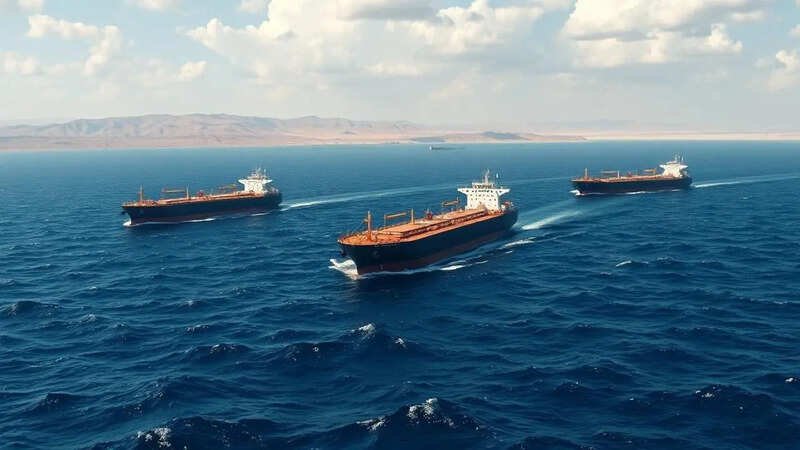
Around 20,000 seafarers are currently stranded in the Gulf as tensions escalate, particularly around the strategic Strait of Hormuz, a vital maritime corridor. Indian seafarer Anish, who has been confined to a vessel at an Iranian port for nearly ten weeks, represents the personal toll of these geopolitical clashes. He arrived in the Shatt al-Arab waterway shortly before the initiation of ‘Operation Epic Fury’ by the United States on February 28. Since then, Anish has experienced the war’s ramifications firsthand.
Anish, who agreed to share his story under a pseudonym, described the ongoing conflict, saying, “We’ve faced the whole situation here, the war, the missiles. Our minds are terribly distracted.” Some of his fellow seafarers managed to return home by crossing Iran’s land border with Armenia, but many remain stuck, waiting for their wages. Anish noted, “Some are stuck because of their Indian agents; they are not getting their salaries,” referring to the intermediaries who oversee recruitment and payroll.
The Strait of Hormuz is pivotal, facilitating around 20% of the world’s oil and gas transport and one-third of the global seaborne fertiliser trade. However, following Iran’s decision to effectively close the strait in retaliation against US and Israeli military actions, maritime activities have been halted. Despite a ceasefire announcement between Washington and Tehran on April 7, navigation through the strait remains perilous, with intermittent assaults reported.
The US Central Command has reported intercepting Iranian threats and defending three guided-missile destroyers from attacks involving missiles, drones, and small craft. In response to US strikes targeting an oil tanker within its waters, Iran claimed to have retaliated against American naval vessels. Accusations from Tehran suggest violations of the ceasefire by the US, including airstrikes on civilian locales.
Amid these tensions, Iran has offered vessels passage through its territorial waters for a fee, though assaults on commercial ships continue amid the conflict. The US has maintained a blockade on Iranian ports since April 13 to impede Tehran’s oil exports and access to foreign currencies. According to maritime intelligence firm Lloyd’s List, at least four commercial vessels have been attacked recently, with a container ship from the French company CMA CGM reporting being targeted while navigating the strait.
The United Nations International Maritime Organization indicates that the ongoing conflict has resulted in the deaths of at least ten seafarers since hostilities began, while the Iranian merchant marine union reported the fatalities of 44 Iranian seafarers, including dockworkers and fishermen, by early April.
Despite discussions about a potential peace deal—characterised by President Donald Trump as being “very possible”—it remains unclear how close the parties are to reaching an agreement. Sporadic lulls in hostilities have permitted some vessels to exit, but the uncertainty persists for those operating in the Gulf’s major shipping sector, characterised by oil, gas, and cargo transport.
Recent developments include the detention of two foreign-flagged cargo ships by Iranian forces, alongside the US Navy seizing three commercial vessels linked to Iran in the Gulf and Indian Ocean. This precarious situation has created an “enhanced state of fear,” according to Stephen Cotton, the General Secretary of the International Transport Workers’ Federation. He stated, “It’s kind of crazy, because these are seafarers. These are just workers.”
The International Maritime Organization has termed the challenges faced by mariners as an “unprecedented” humanitarian crisis. Conditions vary widely depending on the ownership of vessels and the presence of unions. Some seafarers aboard major shipping lines have received hazard payments and help, while others in smaller operations often face delays in payment and inadequate basic needs.
Saman Rezaei, General Secretary of the Iranian Merchant Mariners Syndicate, pointed out that many foreign seafarers in Iran are employed by agencies that do not adhere to international standards. Crew rotations, governed by the 2006 Maritime Labour Convention, state that seafarers cannot be required to stay on board for more than 12 months, yet many endure extended periods due to unstable situations that hinder repatriation. Challenges pertaining to crew changes exacerbate circumstances, especially on larger vessels still operational at sea.
John Bradford, Executive Director of the Yokosuka Council on Asia-Pacific Studies, remarked on the difficulties facing crews caught in this conflict, saying that flights have been disrupted and many have little choice but to remain on their ships beyond their planned rotations. The toll of the ongoing geopolitical tensions on these maritime professionals continues to mount, as daily life aboard these stranded vessels grows increasingly fraught in the face of uncertainty and danger.