








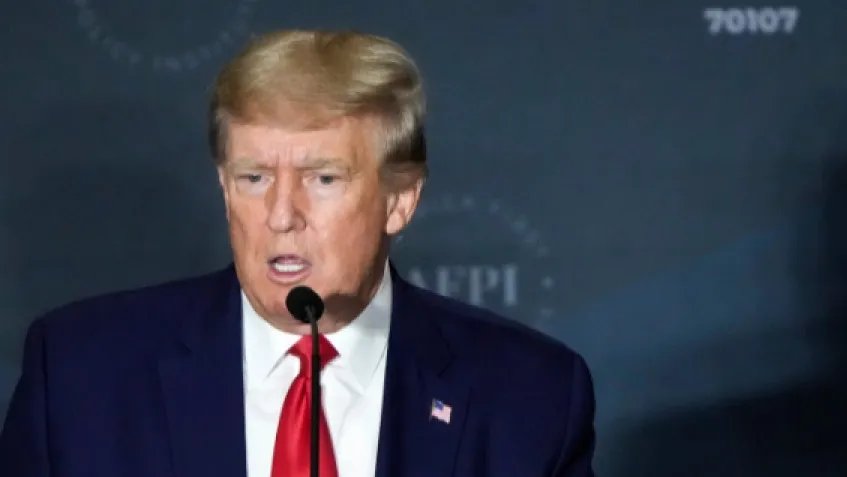
President Donald Trump on Sunday appeared to reject Iran’s response to a U.S. proposal to end the war, calling it “totally unacceptable.”
It was not immediately clear what Iran’s response entailed. But it came one day after top Trump officials met in Miami with Qatar’s prime minister as the war entered its tenth week and more than a month after the Pakistani-brokered ceasefire agreement between Washington and Tehran.
“I have just read the response from Iran’s so-called ‘Representatives.’ I don’t like it — TOTALLY UNACCEPTABLE!” Trump announced.
A diplomatic source in Tehran told MS NOW earlier in the day that the Iranian proposal was a “positive step but any ending is still a long way down the road. Mistrust needs to be seriously reduced and atmospherics need to be substantially improved.”
Trump issued a statement on Truth Social earlier Sunday in which he said Iran “has been playing games with the United States, and the rest of the World, for 47 years.” The president did not address an Iranian response at that time but warned, “They will be laughing no longer!”
Trump has repeatedly insisted the ceasefire remains intact despite the continued exchange of hostilities and mirroring naval blockades. The U.S. launched strikes against Iran last week in retaliation for an attack on U.S. Navy destroyers, with Trump initially dismissing it as just “a love tap.”
Trump, in a wide-ranging interview that aired Sunday on “Full Measure,” said the U.S. has hit “probably 70 percent” of its targets and that Iran has “no leaders” and “no military.” But he added that combat operations have not ended.

Iranian President Masoud Pezeshkian said in an X post Sunday, “We will never bow our heads before the enemy, and if talk of dialogue or negotiation arises, it does not mean surrender or retreat.” And Iran’s deputy foreign minister for legal and international affairs, Kazem Gharibabadi, warned that “any deployment and stationing of extra-regional destroyers around the Strait of Hormuz, under the pretext of ‘protecting shipping,’ is nothing but an escalation of the crisis, the militarization of a vital waterway, and an attempt to cover up the true root of insecurity in the region.”
Recommended

Erum Salam is a breaking news reporter for MS NOW, with a focus on how global events and foreign policy shape U.S. politics. She previously was a breaking news reporter for The Guardian.

Inzamam Rashid is a MS NOW contributor and Monocle’s Gulf Correspondent based in Dubai. He has previously reported for Sky News and the BBC