









India has a long history with jasmine. Why is the conversation changing now?
Aditya Ramanujam – India has always had a deep relationship with jasmine, culturally and economically. For generations, jasmine has been present in religious life, ceremonies, festivals, and everyday adornment. But today, for the fragrance and ingredients industry, the conversation is becoming much broader.
The market is no longer asking only about quality and volume. It is asking where the flowers come from, how they are cultivated, who is harvesting them, what the environmental footprint looks like, and how transparent the supply chain really is.
That is the shift. Sustainability is moving from being a desirable extra to being part of the basic business expectation. The market increasingly wants proof, not just promises: proof of traceability, proof of social responsibility, proof of environmental progress.
What does “sustainable jasmine production” mean in practical terms?
Aditya Ramanujam – It has to be holistic. Sustainable jasmine production cannot be reduced to one topic, such as organic inputs or energy use. It begins with ethical sourcing and continues through farming practices, water and soil management, labour conditions, local community development, and processing efficiency.
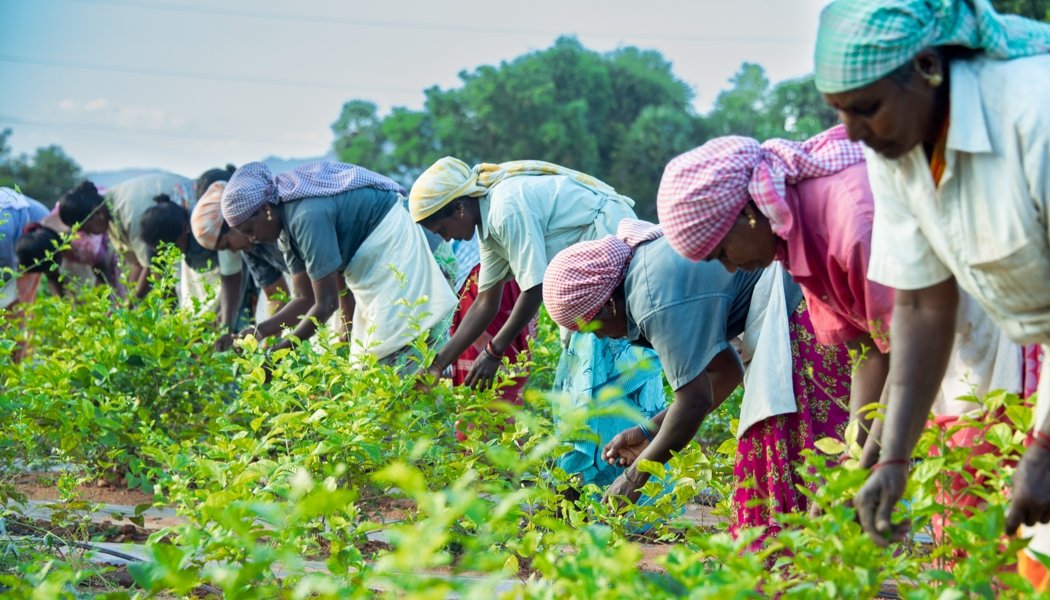
Jasmine is a rural crop, and success in rural sourcing depends on people. If you want a resilient supply chain, you have to invest in the ecosystem around it. That means supporting workers, creating opportunities beyond the harvest season, and strengthening the local social infrastructure. We are a young company, but we are not starting from zero in terms of business values. My family has been involved for generations in enterprises rooted in service, entrepreneurship, and regional development. When we entered jasmine production in 2024, we wanted to bring that same mindset into a new sector.
The difference with Amitié Fleur is that we designed the business intentionally. We did not wait to grow first and then think about sustainability later. We started with the idea that traceability, responsible sourcing, and local empowerment should be built into the model. We are developing both cultivation and extraction with that in mind.
Sholingur is our adopted home base, around three hours west of Chennai, in a region closely connected to jasmine cultivation. It is a rural area, but one that has evolved significantly over time. Better infrastructure, education, and healthcare are essential if you want rural industry to become sustainable in a real sense. When you speak to women working in these communities, their aspirations are very clear. They want education for their children, stable livelihoods, dignity, and opportunity. So the question for a company like ours is: how do we become part of that positive development, not just an extractor of local resources? Jasmine harvesting is seasonal. From April to September, Jasminum sambac harvesting is intensive, and much of that work is carried out by women.
We felt early on that if we wanted to build a credible and loyal workforce, we had to think outside of the harvesting season and beyond seasonal flower plucking. That is why we developed complementary initiatives that can support employment, skills and financial resilience throughout the year. These include tailoring activities, sanitary napkin production, dairy-related support, nutritional food preparation, vermicompost production, and Panchagavya manufacturing. Each initiative has a practical purpose, but together they also strengthen the local economic fabric.
If you want sustainability in jasmine, you cannot think only in terms of flowers. You have to think in terms of families, livelihoods and continuity. Traceability is becoming a key issue for international buyers. How are you approaching it?
Oliver Schmidt – Traceability is becoming central. Today, buyers want to understand the difference between flowers cultivated under close supervision and flowers sourced through the open market.
At Amitié Fleur, we work with two sourcing streams. One is what we call garden flowers — flowers cultivated on our own family-controlled land. The other is market flowers, which we source externally to complement volumes. We began with 35 acres under jasmine cultivation and are now at 40 acres. Our long-term objective is to continue expanding our in-house cultivation base so we can increase transparency, monitor growing conditions more closely, and strengthen full traceability.
This is important not only for customers, but also for internal discipline. When you control more of the cultivation environment, you can manage soil, water, inputs and social conditions much more consistently.
Some European buyers are now applying due diligence expectations across all naturals, even where regulations do not directly apply. Are you seeing that?
Oliver Schmidt – Yes. Even when a particular regulation does not directly cover a product, the mindset has changed. Buyers in Europe and North America are becoming more demanding around transparency, origin documentation, supply chain governance, and long-term sustainability strategy.
That is why Amitié Fleur’s positioning matters. We are not presenting ourselves simply as a supplier of floral extracts. We are presenting ourselves as a partner that understands where the market is going and grow with it.
As VP for Europe and North America, my role on the ground is to build those bridges: between what international customers want and what we are building in India in terms of product quality, operational systems, and responsiveness. We are seeking partnerships with leading fragrance houses in Europe and North America.
So you see Amitié Fleur as partnership-ready?
Oliver Schmidt – Absolutely. We see Amitié Fleur as a large entrepreneurial company that is ready for the next stage. We are independent, family-owned, agile, and deeply focused on quality and sustainability. That combination can be attractive for customers looking for long-term strategic partnerships rather than purely transactional relationships.
We now have a broader product offering, stronger internal systems, international certifications, and a clear commitment to responsible sourcing. We also have something very important: presence and dialogue. Being active in Europe means we can stay close to customer expectations, answer questions quickly, and develop partnerships with a high level of transparency.
What milestones has the company reached so far?
Oliver Schmidt – Our first full production year was 2025, and it was an important step for us. During that year, we produced and commercialized jasmine sambac concrete and absolute from both market flowers and our own 100% traceable farm flowers harvested by our own pickers. We also produced vetiver essential oil and lemongrass essential oil.
At the same time, we worked on strengthening the company structurally. We obtained ISO 9001, ISO 14001, and ISO 45001, which was a significant achievement for a young company. We also took concrete steps on the responsible sourcing side, including progress toward certification by the Union of Ethical Biotrade UEBT. In energy, we installed a 110 kWp solar power system together with a 110 kW battery and inverter station to improve energy independence and diversify our power sources.
And how has the portfolio evolved in 2026?
Oliver Schmidt – In 2026, we expanded our offering further.
Our concretes now include:
– Jasmine Sambac from our own garden flowers, 100% traceable
– Jasmine Sambac from market flowers
– Jasmine Grandiflorum from our own garden flowers, 100% traceable
– Jasmine Grandiflorum from market flowers
– Tuberose hybrid from market flowers
Our absolutes include the same main floral streams:
– Jasmine Sambac, own garden flowers, 100% traceable
– Jasmine Sambac, market flowers
– Jasmine Grandiflorum, own garden flowers, 100% traceable
– Jasmine Grandiflorum, market flowers
– Tuberose hybrid, market flowers
And in essential oils, we now offer:
– Vetiver oil
– Lemongrass oil
– Palmarosa oil
– Cinnamon leaf oil
This reflects our ambition to grow in a focused but meaningful way. Our offerings have advanced significantly. We are building depth, not just adding SKUs.
How important are certifications and external assessments in building credibility?
Oliver Schmidt – They are very important. In international business, especially in naturals, customers want independent validation. Certifications and assessments do not replace substance, but they do help demonstrate seriousness and structure.
For a young company, they also create internal discipline. They push you to formalize systems, document performance, improve consistency, and align teams. That is part of becoming partnership-ready.
What message would you like to send to fragrance houses and buyers reading this?
Aditya Ramanujam – Our message is simple: Amitié Fleur is ready to engage.
We combine entrepreneurial energy with a long-term outlook. We already have a strong footprint in India, we have people on the ground in Europe ready to engage with customers internationally, and we are building a model based on quality, sustainability, and quality.
Oliver Schmidt – We are looking for suitable partners, particularly in Europe and North America, who want to work with a company that was designed with intention and that is investing in responsible growth from the beginning. We are young, but we are serious. We are independent, we are ambitious, and we are ready to build lasting partnerships.
|
Conclusion The Indian jasmine market remains fundamentally attractive, yet future competitiveness will increasingly depend on the ability to create value at source and to demonstrate responsible sourcing performance. Companies such as Amitié Fleur are betting that the future belongs not only to those who can produce beautiful naturals, but to those who can show how those naturals are grown, harvested, processed and shared in a more accountable way. |