






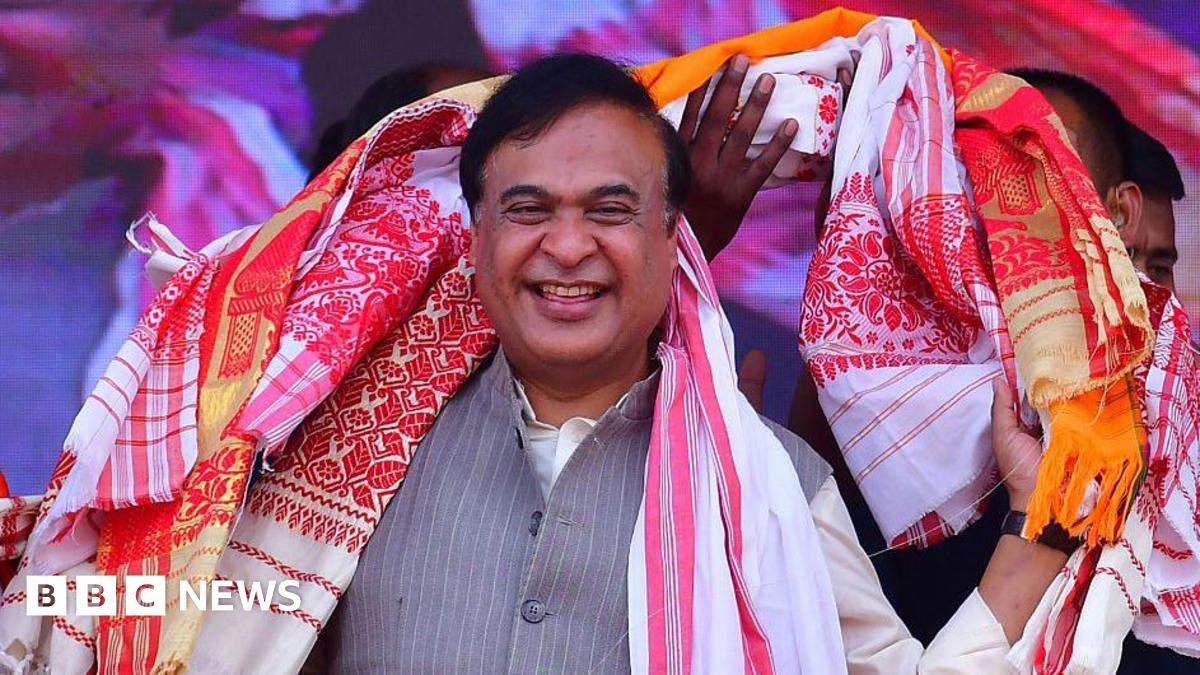
Sarma is the legislator from Jalukbari constituency, located on the northwestern periphery of Guwahati – the largest city in the northeast. He has held the seat since 2001 despite changing political affiliations.
Before joining the BJP in 2015, Sarma was a Congress leader in Assam and a minister in the government led by former chief minister Tarun Gogoi. Gogoi’s son Gaurav is currently the main opposition leader in Assam – he lost in the recent election from the Jorhat seat.
Sarma’s move to the BJP, along with several legislators loyal to him, was seen as a major political setback for the state Congress. Many political observers say it was a turning point in the BJP’s expansion in the region.
Since then, Sarma has become one of the BJP’s key political organisers in the northeast, helping the party build alliances with local groups and boost its influence in states such as Arunachal Pradesh, Manipur and Tripura.
During his predecessor Sarbananda Sonowal’s tenure starting 2016, Sarma was widely seen as a back-end organiser fuelling BJP’s expansion drive in the region.
Sarma became Assam’s chief minister in 2021. With the latest victory, he seems to have further strengthened his position within the BJP.
His party colleagues in the region credit his aggressive campaigns, welfare programmes and organisational control for his success.
Supporters describe him as an effective administrator who has focused heavily on roads, bridges and welfare schemes – one of the most popular among them is the Orunodoi programme, which provides financial assistance to women from low-income households.
But critics say his rise has been accompanied by increasingly divisive political messaging centred on migration and identity – issues that have grabbed centre stage in Assam’s politics for decades.
Immigration from neighbouring Bangladesh has long been a politically sensitive issue in Assam, where debates over language, land and identity have shaped elections for decades.
Opposition parties and rights groups have accused the BJP’s state government of targeting minorities, particularly Bengali-speaking Muslims.
Sarma’s policies linked to Islamic schools, external and child marriage have sparked political debate. Earlier this year, an AI-generated video shared by the state BJP unit appeared to show Sarma firing at images of political opponents wearing Muslim skull caps. The video – which was later deleted – prompted criticism, external from opposition parties and civil society groups.
Sarma and BJP leaders reject those accusations and say their policies are aimed at protecting Assamese culture and addressing illegal immigration.
Despite the controversies, Sarma remains one of the BJP’s most influential leaders in eastern India and an increasingly prominent figure in the party’s election campaigns across the country.
His strategies in Assam have worked on several levels, Akhil Ranjan Dutta, professor of political science at Gauhati University, told the BBC. There are three broad aspects of it – identity, targeted outreach and development.
“The party [BJP] tried to bring indigenous communities closer to a broader Hindu identity, while portraying some groups as outsiders,” says Dutta,
On the other hand, he adds, BJP under Sarma’s leadership has effectively “engaged” women, young people, farmers and small business owners through “schemes and messaging aimed at their needs”.
“Development also played a role,” says Dutta. “Improvements in roads and connectivity, including in rural areas, helped strengthen the party’s appeal.”
Follow BBC News India on Instagram, external, YouTube,, external X, external and Facebook, external.