






“Plant Health 4 Life is built on a key principle: awareness empowers action. In this final year, the campaign reinforces how protecting plant health means safeguarding our food, our environment and our future. By engaging citizens across Europe, the campaign has laid strong foundations that will continue to support efforts to protect plants well beyond the campaign itself,” said Sylvain Giraud, Head of the Plant Health Unit at the European Commission’s Directorate-General for Health and Food Safety.
“Science helps us understand the risks to plant health, but that’s not enough: we need Europeans to connect that knowledge to their daily lives. Plant Health 4 Life makes plant health accessible and relevant. By travelling responsibly, shopping responsibly, and educating the next generation, we can all be part of the solution,” explains Tobin Robinson, Head of the Environment, Plants and Ecotoxicology The study of the adverse impacts of substances, particularly chemicals, in relation to the environment and public health Unit at EFSA.
“Hosting the launch of the campaign during the Cyprus Presidency, together with Chief Officers for Plant Health from across Europe, highlights how plant health is a shared European responsibility. Simple actions by citizens, supported by strong cooperation across countries, help protect our plants and our future,” said Anthemis Melifronidou, Chief Officer for Plant Health of Cyprus.
By showing that plant health concerns us all, the Plant Health 4 Life campaign aims to leave a lasting legacy of awareness and shared responsibility.
Spread the word and get involved!
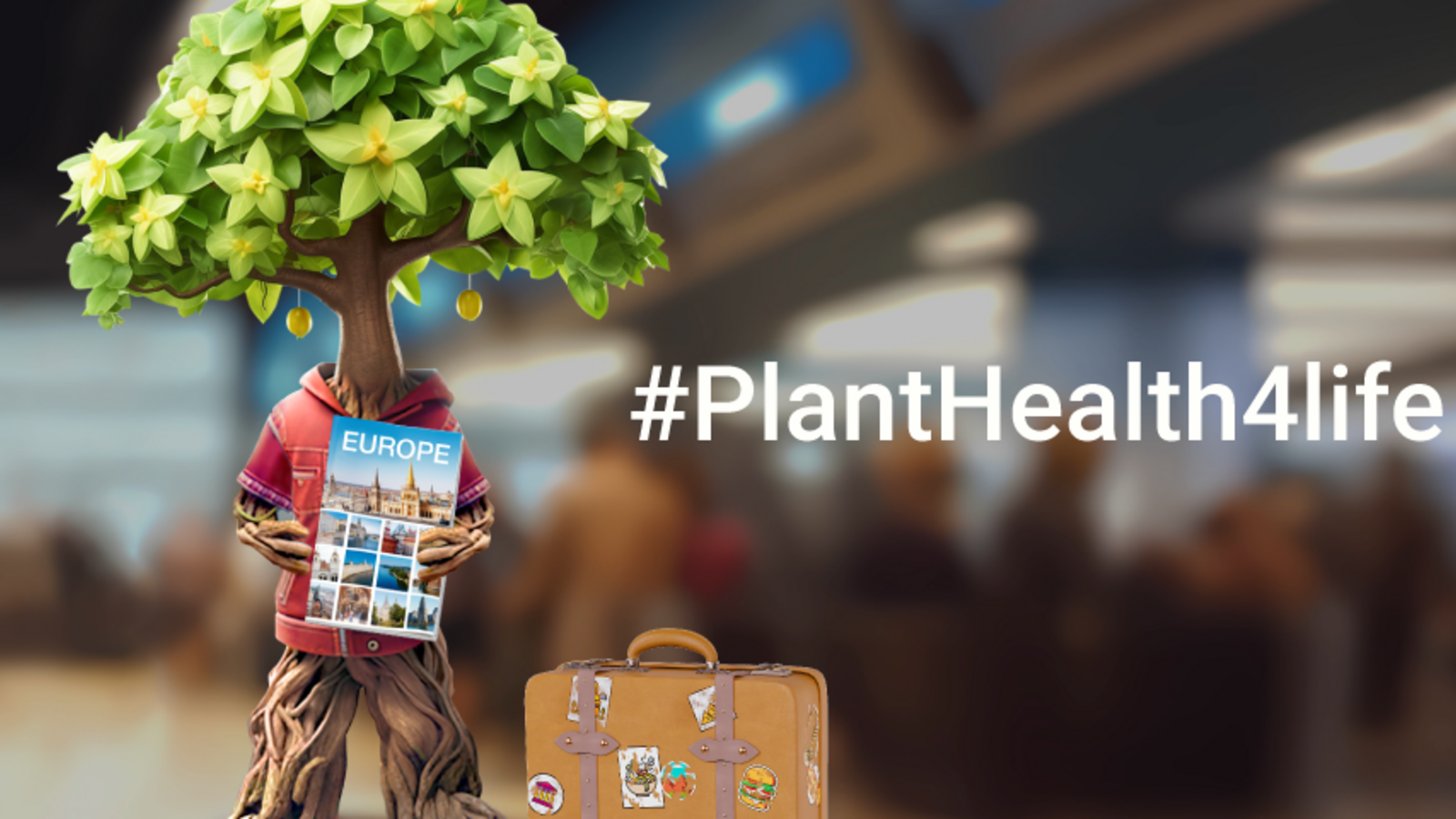
The actions of every European are key to keeping plants healthy. Visit the #PlantHealth4Life campaign website and discover how the campaign encourages the public to safeguard plant health. Resources include press materials, social media posts, and videos.
The campaign is open to everyone, with a particular focus on:
- Curious travellers who love exploring the world and nature.
- Gardeners who grow and take care of vegetables, flowers and trees at home.
- Parents who are concerned about the food their children eat, and eager to protect the environment and biodiversity A term used to describe the variety of living organisms existing in a specific environment for future generations.
About the campaign
#PlantHealth4Life is a multi-year campaign developed at the request of the European Commission. It is based on an in-depth analysis of citizen perceptions and behaviour with respect to plant health across the EU.
The campaign continues to extend its scope and reach, covering 33 countries:
- EU countries: Austria, Belgium, Bulgaria, Croatia, Cyprus, Czechia, Denmark, Estonia, Finland, France, Germany, Greece, Hungary, Ireland, Italy, Latvia, Lithuania, Luxembourg, Malta, Netherlands, Poland, Portugal, Romania, Slovakia, Slovenia, Spain, and Sweden
- Pre-accession countries: Albania, Bosnia & Herzegovina, Kosovo*, Montenegro, and Türkiye, and
- Switzerland.
*This designation is without prejudice to positions on status, and is in line with UNSCR 1244/1999 and the ICJ Opinion on the Kosovo Declaration of Independence.
How does plant health affect our lives?
Plants make up 80% of the food we eat, feed the animals we raise for food, and clean the air we breathe. But that’s not all: healthy plants mean good agricultural yield, which impacts food availability and food prices for consumers. See more information on the role of plants.
Climate change and human activities, such as trade and travel put plants under heavy pressure. The spread of plant pests and diseases can have devastating economic and environmental consequences. For example, the pine wood nematode is a microscopic worm that can quickly kill pine trees and devastate forests. Until 1999, it was never detected in the EU. First introduced in Portugal, it is now present also in parts of Spain and has recently been detected in France. To stop it spreading, EU rules require all at-risk trees (mainly pines) within a 500 metres radius of an outbreak to be cut down and destroyed, with major economic and environmental impact, especially in regions with large pine forests.