






Inconsistent policies are holding back the scaling of renewable liquid gases in Europe, lawmakers and industry leaders have warned. They argue these fuels have a role to play in the decarbonisation of both off-grid heating and road transport.
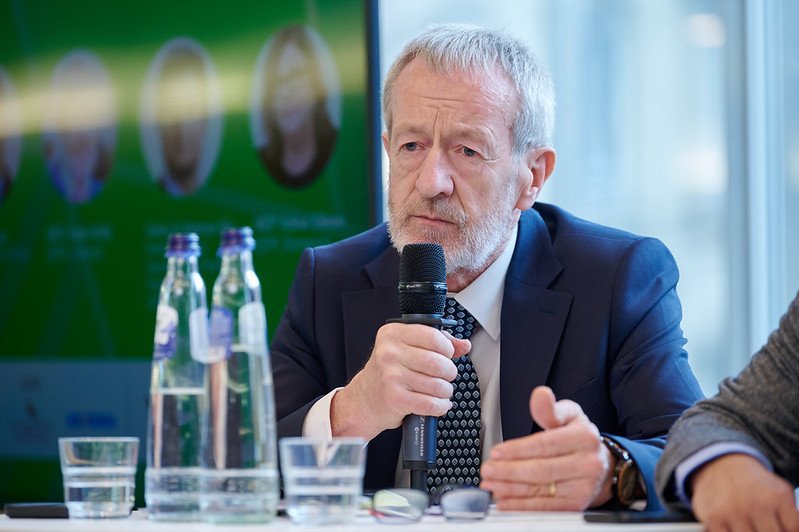
Irish MEP, Seán Kelly (EPP), told a Brussels audience that renewable liquid gases allow more people to be part of the energy transition. He noted that full electrification is not yet feasible for all buildings and factories.
“We have to embrace all technologies that help us to reduce emissions,” Kelly said during an event organised by The Parliament magazine and Liquid Gas Europe at the European Parliament. “If [people] won’t be able to do it, they’ll do nothing,” he remarked.
Along with co-host MEP Pietro Fiocchi (ECR, Italy), Kelly called for more incentives that end the implicit hierarchy in EU funding that favours electrification above all else.
Renewable liquid gases, such as bio-LPG and renewable DME, can be produced from waste, residues and other renewable feedstocks. Crucially, they are ‘drop-in’ fuels: they can be used in many of the same tanks, appliances, vehicles and distribution networks as conventional liquid gases. That allows households and businesses to cut emissions by switching to the renewable fuel, rather than by replacing the entire infrastructure around it.
Monica Di Pinti, public affairs director at the Association of the European Heating Industry (EHI), said more than 80% of the installed heating stock in Europe consists of oil, gas, condensing, and non-condensing boilers, with heat pumps accounting for around 10%.
Kelly said that since there are millions of homes across Europe that can’t afford full electrification, member states should offer pathways with renewable gases as an alternative when electrification is not feasible. “Anything that contributes to reducing emissions has to be entertained,” Kelly added.
It’s a policy gap
Liquid Gas Europe General Manager Ewa Abramiuk-Lété told attendees that Europe is facing a policy gap rather than a technology gap.
“Today, the barrier is not whether renewable liquid gases can contribute; the barrier is whether Europe creates the right conditions for them to scale. And that starts with one essential element: creating a market,” Abramiuk-Lété said.
She called for renewable fuel targets for heating and for renewable liquid gases to be recognised across EU legislation and standards to drive demand.
Commission focused on tailpipe emissions
Aside from dealing with heating and cooling in rural and off-grid areas, the event also featured a discussion on the decarbonisation of road transport in Europe.
Ana Álvarez Rodríguez, head of EU affairs at Repsol, said 100% renewable fuels are already available but that inconsistencies in the current regulatory framework are holding the industry back. She highlighted the Renewable Energy Directive recognises the potential of such fuels, but that the carbon emission standards focus only on emissions coming out of the exhaust pipe.
MEP Jan-Christoph Oetjen (Renew Europe, Germany) believes the Commission is reluctant to move away from the tailpipe approach. The Commission proposed that from 2035 onwards, carmakers need to reduce emissions by 90% from the tailpipe and 10% through low-carbon steel and e-fuels/biofuels, the latter capped at 3%.
Oetjen said this framework is too prescriptive and does not incentivise manufacturers to compete based on innovative approaches. He also called for the creation of a new category of cars with internal combustion engines that run on alternative fuels.
Enhancing the use of renewable fuels for road transport was crucial to help scale the use of renewable aviation and maritime fuels, Rodríguez argued, due to the production economics of these fuels.
“If we don’t have space for these fuels in road transport, the investment case, the chemistry case is just not there,” she said.
Rodríguez was joined by Marco Seimandi, sales and marketing VP at Westport Fuel Systems, in supporting MEP Oetjen’s point on the need for a new vehicle category. Seimandi warned that the industry is still unclear about what the CO2 emission review expected this autumn will contain.
Addressing a question from the audience, MEP Fiocchi warned that emissions reductions should not be overstated if they are achieved only on paper, pointing to the environmental impact of lithium mining for EV batteries.
“Sometimes we reduce the emissions in Europe, but we increase the emissions outside of Europe,” Fiocchi said. “But we have to remember that the planet is one”.
[BM]