









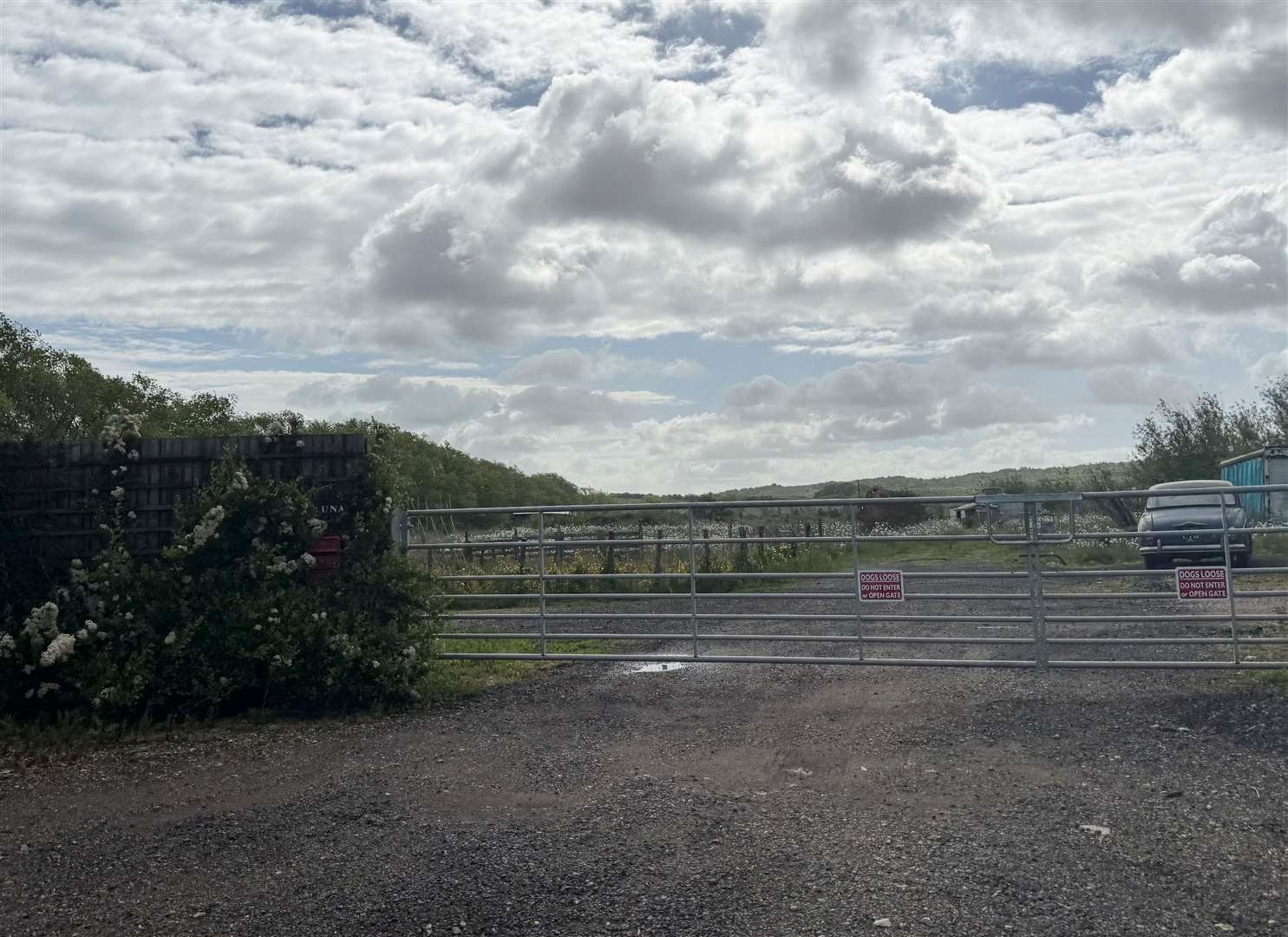
The Environment Agency’s own figures place the Evaluna site among the 14 largest “active illegal” dumps in England and one of only three in Kent to have breached the 20,000-tonne threshold.
Drone images captured for KentOnline reveal what looks like an expanse of little more than thick foliage, with only subtle rises in the land hinting at what may lie beneath.
At ground level, the site also appears unremarkable, with portable toilets, caravans, sheds and a handful of old vehicles scattered around the gated plot, just about visible from the lane through the well-established treeline.
A nearby track hosts a small excavator vehicle with a bucket hooked to the front, but there is no activity at the scene when our reporter visits.


Yet according to the Environment Agency, the land now contains an estimated 30,000 tonnes of waste, made up “predominantly of soil with varying levels of construction waste”.
It places the Faversham site alongside the infamous Hoads Wood dump near Ashford, where up to 34,000 tonnes of waste – including some hazardous material – was illegally tipped in protected ancient woodland.
Only Raspberry Hill Farm near Sittingbourne, estimated to contain 36,000 tonnes, is believed to be larger in Kent.
The scale of the country’s waste crime problem has prompted a major House of Lords inquiry, during which Environment Agency chief executive Philip Duffy previously admitted the current system for tackling rogue operators was failing.
Giving evidence to the Environment and Climate Change Committee in March, he said the approach to waste crime was “too slow, too weak and too uncertain” and warned organised crime gangs had “penetrated the UK waste sector”.
Kent was specifically identified as one of the regions where Environment Agency officers are “spread thinly” because of the concentration of illegal waste sites here and in London, with peers told there are just “five and a half investigators from Dover to Dorset”.

But the Evaluna site – one of eight new mega dumps named by the agency in addition to six earlier this year – is among those firmly on the small team’s radar.
Officers have already revoked an exemption previously being used by operators after concluding activities on the land no longer met the required conditions.
The agency has also demanded paperwork and documentation relating to the site’s activities and carried out repeated inspections following reports of fresh tipping.
Activity there raised eyebrows several years ago, with the matter first reported to investigators in 2022.
Historic Google Street View images from 2009 show the site was once open fields and horse paddocks, before gradually becoming more developed in recent years.
A 2023 image captured a mound of earth piled about halfway down the plot.


The Environment Agency insists the site is considered “low risk”, despite its enormous size, because much of the material is believed to be inert soil rather than highly hazardous waste.
Specialist environmental crime officers have calculated the size of the dump as an “estimate based on years of experience” and are continuing their investigation.
However, the agency has repeatedly stressed tonnage alone does not tell the full story.
In a letter sent to Baroness Sheehan ahead of the Lords inquiry, Mr Duffy warned estimates are difficult because waste may be buried underground, compacted over time or mixed with different materials.
He wrote: “The nature of illegal waste dumping means that this is a dynamic picture.”
The scandal surrounding Hoads Wood has become a defining example of the crisis facing regulators.

The Ashford woodland site, located within a Site of Special Scientific Interest, became so severe that the then environment secretary Steve Barclay issued an unprecedented direction ordering the Environment Agency to clear it.
The clean-up operation is expected to cost about £15 million, with 24,800 tonnes of waste removed so far.
Kent Police also made arrests linked to the case last year.
During the Lords hearing, Mr Duffy acknowledged authorities had often reacted too slowly once large dumps began appearing.
He said criminals were exploiting weaknesses in the system, sometimes dumping huge amounts of waste in just days.
The inquiry heard operators frequently use remote land hidden behind trees or barriers, making activity difficult to spot from nearby roads.

Mr Duffy also revealed criminals sometimes rapidly transfer ownership of land or divide sites into smaller parcels to complicate enforcement and avoid liability.
The Environment Agency has now pledged a tougher approach through a new 10-point plan announced in March.
Measures include faster intervention, greater intelligence-sharing with police and councils, and expanded use of restriction notices capable of shutting illegal operations immediately.
Officials told peers they now aim to visit suspected illegal waste sites within 48 hours of receiving credible intelligence.
The agency is also preparing to publish details of major illegal waste sites through a new public “Waste Hub”.
It says it is beginning to see some successes nationally, with 971 illegal waste sites closed since the start of 2025.

Of those, 27% have either already been cleared of waste or brought back into compliance.
But officials acknowledge the enormous quantities of waste already uncovered across England – some capable of contaminating land and waterways – may still only scratch the surface.
Waste crime is estimated to cost the national economy about £1 billion annually, with roughly one-fifth of all waste thought to be handled illegally.
The Environment Agency believes much of the offending is being driven not by small-time fly-tippers but by sophisticated criminal networks exploiting weaknesses in the waste industry, “undercutting legitimate businesses and depriving the public purse of millions in lost tax revenue”.
Mr Duffy told peers: “You do not acquire 20,000 tonnes of trommelled household waste by going round a housing estate in a van or by picking up skips.”
An Environment Agency spokesperson told KentOnline: “Waste crime is a major and growing problem – through our 10-Point Plan, we are changing gear and moving upstream to stop illegal sites before they become established.
“We are doing everything within our power – including naming rogue operators and making greater use of intelligence – to ensure that perpetrators pay the price for their despicable actions.
“We are actively investigating the site in Faversham and will not hesitate to take enforcement action against those responsible.”