







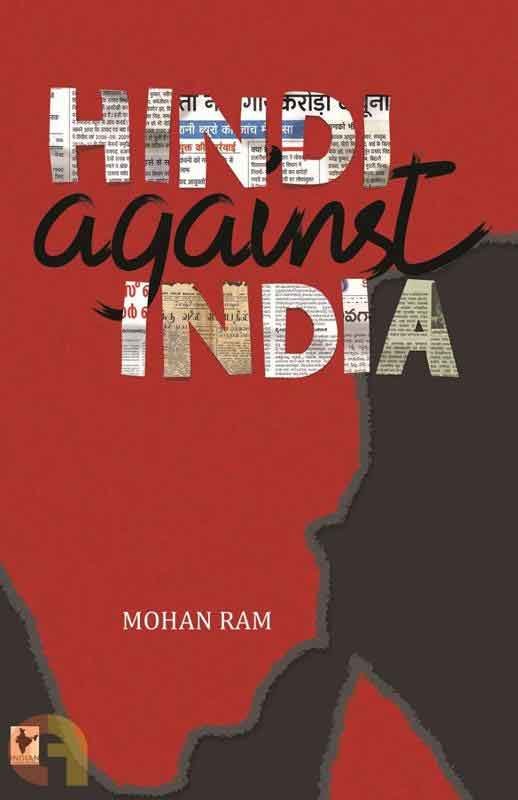

In contemporary India, debates over language continue to shape politics, education, administration and identity. The recurring resistance to Hindi imposition in southern and non-Hindi-speaking states is often portrayed as emotional regionalism or narrow linguistic chauvinism. Yet such interpretations ignore the deeper historical and structural questions that underlie the conflict. Mohan Ram’s landmark 1968 work, Hindi Against India: The Meaning of DMK, remains one of the most penetrating analyses of this issue.
Written in the aftermath of the historic 1965 anti-Hindi agitations and the electoral victory of the Dravida Munnetra Kazhagam (DMK) in 1967, the book approached the language question not as a cultural quarrel but as a struggle over power, representation and the nature of the Indian Union itself. Mohan Ram argued that the Hindi controversy reflected a clash between two competing visions of India: one seeking centralized cultural uniformity, and the other defending a plural and federal structure.
At the centre of Ram’s argument is his distinction between what he called the “Hindi Midland” and the “Coastlands.” The Midland consisted of the densely populated northern Hindi-speaking states such as Uttar Pradesh and Bihar. According to Ram, these regions were marked by educational backwardness, feudal social structures and conservative political tendencies. In contrast, the Coastlands — including Tamil Nadu, Maharashtra and West Bengal — had experienced earlier industrialization, greater literacy and stronger secular traditions due to their deeper engagement with colonial modernity and maritime trade.
Ram saw the language conflict as an attempt by the numerically dominant Midland to establish political and cultural hegemony over the more advanced non-Hindi regions. Hindi, in this framework, was not merely a language but an instrument of state power. When a language spoken by only a section of the population is elevated above all others in administration, education and employment, speakers of other languages inevitably become disadvantaged in their own country.
This concern was especially acute in the sphere of public employment and civil services. The privileging of Hindi in recruitment and administration effectively created unequal citizenship. Those from non-Hindi regions faced additional barriers to accessing federal institutions and opportunities. Ram warned that this process would gradually transform India into a hierarchical union where some linguistic groups would dominate while others would remain subordinate.
The book also drew attention to the differing socio-political aspirations of the Hindi belt and the southern and western states. Ram observed that politics in the Midland was increasingly shaped by religious conservatism and centralizing nationalism, represented by forces such as the Jana Sangh. Campaigns for cow protection, cultural uniformity and a strong unitary state reflected this orientation. By contrast, political mobilizations in the South often centred on economic development, social justice and regional autonomy. Movements demanded steel plants, industrialization, public investment and decentralization rather than religious-cultural conformity.
Within this context, Mohan Ram interpreted the rise of the DMK not as separatist extremism but as a defensive democratic response to northern majoritarianism. The Dravidian movement emerged from the anti-caste and social justice struggles led by Periyar E.V. Ramasamy and later adapted itself to confront the challenge of linguistic domination from the Centre. Ram carefully explained how the DMK gradually shifted from the earlier demand for an independent Dravida Nadu to a demand for greater state autonomy within the Indian Union. This was not a retreat from principle but a strategic effort to preserve regional dignity and federal balance.
One of the most significant insights of the book is its warning that India cannot survive as a stable democracy through enforced uniformity. Ram argued that attempts to impose a single national language on a multilingual civilization would ultimately weaken national unity rather than strengthen it. His warning remains strikingly relevant today:
“Hindi is not a language issue; it is a political issue… Hindi threatens the country’s disintegration.”
For Ram, the only sustainable basis for Indian unity lay in genuine federalism — a voluntary union of equal linguistic nationalities where no region or language exercises domination over another.
An equally important but often neglected aspect of Mohan Ram’s analysis concerns Kerala and the role of the communist movement in articulating linguistic identity. Public discourse frequently singles out slogans such as “Tamil Nadu for Tamils” as examples of exceptional regionalism. Ram demonstrated that similar sentiments existed across India and were rooted not in chauvinism but in democratic resistance to centralization.
He pointed in particular to the slogan “Kerala for Malayalees,” associated with the movement for a unified Kerala state and strongly influenced by the Marxist thinker and communist leader E.M.S. Namboodiripad. In his 1952 work The National Question in Kerala, EMS argued that Malayalis constituted a distinct nationality bound together by common language, territory and culture. The demand for linguistic states and regional autonomy was therefore not separatist but democratic and federal in character.
The communist movement in Kerala recognized that excessive centralization and the imposition of a dominant language would marginalize non-Hindi nationalities economically and administratively. Thus, “Kerala for Malayalees” was fundamentally a demand for self-governance within a federal India, just as the Dravidian movement’s resistance in Tamil Nadu was a defence of linguistic equality and regional rights.
This wider perspective is crucial because it dismantles the myth that anti-Hindi movements were isolated expressions of Tamil exceptionalism. Similar assertions of regional identity emerged across the country — in Maharashtra, Punjab, Bengal and Kerala — all reflecting a broader struggle to preserve India as a union of equals rather than a centralized cultural empire.
More than half a century after its publication, Hindi Against India continues to illuminate India’s unresolved federal tensions. The debates over the three-language formula, competitive examinations, central recruitment systems and educational policy all reveal the continuing anxiety among non-Hindi-speaking peoples regarding cultural and political subordination.
Mohan Ram’s central argument remains profoundly relevant: India’s unity cannot be sustained through linguistic homogenization. A durable and democratic India can survive only through pluralism, equality among languages and respect for federal autonomy. The strength of India lies not in sameness, but in the coexistence of many historic nationalities, cultures and languages within a cooperative constitutional framework.
Subscribe to Our Newsletter
Get the latest CounterCurrents updates delivered straight to your inbox.
Pon Chandran belongs to PUCL, Coimbatore