







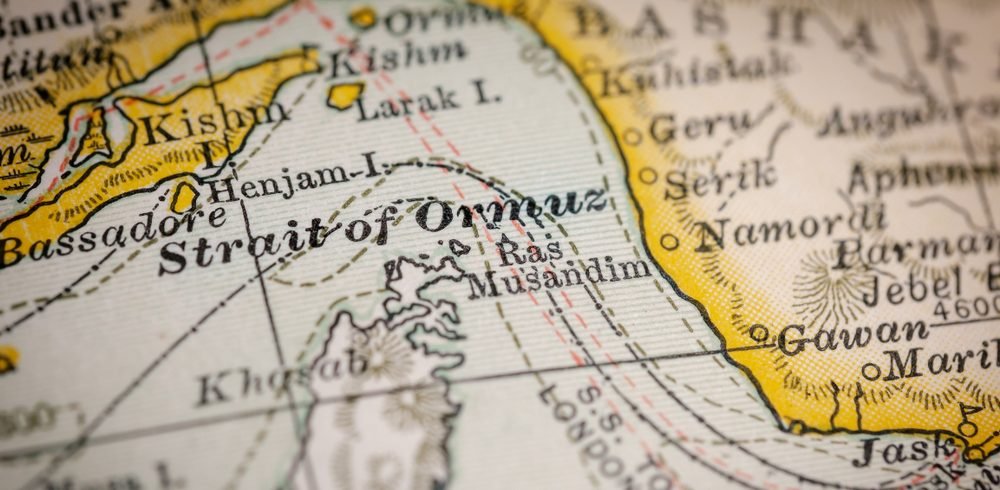
Windward’s latest report, issued 25 May, outlines a rapidly shifting Strait of Hormuz environment shaped by escalation, enforcement actions, partial export recovery.
As explained, the Hormuz operating environment moved through one of its most consequential five-day windows of the conflict between May 20 and May 24, with Iranian administrative escalation, sustained U.S. enforcement, partial export recovery, and the first publicly announced diplomatic framework all advancing in parallel.
Iran’s PGSA extended its claimed zone to the UAE coast south of Fujairah, drawing formal rejection from five Gulf states and triggering observable behavioral effects in the Fujairah area within 24 hours. U.S. Marines boarded the Iranian-flagged tanker CELESTIAL SEA on May 20. Kharg Island resumed partial loading after 13 days of inactivity. On May 23, President Trump publicly stated that an agreement has been largely negotiated and that the Strait will be opened.
The combined picture is a Hormuz environment approaching an inflection point shaped by competing escalation and de-escalation pressures, with the announced diplomatic framework now the central variable to watch.
At a clance
- Iran’s Persian Gulf Strait Authority (PGSA) extended its claimed zone boundary to the UAE coast south of Fujairah on May 20, asserting administrative authority over the maritime approaches to the UAE’s primary Hormuz-bypass terminal.
- Five Gulf states (UAE, Saudi Arabia, Bahrain, Kuwait, Qatar) formally rejected the zone in a joint letter to the IMO, as the UKMTO published its first dedicated Strait of Hormuz transit guidance the same day.
- Within 24 hours, chemical tanker AIS suppression spiked 59% in the Fujairah area, crude exports fell to a six-month low, and VLCC counts dropped from 23 to 14.
- U.S. Marines boarded the Iranian-flagged tanker CELESTIAL SEA in the Gulf of Oman on May 20, the fourth at-sea interdiction of the campaign, following SKYWAVE, MAJESTIC X, and TIFANI.
- Kharg Island resumed partial crude loading with three confirmed tanker loadings across May 20–23, the first since the terminal went inactive around May 7, though approximately 27 vessels remain waiting offshore.
- President Trump publicly stated on May 23 that an agreement with Iran has been “largely negotiated” and that the Strait will be opened, marking the first publicly announced diplomatic resolution framework of the conflict.
- Three commercial vessels are currently held off the Puntland coast of Somalia, the first simultaneous three-vessel piracy hold since the 2010–2012 peak years, with the resurgence tied directly to vessels rerouting around Africa to avoid Hormuz.
- Vortexa data shows approximately 39.79 million barrels of Iran-origin oil now held in floating storage across 79 tankers, with no laden VLCC or Suezmax tracked arriving in Asia since May 4.
Operational overview
The Hormuz operating environment moved through one of its most consequential five-day windows of the conflict between May 20 and May 24, with Iranian administrative escalation, sustained U.S. enforcement, partial export recovery, and the first publicly announced diplomatic framework all advancing in parallel.
Iran’s PGSA extended its claimed zone to the UAE coast south of Fujairah, drawing formal rejection from five Gulf states and triggering observable behavioral effects in the Fujairah area within 24 hours. U.S. Marines boarded the Iranian-flagged tanker CELESTIAL SEA on May 20. Kharg Island resumed partial loading after 13 days of inactivity.
On May 23, President Trump publicly stated that an agreement has been largely negotiated and that the Strait will be opened.
The combined picture is a Hormuz environment approaching an inflection point shaped by competing escalation and de-escalation pressures, with the announced diplomatic framework now the central variable to watch.