








NASA selected the lunar South Pole region as the site of the Moon Base because of its strategic, scientific, and long-term exploration potential. But the same conditions that make the region valuable also make it one of the most demanding environments humans have ever attempted to explore. Extreme temperatures, long periods of darkness, abrasive lunar dust, and rugged terrain all present major challenges for sustained surface operations. Establishing the Moon Base in this environment will require advanced technologies, resilient infrastructure, careful site planning, and new approaches to living and working beyond Earth.
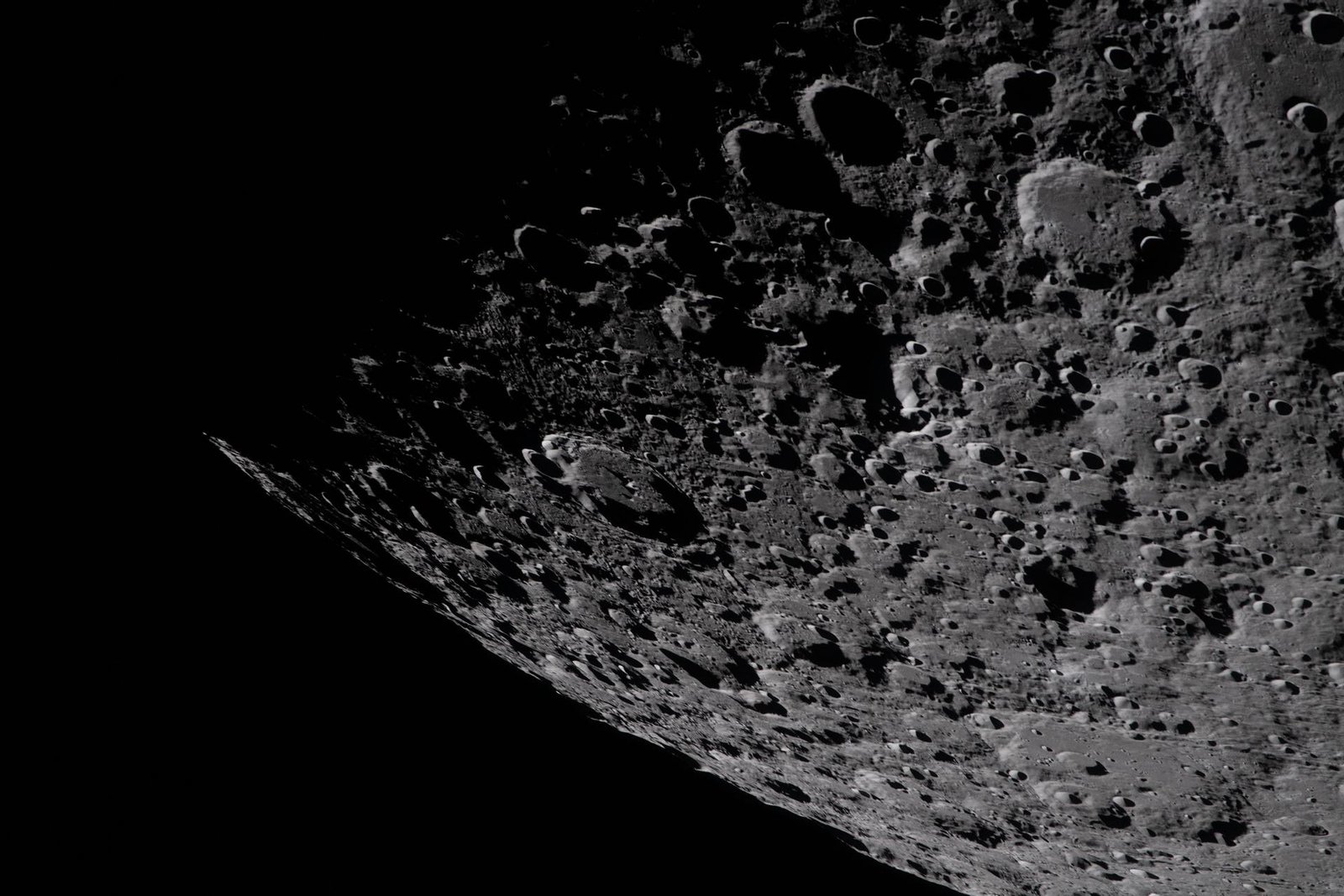
The lunar South Pole region has a dramatically different lighting environment than the equatorial maria and highlands visited during Apollo. At the lunar South Pole, the Sun remains low on the horizon, casting dramatic shadows that can hinder solar electricity generation and subject systems to prolonged periods of extreme cold and dark. Systems, operational paradigms, and site plans must be robust to these conditions, including heating and power solutions that allow systems to survive the lunar night and operate in areas of permanent shadow. Operational planning must also account for new shadows cast by emplaced infrastructure as the Moon Base grows.
The South Pole region features a topography of extremes, including high mountains, deep craters, and steep slopes. Mobility systems will need to traverse rugged landscapes and descend into deep craters to access frozen volatiles in permanently shadowed regions. NASA and its partners must develop systems capable of climbing and descending these extreme slopes to collect scientific samples, search for resources, and enable in-situ resource utilization activities that support a sustained lunar presence.
Temperatures in the lunar South Pole region are extreme and will be a major consideration for the Moon Base. Some permanently shadowed regions have not seen sunlight in billions of years and can reach temperatures as low as minus 334°F (minus 203°C)—far colder than any temperature ever recorded in Antarctica. Meanwhile, nearby sunlit areas can climb to around 130°F (54°C). Designing systems capable of surviving these dramatic temperature extremes will be essential for sustaining long-duration human and robotic operations on the Moon.
Lunar dust, known as regolith, is one of the most persistent and challenging hazards of the lunar environment. While it may appear soft and powdery, lunar regolith is made of tiny, sharp-edged particles formed by billions of years of meteoroid impacts on the Moon’s surface. Without wind or water to wear these particles down, the dust remains highly abrasive and can damage spacesuits, seals, tools, vehicles, and other surface systems over time.
Constant exposure to solar radiation causes static electricity to build up on the lunar surface, making lunar dust cling stubbornly to surfaces. The dust can interfere with mechanical systems, degrade electronics, and even make its way inside living spaces during surface operations.
For a sustained human presence on the Moon, managing lunar dust will be essential. NASA and its partners are developing new materials, filtration systems, protective coatings, and dust-repelling technologies designed to help astronauts live and work safely in the harsh lunar environment.