





The equality watchdog has appointed just one disabled person to its board of commissioners, but it has been heavily criticised for refusing to reveal their identity.
In recent months, Bridget Phillipson, Labour’s minister for women and equalities (and also the education secretary), has appointed several new board members to the Equality and Human Rights Commission (EHRC).
Under the Equality Act 2006, at least one of the members of the EHRC board must be, or have been, a disabled person.
This week, the commission told Disability News Service (DNS) that “the protected characteristic of disability is represented by a commissioner on the EHRC board”.
But the commission declined to say which of the 12 commissioners is a disabled person, or even whether EHRC had asked that individual if they were happy to be identified publicly as a disabled person.
It means that, at present, there is no commissioner who can be identified publicly as a disabled person.
The commission has responsibilities to encourage equality and diversity, enforce equality legislation on disability and other characteristics protected under the Equality Act, and protect the human rights of everyone in Britain.
Earlier this month, Phillipson appointed five new commissioners to the board: David Carrigan, Baroness [Polly] Neate, Jemima Olchawski, Sunder Katwala, and Susan Kemp.
Another new commissioner, Martyn Jones, was appointed on 24 March.
They join existing commissioners Kunle Olulode, Alasdair Henderson, Ali Harris, Professor Shazia Choudhry, Keith Richards, and the chair, Dr Mary-Ann Stephenson.
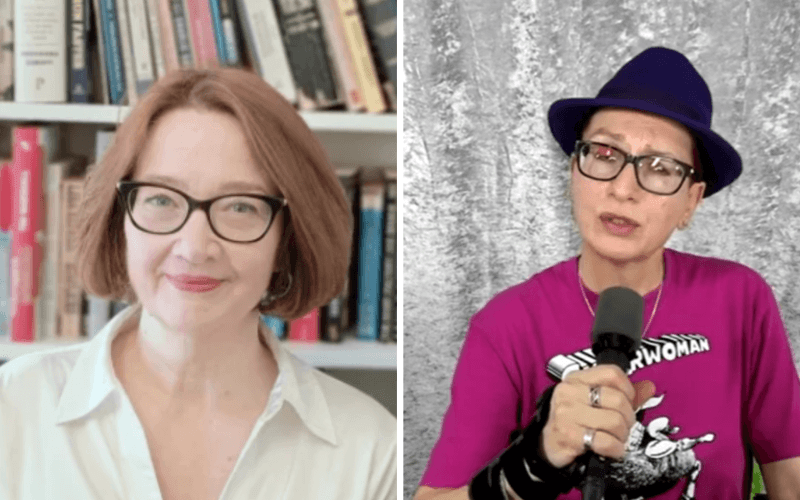
Dr Ju Gosling, co-chair of Regard, the national organisation of LGBTQI+ disabled people, and artistic director of disability arts organisation Together! 2012, told DNS: “It is both heartbreaking and disgraceful to see the past work and achievements of the Disability Rights Commission completely abandoned within the work of the current Equality and Human Rights Commission.
“Whatever happened to the fundamental principle of ‘nothing about us without us’?
“Where is the disability pride and representation if not a single member is willing to be publicly described as disabled?
“I think the EHRC’s attitude to disabled people can be summed up in their recent guidance on toilets, where trans people are simply directed to use the already completely inadequate accessible public toilet provision.”
Despite its statutory duty to appoint a disabled commissioner, EHRC said it would not be appropriate to disclose the personal details of individual members of the board.
An EHRC spokesperson said: “Appointments to our board of commissioners are made by the minister for women and equalities through the standard public appointment process.
“As required by the Equality Act 2006, the protected characteristic of disability is represented by a commissioner on the EHRC board.
“Our commissioners come from all walks of life and bring with them a breadth of skills, expertise and experience.
“This diversity helps us make impartial and independent decisions, and ensures we continue to uphold the rights of all people in Britain.”
Picture: Dr Mary-Ann Stephenson (left) and Dr Ju Gosling