





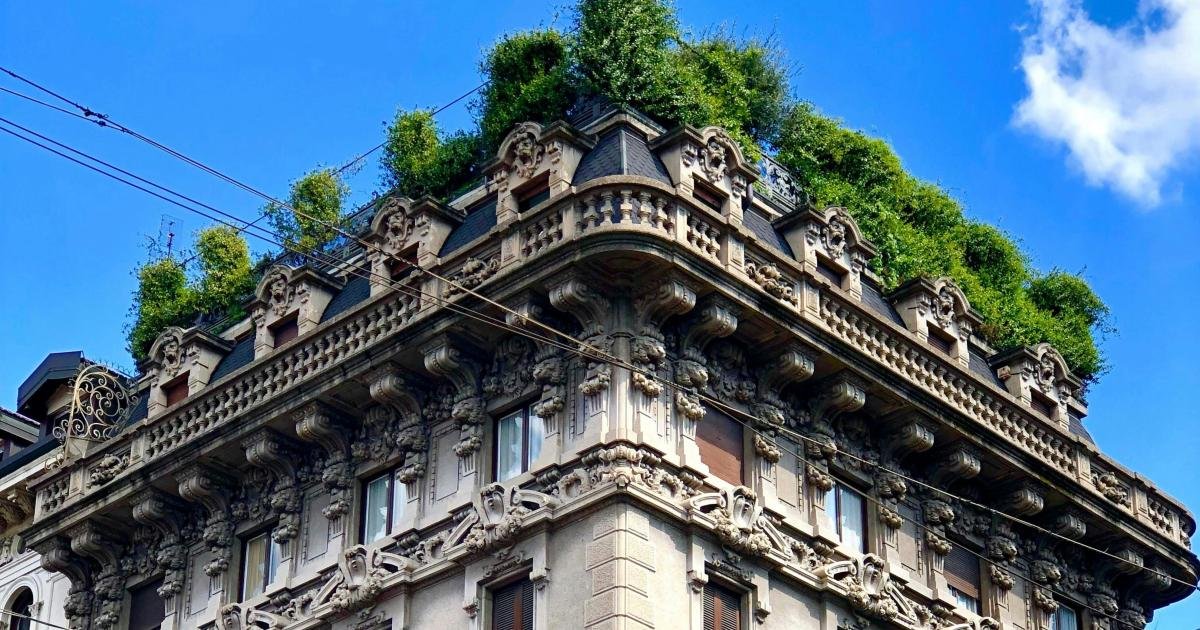
As modern cities grapple with rising temperatures and a decline in traditional green spaces, building so-called integrated-vegetation, or green roofs, has emerged as an innovative and practical solution.
Green roofs involve cultivating plants on top of building structures and offer an effective way to restore nature in densely built environments where open land is scarce. But they are much more than just aesthetic enhancements.
According to a report by the European Commission’s Joint Research Centre (JRC), green roofs provide measurable improvements in climate resilience, energy efficiency, and urban biodiversity.
While lower-maintenance extensive roofs covered in hardy, low-growing plants currently dominate European spaces, more complex configurations offer higher biodiversity and social value. These systems create habitats for urban wildlife, particularly pollinators and insects, and support some of the goals set by the EU’s Nature Restoration Regulation.
One of the most immediate advantages of green roofs is their capacity to regulate temperature and manage water.
The EU’s LIFE-myBUILDINGisGREEN project has seen significant results when implementing nature-based solutions, including green roofs, across schools in Spain and Portugal. Indoor temperatures fell by 4°C to 6°C, and electricity consumption for cooling dropped by more than 11%.
Furthermore, these systems dramatically reduced stormwater runoff, easing pressure on municipal drainage systems by absorbing rainwater that would otherwise overwhelm paved surfaces.
Positively affecting the mind
Beyond structural and environmental performance, green roofs provide verified health benefits for city residents. One study, seen in Science for Environment Policy, evaluated the physiological and psychological impacts of rooftop and vertical greening under heat exposure.
Using sensors to track heart rates and brainwave activity, researchers discovered that exposure to rooftop greenery significantly lowers heat stress. When individuals spent time near visible greenery, their heart rates dropped, and their brainwave patterns showed signs of relaxation and improved attention.
The study noted that visual exposure to greenery plays a powerful role in providing psychological relief, meaning that simply looking at these natural surfaces improves mood and creates a noticeable sense of cooling.
Cities across Europe are also turning these findings into active urban policy. Lithuania’s capital, Vilnius — also European Green Capital 2025 — is a perfect example of this, after integrating a large-scale 1,000 m² green roof on its Lazdynai swimming pool as part of its community-driven greening initiatives.
The project demonstrates how municipal leadership, backed by community engagement and dedicated funding, can successfully scale up nature-based solutions to counter air pollution and boost biodiversity.
Experts working on projects, like in Vilnius, suggest that successful urban greening requires a thoughtful, long-term approach. This includes selecting resilient native plant species tailored to the local climate, ensuring the survival of the roof’s ecosystem without requiring excessive resources.
While green roofs do require time to mature and fully establish themselves, the overall benefits of such nature-based solutions offer a reliable pathway towards cooler, healthier, and more sustainable cities.