






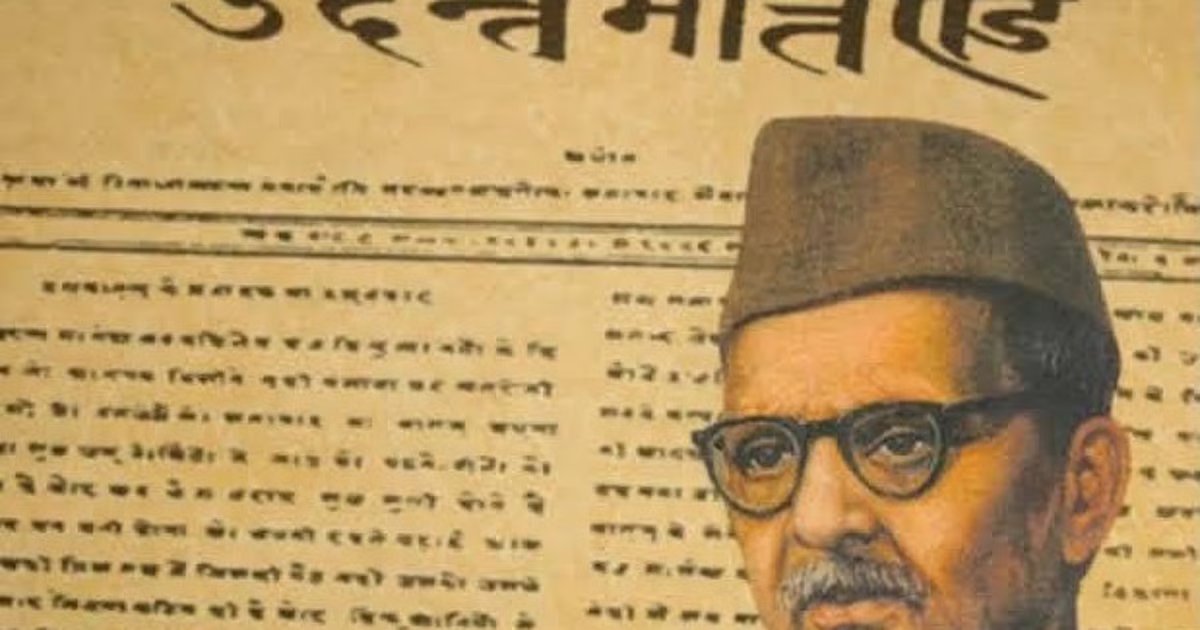
Literary journalism flourished alongside political reporting. Munshi Premchand’s Hans, launched in 1930, combined literature with sharp commentary on caste, feudalism and colonial rule. Publications such as Matwala used satire and wit to challenge authority, while contributors including Suryakant Tripathi ‘Nirala’ sharpened Hindi journalism’s critical edge.
During the Non-Cooperation, Civil Disobedience and Quit India movements, Hindi journalists often functioned as activists as much as reporters. When presses were confiscated, handwritten and cyclostyled publications circulated clandestinely. Colonial laws such as the Vernacular Press Act and later emergency regulations sought to suppress these voices, but repression often strengthened rather than silenced them.
Nation-building and the commercial turn
After Independence, Hindi journalism entered a new phase. The challenge was no longer anti-colonial resistance but democratic consolidation and nation-building. Newspapers such as Dainik Jagran, Dainik Bhaskar, Navbharat Times and Jansatta expanded into smaller towns and semi-urban India, bringing local concerns into national conversations and broadening democratic participation.
For millions beyond metropolitan centres, Hindi newspapers became the primary source of information and political engagement. They played a major role in language advocacy, electoral mobilisation and the articulation of regional aspirations.
Economic liberalisation in the 1990s, however, transformed the media landscape. Advertising overtook subscriptions as the dominant revenue model, intensifying competition and encouraging sensationalism. The rise of 24-hour television news accelerated a shift towards spectacle, where speed and ratings often competed with depth and nuance.
The result was a growing tension between journalism as a public service and journalism as a commercial enterprise.
Polarisation, ‘godi media’ and digital resistance
In recent years, Hindi media has faced increasing scrutiny over its relationship with political power. The term “Godi media”, popularised by journalist Ravish Kumar, entered public discourse as shorthand for sections of the media perceived to be excessively deferential to the ruling establishment. Concerns over corporate concentration and editorial independence have deepened as large conglomerates expanded their influence across television and digital platforms.
Critics argue that shrinking space for dissent, tightly managed political access and pressures on independent reporting have weakened journalism’s traditional watchdog role.