








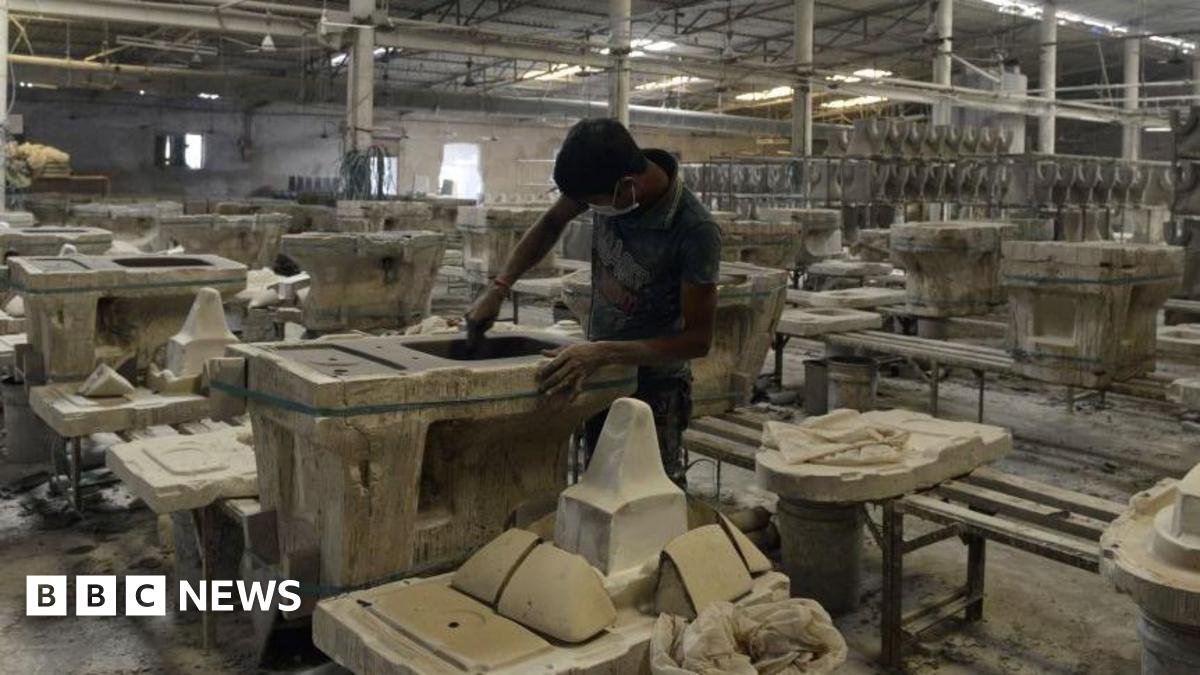
Ceramics manufacturing is energy-intensive, relying on propane and natural gas to fire kilns at high temperatures.
“Roughly four out of 10 manufacturers use propane. The others use natural gas,” Amit Prajapati, a manufacturer told the BBC.
The manufacturers say they purchase propane from private companies, while piped natural gas is received from a state-run distributor.
“About 550 factories have halted production, while a few using piped natural gas remain operational, depending on availability,” Mukesh Kundariya, adviser to the Morbi ceramics manufacturers’ association, told the BBC.
Overall, around 80% of manufacturers in Morbi – especially larger units – have shut operations.
The shutdown is set to be in place until 15 April, says Kundariya.
“The fuel shortage worsened rapidly within days, leaving factories unable to maintain continuous kiln operations, which are required to avoid damage to equipment and unfinished products.”
Prajapati offers a clearer picture: “Factories that rely on propane have shut as supplies have dried up. Natural gas is still available, but most units using it have also stopped because prices have become volatile and unpredictable. That uncertainty has left manufacturers unsure how to price their products.”
Morbi’s 3,000-odd ceramic sellers and distributors are relying on existing stocks, with fresh supplies cut off for at least a week. Traders warn that if the shutdown persists, domestic shortages could emerge, with inventories likely to start shrinking from April.
“Export orders could also face delays, and prices may rise if output does not resume quickly – although the scale of any increase will depend on how long fuel supplies remain disrupted,” Bhavin Dharodiya, a Morbi-based trader of tiles, told the BBC.
Existing stockpiles may cushion the immediate impact, but shortages shall become more visible if the shutdown extends beyond the planned period, he adds.
Morbi’s ceramics industry employs about 400,000 people, many of them migrant workers from northern and eastern India, whose livelihoods have been hit by the shutdown.
They work across factories and in allied sectors such as logistics, packaging and exports. Many of them are heading back home.
“I will have to go hungry if I continue staying here without work,” Sachin Parashar, a migrant worker, told a regional news channel.
Some who have stayed back face uncertainty.
“My employer has offered food and shelter, but I do not know what will happen if the shutdown continues indefinitely,” says Bhumi Kumar, another migrant worker employed at a tiles factory.
Follow BBC News India on Instagram, external, YouTube,, external Twitter, external and Facebook, external.