







“Earlier, defections tended to involve individual leaders breaking away. Today entire factions can rebel because the BJP provides an alternative centre of power, resources and political protection. The pattern resembles recent splits in parties such as Shiv Sena [a powerful regional party in western India] where a succession struggle and the concentration of power within one family triggered a large-scale rebellion,” says Verma.
Verma sees the TMC’s troubles as part of a broader transformation in Indian politics. Regional parties, he argues, have become increasingly centralised and family-centric.
“Ambitious lieutenants may accept a founder’s authority, but often balk when leadership is passed to a family heir. The split in Shiv Sena, after Uddhav Thackeray elevated his son Aditya, illustrated the problem, he says.
Earlier succession battles tended to remain within political families or involved dissidents who lacked the resources to mount a serious challenge.
The BJP’s presence has changed that equation.
“Combined with generational transitions and patronage-driven party structures, it creates a potent mix: once a party loses office, local leaders who joined for power and influence often see little reason to stay,” says Verma.
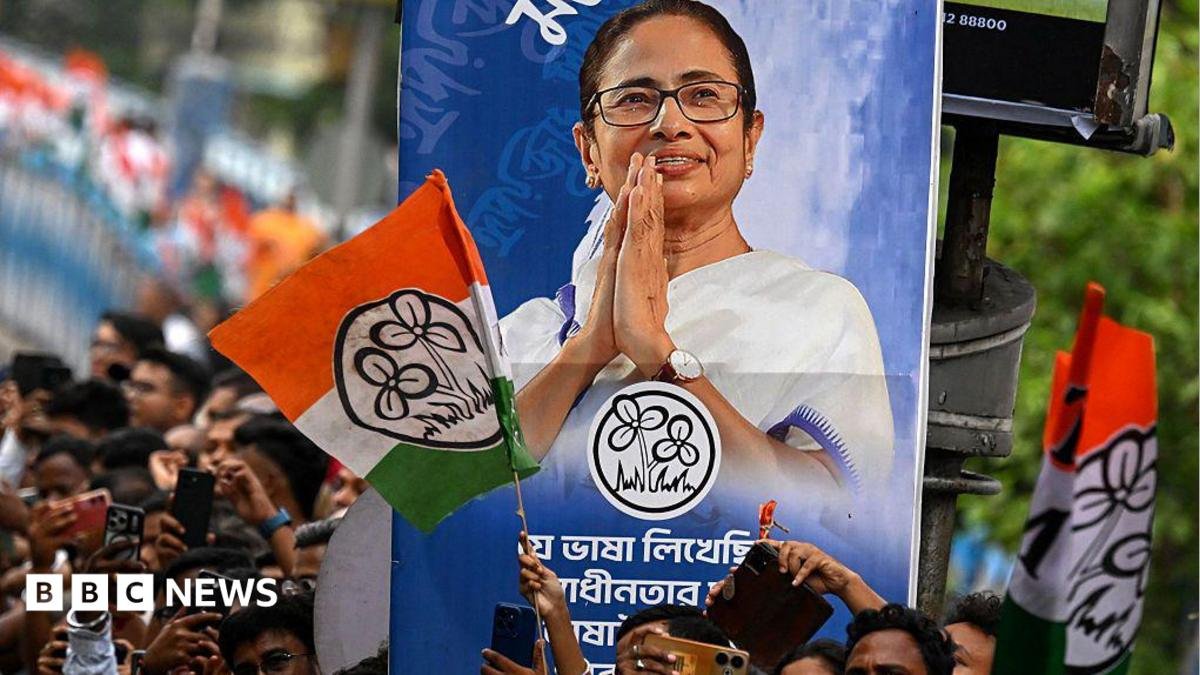
For now, 71-year-old Banerjee remains defiant.
She has described the BJP’s victory as “illegal” and “immoral”, and alleged that around 100 seats were “looted”.
She dismisses the rebellion as naked opportunism. “For so long, some people enjoyed power, and now that we have lost, they immediately seem to have reached an understanding with another party,” she said last week.
Yet she insists the party can recover. “We will rebuild the party anew. TMC is not for its leaders; it is for its workers.”
Can the TMC emerge from what increasingly looks like an existential crisis?
It is too early to tell. The rebellion could fizzle out and the rebels led by a minor legislator – a former communist who defected to TMC – could break further and return to Banerjee. But if the MPs now signalling support for a split hold their nerve, the challenge could prove more consequential than early sceptics assume.
Yet writing off Banerjee would be premature.
“She can still come back,” says Bhattacharyya. “If there is one face in Bengal that still attracts attention and one voice that people cannot simply dismiss, it is hers.”
But any revival, he argues, will require more than charisma. It will demand a willingness to renew the party and make difficult decisions about its leadership. So far, that has not been Banerjee’s strongest suit.
Throughout her career, Banerjee has defied political odds. Yet the task before her is unlike any she has faced before. Overthrowing a government is one thing. Rebuilding a party after its own leaders have abandoned it may be quite another.