








Deep within the Dinaric Alps, a stunning series of cascading waterfalls and lakes emerge from the karst landscape. They fascinate scientists and tourists alike – and are formed by impressive natural processes.
These astonishing geological formations are found in Croatia’s largest national park, Plitvice Lakes National Park, which covers almost 30,000 hectares in the country’s central region.
The waterfalls, caves and lakes found along the park’s waterways are by-products of naturally formed dams, known as tufa barriers.
These tufa barriers are largely influenced by the surrounding karst. The water that flows through this landscape is saturated with calcium carbonate, and this is deposited on the lakes’ edges and bottoms.
Over time, this builds up to create tufa barriers which further shapes the dams. The scale of the tufa at Plitvice Lakes helped the national park to be listed as a UNESCO World Heritage Site in 1979.
Logist Tehnik/Getty Images
Plitvice Lakes National Park wildlife
The park is home to many endemic and rare species. Scientists have documented 321 butterfly species alone, including the swamp blue – which is critically endangered, but populous in the park. Two out of three of Croatia’s venomous snake species are also found there: the nose-horned viper and the common European viper.

Its rich forest provides shelter for many birds, including the critically endangered European honey buzzard. Larger carnivores, such as brown bears, grey wolves, Eurasian lynx and Eurasian otters, also roam the park. However, these species prefer secluded areas so contact with humans isn’t common.
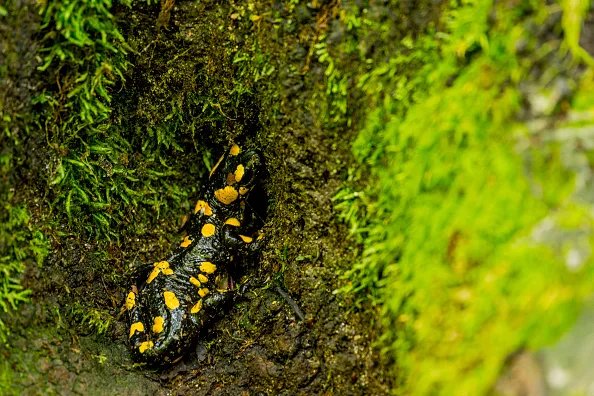
Plitvice Lakes’ vast aquatic habitats support a huge diversity of wildlife. European crayfish and stone crayfish (both endangered) can be found in its waters, as well as brown trout. The alpine salamander and the Italian crested newt are commonly found in the western areas of the Dinaric Alps, as well as the Alps.
More than 1,400 plant taxa have been recorded in the park, which equates to 30 per cent of the entire Croatian flora. These include carnivorous plants (such as common butterwort) and endangered orchids (including the lady’s-slipper orchid).