









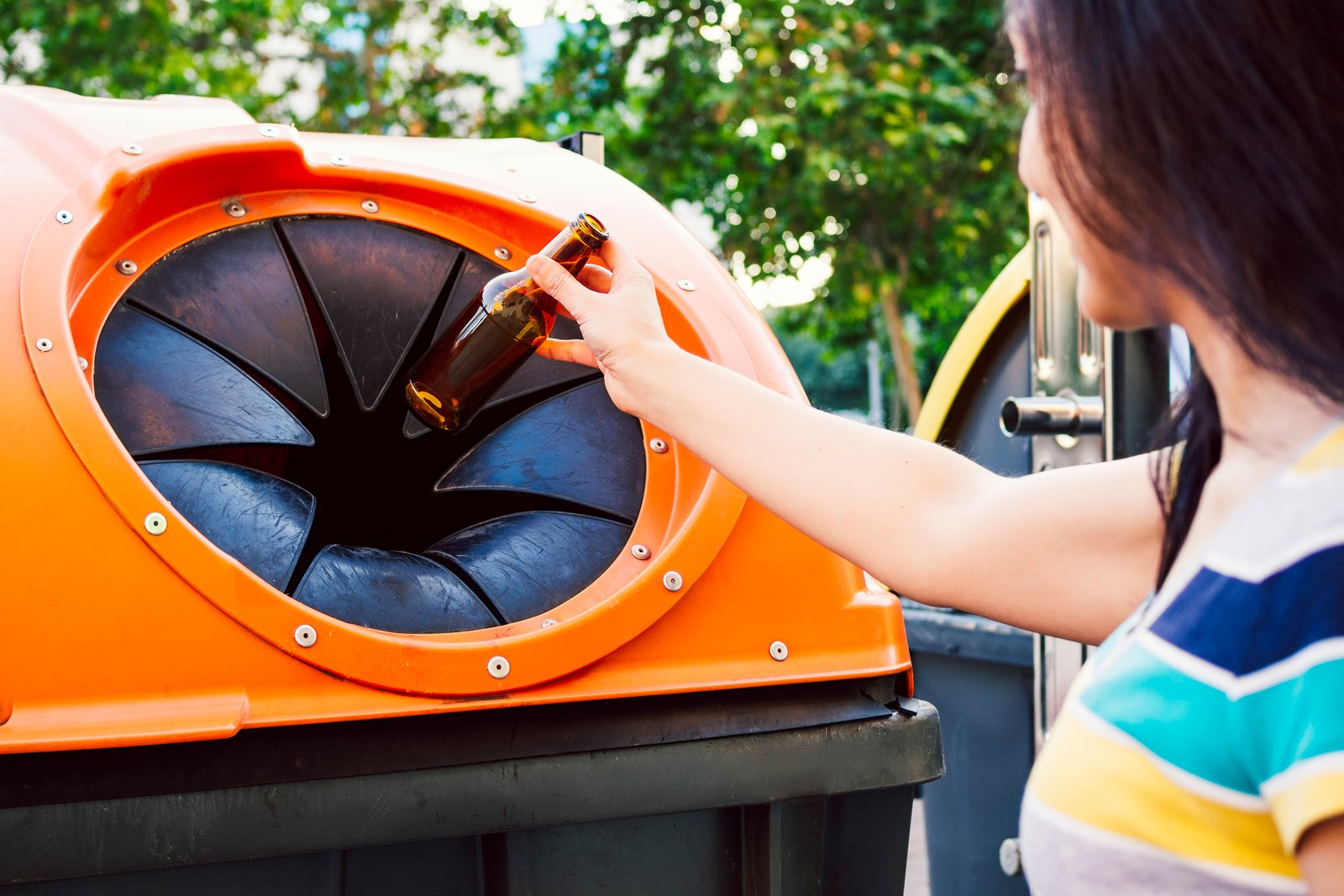
People notice and make more use of bins with features that make them stand out from the surrounding environment – like a particular colour – the first paper published by the BPS’s new journal, Environmental Psychology Research (EPR), indicates.
However, the results were less consistent about what colour people prefer, which then results in more waste being collected, the paper says.
It is based on a systematic review of 44 studies looking at external factors that shape waste bin behaviour, and which also include the shape of bins, logos and signs attached to them and the location of bins.
Professor Lorraine Whitmarsh, co-editor-in-chief of EPR, said:
“We are delighted that our journal’s first published paper showcases exactly the kind of impactful research Environmental Psychology Research seeks to promote.
“This paper gathers evidence from diverse studies to show that simple design choices really matter when it comes to people’s recycling behaviour.
“Our journal aims to be the home for such innovative, multidisciplinary and international research on people and their natural and built surroundings, and importantly to provide useful insights for practitioners and policymakers.”
Anna Högberg, one of the authors of the paper, said this type of research was important because, for planners and municipalities, “reducing littering and increasing the sorting of recyclable materials remains a challenge globally”.
The paper concludes that colour preference depends on the setting in which the waste bin is being used, and on the type of waste and recycling material it is intended to collect.
In one experiment in an urban setting, it was observed that an orange waste bin collected more waste than a grey bin and a white bin, especially at the weekend when the city was more crowded. The authors suggested the reason for this was that the orange bin stood out from the surroundings and captured users’ attention.
Several studies indicate that the most preferred and noticeable colour is one that people have learned to associate with a waste bin, for example brown for compost and green for landfill.
City architects, who decide the colour of waste bins, should take ‘saliency’ into account when planning the design of public spaces, especially in outdoor environments, the paper states.
The authors call for further research to test the relative contribution of external factors to waste bin behaviour and how they interact with each other.
For example, it is well known that distance has a tangible effect on waste bin behaviour, but perhaps this is modulated by waste bin salience, the authors comment, saying: “As salient colours capture attention, this might compensate for some of the disadvantages of locating waste bins further away.”
Further information
Read the full paper: The effect of waste bin design on observable recycling behaviour: A systematic review and research agenda
Interested in submitting to the journal?
Visit the journal webpage for the full list of topics considered for publication.
Take me to the author guidelines.
Interested in being a reviewer for the journal?
Would you like to be considered as a reviewer for the journal? Please complete this form and email to the Wiley team at [email protected].