






In an era when digitalisation is accelerating, computing power is more than ever a critical differentiator. The deployment of Airbus’ new generation high-performance computing (HPC6) supercomputers shows how supercomputers can offer a massive leap in capacity, representing a new step toward full digital enablement and bringing more efficient and quiet aircraft to market, faster.
What is High Performance Computing (HPC) and how has it evolved into a crucial tool for Airbus’s engineering community?
As a leader in the aerospace sector, Airbus is pursuing a comprehensive digital transformation. Central to it is the use of High Performance Computing (HPC), which introduces the latest generation of supercomputers.
For more than two decades, High Performance Computing has enabled Airbus engineers to minimise or even substitute physical tests with digital calculations. Its application, once limited to flight physics and airframe development, has now broadened to powerplant and systems. For example, tests to assess aircraft components’ resistance – especially cockpit windows and engines – to birdstrike can now be carried out digitally.
What are the capabilities of the new generation of HPC ?
Airbus elevated its HPC standards in 2026 by deploying two supercomputers from Bull, a European leader in advanced computing and AI. They offer throughput capabilities three times higher than the supercomputers of the previous generation. Their calculating power has grown, enabling a shift towards a full digitalised aircraft design.
What is the role of simulation in next-generation products?
One of the major changes brought by increased HPC capacity is the ability to quickly investigate many different aircraft configurations, supporting the need for speed in bringing future aircraft and rotorcraft to market on time. “Supercomputers help create finer 3D representations of objects, enabling the exploration of more complex design and more detailed simulations to achieve higher fidelity,” says Jean Gutierrez, scientific computing product manager in Engineering at Airbus. “HPC enables us to handle larger problems, moving closer to reality by reducing the need for allowable margin of error, which would otherwise necessitate physical testing.”
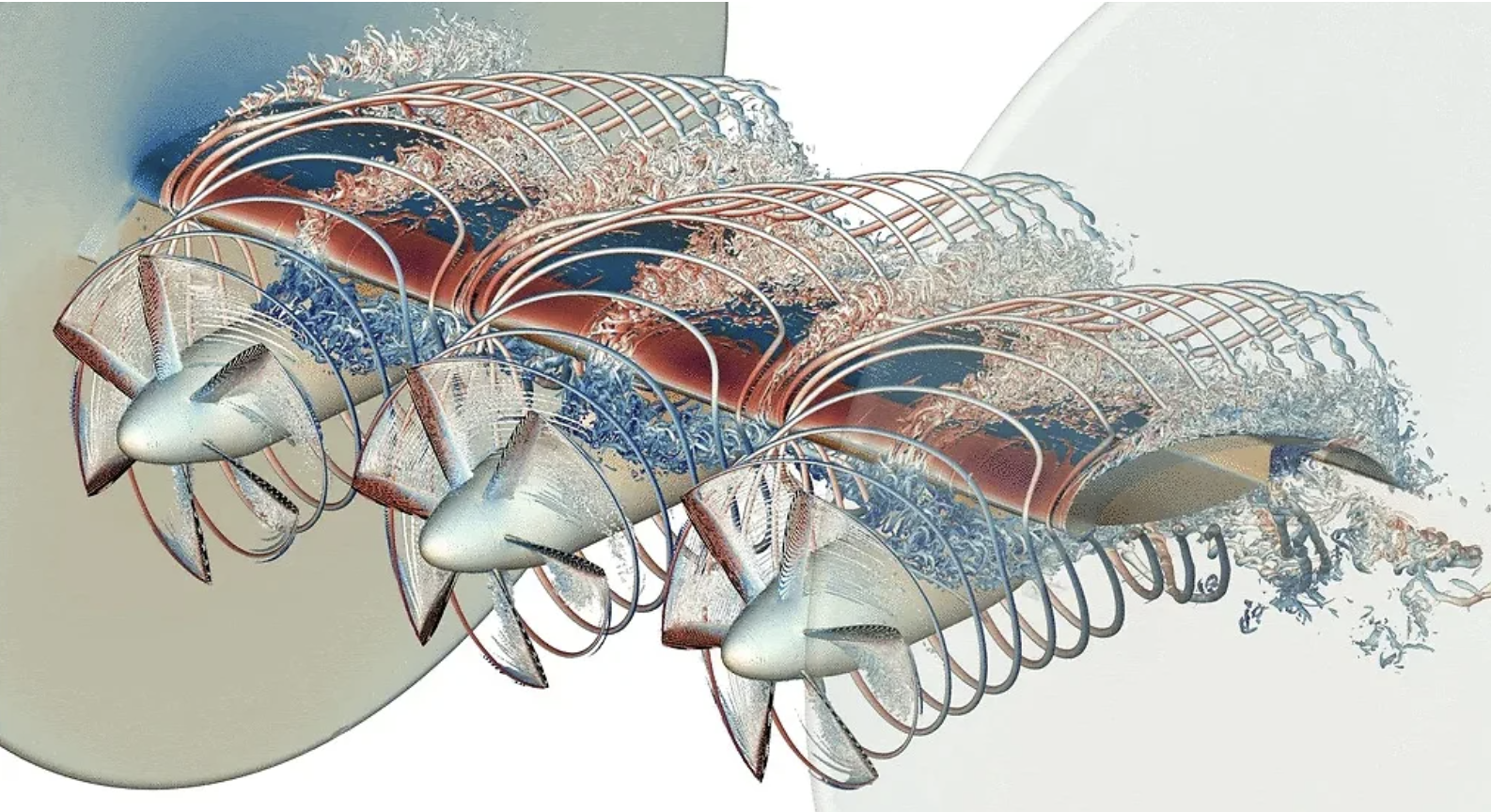
Demonstrating the increased level of detail that the software can handle, HPC6 directly supports engineers in developing more innovative and efficient products, benefiting both current and future aircraft and rotorcraft. HPC6 is already supporting existing programmes and their derivatives such as the A350 Freighter, and more generally future developments, including next-generation helicopters.
How Airbus is managing the energy footprint of the supercomputers
The latest generation of supercomputers, boasting more than triple the previous capacity, opens up opportunities to advance plans for a local heat exchange system. This project would capture and repurpose the heat produced by the supercomputer, redirecting it into the local power grids.