




Writing its own playbook
What makes India structurally different is where its players come from.
In most emerging padel markets, 60–80% of new players cross over from tennis.
In India the figure is just 15%.
The country was never tennis-first — badminton is the national racket sport, with some 19 million players — so padel is drawing from a far broader funnel, with pickleball acting as a feeder rather than a rival.
That independence shapes the economics. India is not copying the global sequence; it is inverting it.
Consolidating before it fragments
Here is the most counter-intuitive finding. Every previous padel market scaled through years — sometimes decades — of fragmentation before it consolidated. India is doing the reverse.
The investable core is already tight: around 40 venues, two-thirds of them in Mumbai, capture roughly 75% of all national bookings.
And sport-pedigreed capital is building integrated platforms early, before the market has had a chance to sprawl — JSW Sports (Parth Jindal), MS Dhoni, Sky Impact Capital and Mahesh Bhupathi among them.
The January 2026 merger of 7Padel and PadelPark created a single operator controlling a large share of India’s premium courts, vertically integrated from court manufacturing to consumer brand.
No other padel market has consolidated this early.
Capital — and courts — now flow both ways
The clearest signal that India has stopped merely importing the sport is that it has started exporting it.
PadelPark India has taken an equity stake in the Generali Hexagon Cup — the celebrity-backed international competition — alongside Saudi Arabia’s Public Investment Fund and Qatar Sports Investments. It is the first Indian entity to hold equity in a global padel property.
The export story runs through the supply chain too.
Some 85–90% of the padel courts installed in India are now manufactured domestically, and the leading builders are gearing up to export into Southeast Asia within the next two to three years.
A market that imported every court a few years ago is preparing to supply the region.
The takeaway
India’s trajectory points to one million players by 2036 — not because it is following the global playbook, but because it is writing its own.
Returns today run at 30–40% per court, against 20–25% globally, and the binding constraint has already shifted from building courts to building the ecosystem around them: coaching, clubs and governance.
For anyone watching the next wave of padel markets, the lesson from India echoes what is emerging everywhere: value is built through depth and concentration, not headline participation.
India is simply reaching that conclusion first.
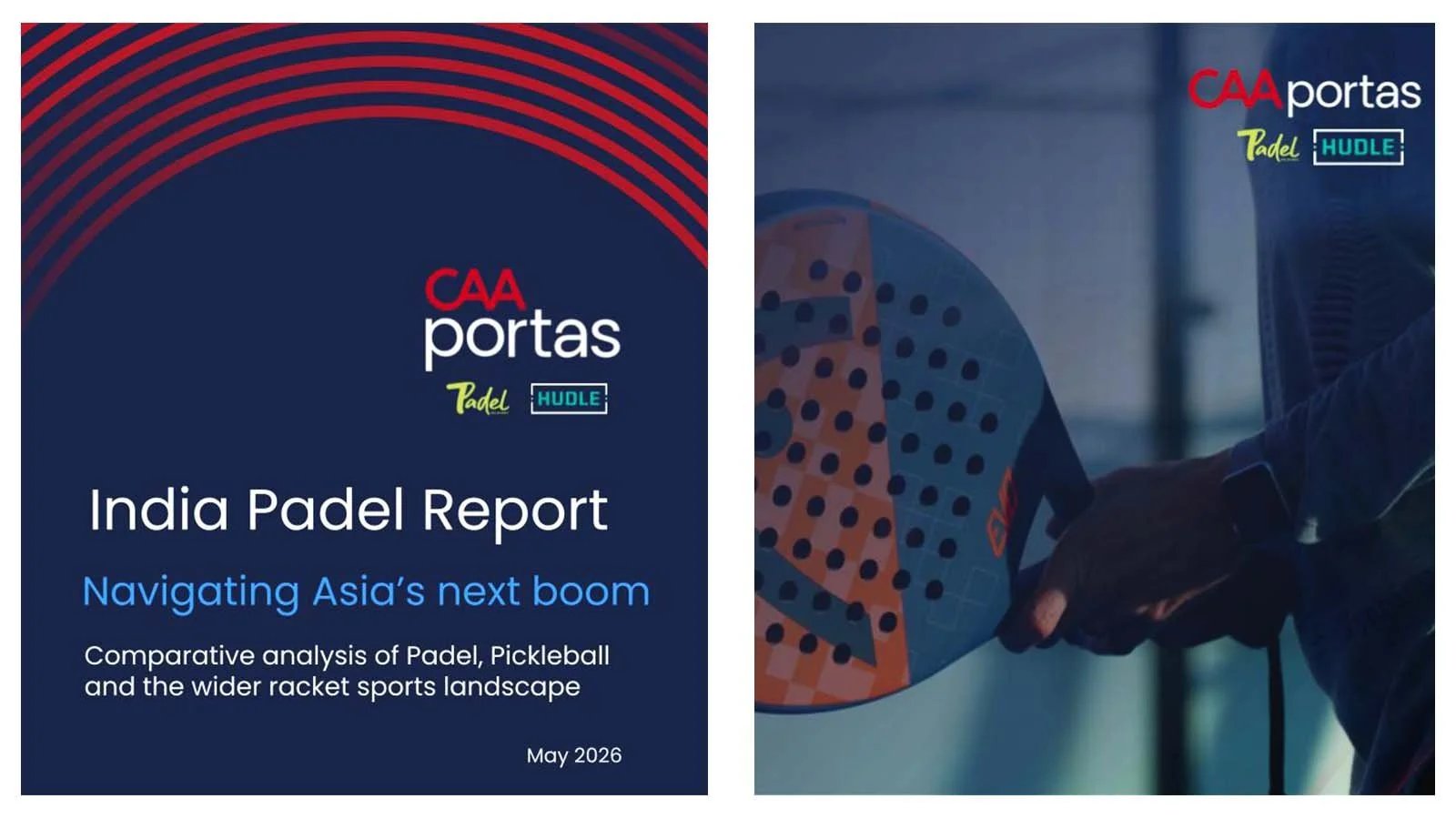
The full India Padel Report: Navigating Asia’s Next Boom, produced in partnership with PadelPark India (7Padel) and Hudle, is available from CAA Portas. Saidja Drentje is a partner at CAA Portas, where she leads the global racket sports practice. She is a former Netherlands national tennis player and founded one of the first padel clubs in Dubai.
READ NEXT: Padel news: Padel 100 launches initiative to provide free padel courts for Irish schools