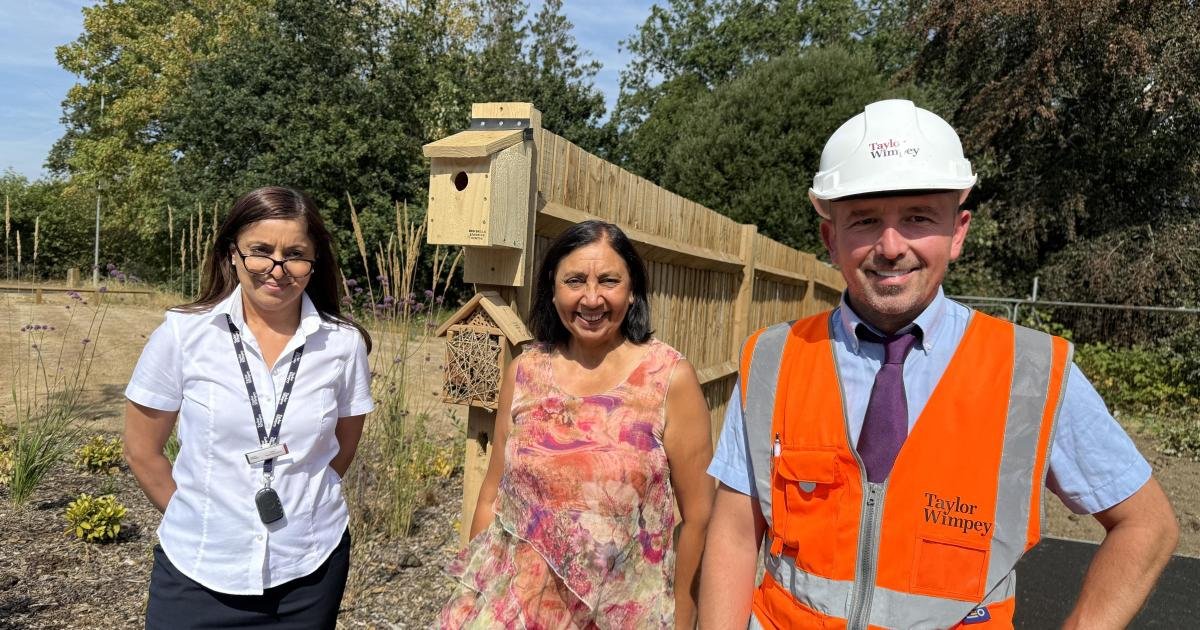










Will Arnold is Head of Sustainable Materials at the Useful Simple Trust, Technical Author for the UK Net Zero Carbon Buildings Standard, Convenor of Part Z, and Visiting Professor at the University of Bath. Photograph by Steve Cross, Instagram @stevecrossphotos.
‘Do you lobby here often?’ the housebuilder asked me, grinning.
It was my first time in the Houses of Parliament. We were both there for an event on embodied carbon, and I was hopeful that Part Z might finally gain some political traction.
He raised an eyebrow, curious as to what I thought could be achieved in a single evening.
‘I’m here three times a week!’ he said, explaining the importance of representing his employer’s interests.
It dawned on me that this trip to Westminster was going to turn out to be quite futile.
It was a short exchange, but a revealing one. While sustainability professionals were producing evidence, writing reports and presenting at conferences, those with other agendas were turning up in-person and making their case directly to those in power.
Turns out, technical wonkery alone isn’t enough to make the case for new policy.
That lesson feels particularly relevant to the current RIBA presidential election.
At first glance, this might seem like a routine institutional process. It isn’t. The next president will serve from 2027 to 2029, the period immediately leading up to what will likely be one of the most consequential UK general elections in decades.
This matters because the wider political context is become less stable, not more. The UK has had six PMs in a decade, and may soon see a seventh. Two-party certainty is gone. Global order is fragmenting. Today’s policies are short-term, reactive, and easily reversed.
That instability matters. Because while politics accelerates and fragments, climate innovation continues to be slow, technical, and long-term.
On the one hand, there is real momentum. The UK Net Zero Carbon Buildings Standard. Widespread global uptake of embodied carbon. The first building shortlisted for the Earthshot Prize.
But national policy remains stuck. Part Z lies waiting, and a coherent circular economy strategy remains elusive. Greenhushing is in. Bold moral ambition is out.
So now we have a strange imbalance – technical progress on the one hand, political hesitation on the other.
And this tension is costing us.
Because while the industry progresses circularity assessments and carbon factors, the public don’t see that – and they don’t realise that they care. They just want warmer homes, lower bills and thriving high streets.
But they also want a better future for their children. Three quarters of the British public are still concerned about climate change. But no-one has shown them the link between warm homes, low-carbon, and national policy.
And so to the RIBA presidential election.
Now, more than ever, the built environment needs a figurehead capable of speaking up amid the noise of short-term politics, who can make a clear, compelling case to both government and the public.
Not just describing technical solutions, but translating them:
- Retrofit as comfort and affordability
- Circularity as preserving local character, and minimising disruption
- Low-carbon as long-term value and supply chain security
In short, the next president needs to Make the Environment Great Again.
Not through slogans alone, but by reclaiming environmental action as something positive, practical, and aspirational.
I know from my own experience working within a professional institution that they can be criticised for being slow-moving. But with that slowness comes continuity and credibility – qualities in short supply in Westminster right now.
When institutions speak loudly and courageously, they can move mountains.
As such, the next RIBA presidency will be more than just ceremony. It will be a perfectly-timed platform, a loudspeaker … and a responsibility to tackle the global issues – after all, 8,000 of the RIBA’s members are international.
You might argue that, as I’m not a member of the institute, my view on this is irrelevant. But this is not just my opinion. The RIBA’s own code of conduct explicitly requires its members to advocate for sustainable buildings and communities.
The question is not whether that principle exists.
It is whether the leaders of our profession are willing to act on their own obligations when the politics around us become uncomfortable.