






1. Bramley apples

(Image credit: Alamy)
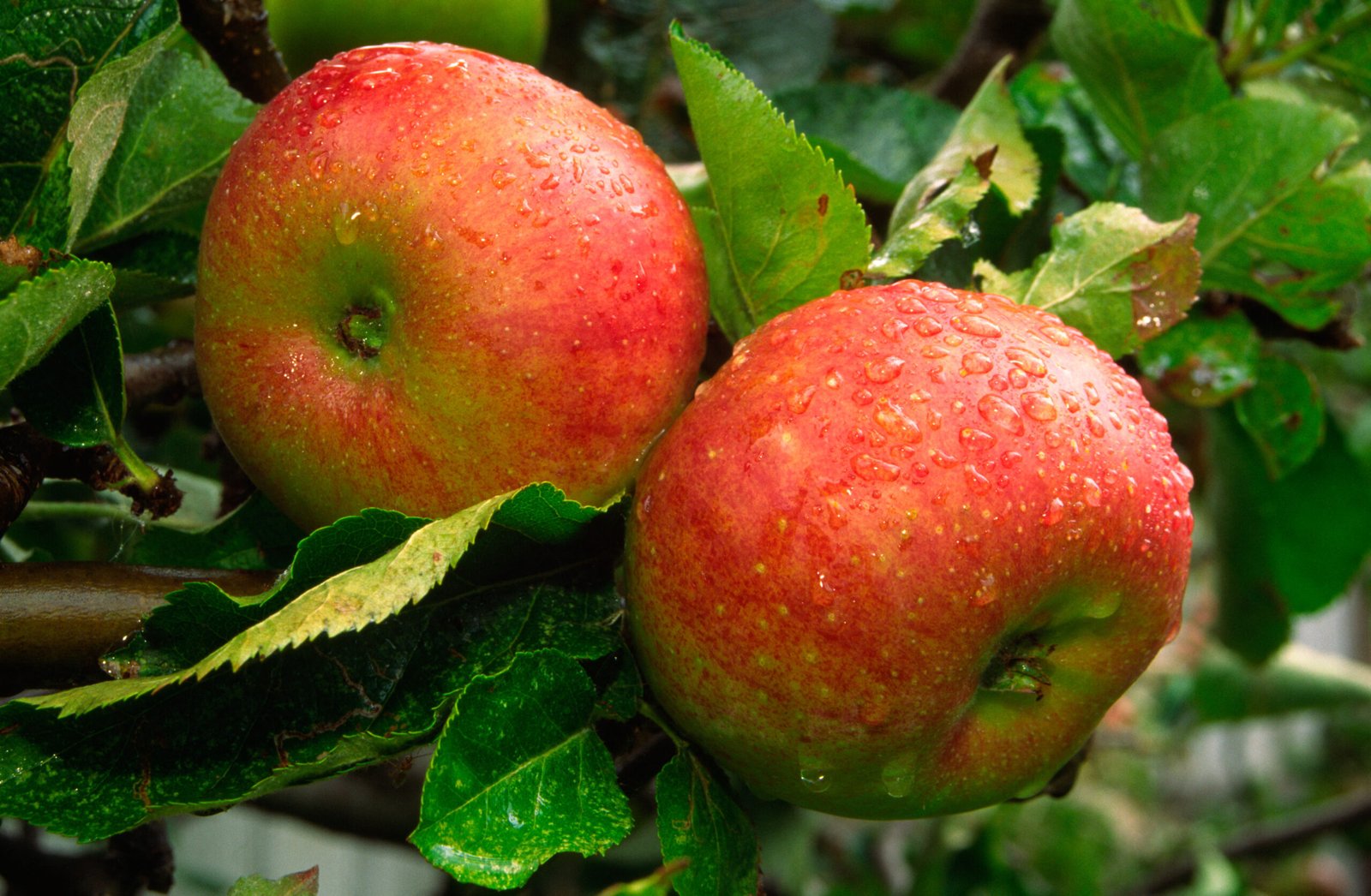
Behind this crumble stalwart is a very English tale of hobbyist persistence. In 1837, Nottinghamshire gardener Henry Merryweather was given permission to take cuttings from a blossom-bedecked apple tree that had caught his eye in a neighbour’s cottage garden, on the condition that he named any offshoots ‘Bramley’ after the owner. Forty years of painstaking cultivation later, the fruit finally went on sale.
Today tart, fragrant Bramleys are beloved as far afield as Japan, which has its own Bramley apple appreciation society.
Bare root stock from £34.99 from the RHS Plant Shop

2. Church’s brogues
Not for nothing is one of Church’s brogue styles named Diplomat — they signal English elegance so widely that they feel positively ambassadorial.
Founded in 1873 in Northampton, Thomas Church’s firm pioneered left/right footwear, as well as Goodyear welting, which allows the sole to be replaced many times (Church’s offers two refurbishments per pair).
Originally conceived as country footwear — the perforations in the leather help them to dry out — today’s brogue comes in two principal styles, the Oxford (the original, with ‘closed’ laces) and the Derby (‘open’ laces thanks to the quarters sitting on top of the vamp, arguably more relaxed in look and feel).
Church’s excels at both and, although, in 1999, the company was acquired by Prada, its brogues are still manufactured entirely in Northampton.
3. David Austin’s Rosa ‘Gertrude Jekyll’

(Image credit: Alamy)
First name-checked in the pages of Country Life on August 15, 1996 by then Gardens Editor Tony Venison — who hailed it as one of the new ‘moderns with old-world charm’ — Rosa ‘Gertrude Jekyll’ is widely held to be the quintessential English rose and was listed among Britain’s greatest masterpieces by Country Life (June 16, 2021).
Created by David Austin, the nurseryman hailed as ‘the father of English roses’, the genius of ‘Gertrude Jekyll’ for the interplay of colour and texture is reflected in a shrub-rose cultivar juxtaposing the boldness of Schiaparelli pink and a powerful old-rose scent with a delicate froth of petals.
4. Jones’ Crumpets
‘Nothing goes so well with a hot fire and buttered crumpets as a wet day without and a good dose of comfortable horrors within,’ Dorothy L. Sayers wrote in Strong Poison (1930). The pleasure of biting into a proper, old-fashioned, freshly toasted crumpet remains unbeatable: industrially produced supermarket ones simply don’t hit the spot.
Thank goodness, then, for London baker Ian Endfield, of Jones’ Crumpets. Made with a sourdough starter, his wares are golden, irresistibly toothsome and honeycombed with air bubbles, all the better for soaking up butter. A cheddar-and-Parmesan version cries out for the rarebit treatment; another has a thick layer of dark chocolate sealed inside that turns molten when toasted.
They’re all available to order online, from independent food shops and farmer’s markets.
5. David Mellor Embassy cutlery

(Image credit: David Mellor)
First commissioned in 1963 for — as its name suggests — use in embassies all over the world, Sheffield silversmith David Mellor’s Embassy range is a masterpiece of understated elegance, with its subtle tapering and three-pronged fork. It’s practical, but has a real sense of occasion; a teapot, toast rack and candlesticks following the same design cues complete the picture.
Made from mirror-polished stainless steel in David Mellor’s Peak District factory, each piece is hand finished individually.
Six-piece cutlery place setting from £165
6. Fortnum & Mason Smoky Earl Grey tea
There have been tea counters at Fortnum & Mason since the store first opened its doors in 1707. Today, there is a dizzying choice of loose-leaf varieties on sale — more than 150 at last count — but Earl Grey, said to have been named in honour of the abolitionist Whig politician Charles Grey, is enduringly popular.
The first Earl Grey to be sold on Piccadilly, in 1835, was this smoky blend with lapsang souchong and gunpowder tea added to the bergamot-scented base for ‘real oomph’.
7. Burleighware

(Image credit: Burleigh Pottery)
The first set of this delicate floral china left Staffordshire’s Middleport Pottery in 1889, the same year the Eiffel Tower opened. In 2011, The Prince’s Regeneration Trust led a £9 million transformation of the facility, with the then Prince of Wales arriving on a canal boat to see it in operation.
The soft blue-and-white Asiatic Pheasant range, decorated by hand using tissue-printing, never fails to raise a smile, with mix-and-match pink and green colourways also available.
8. Liberty paisley
An ancient design with roots in South Asia, paisley’s teardrop motifs became hugely fashionable in Britain in the mid 19th century, thanks to imported Kashmiri shawls.
Liberty, the fashion world’s favourite London department store, began manufacturing its own paisleys in the mid to late 19th century and, by the 1920s, its distinctive line of prints was well established.
Collaborations with the likes of YSL and Mary Quant repositioned the print for the psychedelic era, with The Beatles, Jimi Hendrix and David Bowie all stepping out in Liberty paisley.
The design team continually refers to the 500-plus paisley samples in the archive; Felix and Isabelle, a current bestseller in lawn cotton, is a reworking of the print from an 1850s shawl.
9. Claverton Cloches

(Image credit: Country Life)
When protecting plants from pests and the elements, a Victorian-style cloche is the most archetypally English — and durable — choice.
Claverton’s handsome iron-frame ones are completely handmade in Somerset, in close partnership with a local foundry, and are exported worldwide; visitors to the royal gardens at Balmoral in Aberdeenshire might spot them, too.
A range of new pieces is currently in development; the Claverton workshop also has an admirable sideline in restoring antique cloches.
10. Hepple Gin
It’s no surprise that Walter Riddell gravitated towards making gin: Northumberland, where he grew up, is home to one of Britain’s two principal juniper populations. Operating out of an old coach house near Morpeth, he and his team (which includes ex-Sipsmith distiller Chris Garden) create Hepple with just-picked local botanicals: Douglas fir, blackcurrant leaf, lovage for a complex savoury note and celery-esque bog myrtle (Left of the field).
The gin’s sense of place isn’t a marketing gimmick, either: the Hepple Juniper Trust plants an array of saplings annually.
11. Marmite

(Image credit: Country Life)
Pined for by homesick Brits the world over and given the paws-down by Paddington Bear in a tongue-in-cheek television advertisement, the eternally divisive spread has been made in Staffordshire since 1902, using local brewer’s yeast.
Newer innovations — including a deluxe truffled version, Marmite peanut butter and an entire tie-in range with Marks & Spencer — have garnered headlines, but the original reigns unassailably supreme, for breakfast or afternoon tea.
Nigella Lawson’s recipe for Marmite butter pasta, furthermore, is the world’s greatest hangover cure.
12. Lock & Co’s trilby
The world’s oldest hat shop — established in 1676 — has served everyone from Admiral Nelson, whose bicorn at Trafalgar was made by the firm, to Sir Winston Churchill, who favoured Cambridge and Homburg styles.
Its eminently wearable London-made trilbies (the range includes some nifty rollable styles) are Hollywood royalty; look out for them in Dr No and From Russia with Love.
One for the pub-quiz aficionados: the style takes its name from a racy 1894 novel by George du Maurier, Daphne’s grandfather.
13. Shipton Mill flour

(Image credit: Jamie Turner)
In 1979, decades before regenerative farming became an advertising buzzword, John Lister and a group of Arts-and-Crafts-loving friends stumbled across a run-down mill at the end of a Gloucestershire lane. After laboriously restoring it to working order with entirely vintage parts from other disused mills, they began stone-grinding flour, teaming up with local farmers who prioritised soil health and biodiversity.
Today, Shipton Mill’s organic range, encompassing a malted blend, spelt and a dark rye, as well as more traditional white and wholemeal varieties, is very likely to be your favourite restaurant’s go-to: harvested grains are tested carefully to divine their properties for baking.
14. Dukes cricket balls
The unsung heroes of Test cricket matches are Dukes’ hand-stitched balls. In 1760, Timothy Duke, a shoemaker who played for his county in his spare time, set about addressing the unreliability of the game’s balls — many of which were still being made by the players themselves — at Penshurst in Kent. A cork core rounded out with thread made for superior bounce and, within 15 years, Duke had received a Royal Warrant. With county cricket taking off properly in the 19th century, Dukes balls were the toast of the 1851 Great Exhibition, where they won a medal.
Today, the company is based in east London; many of its staff are third- and fourth-generation specialists and such is the attention to detail throughout the shaping, stamping and polishing that only a handful of balls is finished each day.
15. Colman’s mustard

(Image credit: Country Life)
French brand Maille’s boutiques may have become tourist destinations in their own right, but for sheer sinus-clearing might the profoundly English Colman’s still reigns supreme.
First produced near Norwich by Jeremiah Colman in 1814, its distinctive yellow packaging with its bull’s head motif arrived in 1855 and a Royal Warrant followed 11 years later. To this day, it’s made in Norfolk, with the mustard seeds (white and brown, almost all British-grown) being sieved nine times for purity of flavour, using wooden equipment that has been in service since the 1950s.
16. Brompton bicycles
The story of the commuter’s best friend began in 1975, when engineer Andrew Ritchie put together a prototype of a lightweight, foldable bicycle in his bedroom overlooking Brompton Oratory in London. Twelve years of tinkering later, the first models went into commercial production.
They may still be made in west London and Sheffield, but their reach is international: the annual Brompton World Championship sees owners from across the globe (including, in 2008, Tour de France stage winner Roberto Heras, who narrowly missed first place) racing in a friendly spirit.
17. Chococo Dorset chocolate truffles
When Country Life conducted a taste test earlier this year of the best British-made Easter eggs, one independent maker was singled out by the team for praise. Chococo, founded in Purbeck in 2002 by Claire and Andy Burnet, creates chocolates that make your inner child’s eyes light up: molasses and brown-butter caramels, toasted cashew and Dorset sea-salt slabs, pearlescent fossil-shaped truffles that nod to the Jurassic Coast.
From the outset, its selection boxes have had no plastic inserts and, today, Chococo packaging is 100% plastic-free.
18. Jilly Cooper’s ‘Riders’

(Image credit: Alamy)
The late Dame Jilly Cooper must surely be England’s most cherished 20th-century author. If Country Life could press only one of her novels into the world’s hands, it would be 1985’s Riders — the book that launched her ‘Rutshire Chronicles’.
Written on Monica, her trusty typewriter, then literally cut and pasted together, it brilliantly exemplifies so many elements not only of her writing at its best, but of Englishness itself, from the beautifully drawn Cotswolds setting and beloved horses and dogs to the puns and the romps during which nobody takes themselves too seriously.
Impeccably researched — Dame Jilly won over the initially suspicious all-male British showjumping team — witty and warm-hearted, it ‘changed the course of popular fiction forever’, as her publisher put it after her death in 2025.
19. Montgomery’s Cheddar
The Editor’s pick of England’s farmhouse Cheddars: rich, super-savoury, long-matured and with a winningly crumbly texture that occasionally reveals a streak of blue.
Made with raw milk in Somerset by Jamie Montgomery, its flavour is described in quintessentially English terms by Paxton & Whitfield as ‘hot buttered Marmite toast’.
The company has entire wheels intended to form the base of a tiered cheese wedding ‘cake’.
20. Sugrue South Downs English sparkling wine

(Image credit: Sugure)
The coveted ‘Best in Show’ trophy at last year’s Decanter World Wine Awards was taken home not by a venerable château, but a relatively little-known English sparkling wine made on the South Downs.
Earlier that year, East Sussex winemaker Sugrue’s The Trouble With Dreams 2009 in magnum had also won the highest score of any wine at the International Wine & Spirits Competition. Clearly, Dermot and Ana Sugrue, who between them have made wine in Austria, Peru, Croatia and at the neighbouring Wiston Estate, are onto something.
The 2009 award winner has long since sold out: instead, try the Cuvée Boz Blanc de Blancs 2020, poured as the welcome drink and during the toasts at Windsor Castle for the state banquet in March and which the Sugrues describe as ‘the ultimate expression of English Chardonnay on South Downs chalk’.
21. Patrick Baty paints
Plenty of paint brands have heritage ranges, but none can match Patrick Baty’s Chelsea-based Papers and Paints for sheer expertise. One of the world’s foremost historians of architectural paint, Patrick’s projects include the Ashmolean in Oxford, Goodwood House in West Sussex and even the Royal Albert Bridge in London.
At Papers and Paints, which was granted a Royal Warrant in 2007, he and his wife, Alex, lead the way in colour matching from merely ‘a flake of discontinued paint or a scrap of wallpaper’, often by eye, although they also use the more scientific technique of spectrophotometry, which precisely measures light absorption.
The company’s Historical Colours selection encompasses the likes of Deep Egyptian Red and Pompeian Buff; ‘Odd Useful Colours’ has ‘London Railings’ and ‘Soane Yellow and the decade ranges (1920s, 1960s) are superbly evocative.
22. Romney’s Kendal mint cake

(Image credit: Country Life)
From the fells of the Lakes to Everest, no other snack has had quite such an adventurous life. A blend of sugar, glucose and peppermint oil, Kendal mint cake made headlines in 1922 when George Mallory’s Everest expedition set off with several 40lb cases of it; Mallory himself was reportedly so keen that ‘given half a chance he’d have eaten the lot’.
In 1953, members of the public donated their sweet ration to ensure Sir Edmund Hillary, Tenzing Norgay and the rest of the Everest party could follow suit for their — successful — summit attempt.
23. Barbours
‘Barbour jackets,’ declared Country Life on July 28, 1983, ‘need no introduction.’ This is as true today as it was then, with the publication of The Official Sloane Ranger Handbook a year earlier having immortalised them; Ann Barr and Peter York located the garment’s appeal in its ‘green oily pre-synthetic look’.
John Barbour & Sons has been operating in Tyneside since the late 19th century. Its founder supplied oilskins to fishermen before branching out into waxed jackets in 1909, later advertising its wares with the slogan ‘the best British clothing for the worst British weather’.
Newly embraced by the fashion world, today’s urban Barbours are more likely to have disposable vapes than spent cartridges in their pockets, but the jacket’s heartland will always be the English countryside — as we put it back in 1983, ‘for sheer hard country wear they are pretty well unbeatable’.
24. Smythson personalised stationery
With emails and paperless ‘e-vites’ firmly entrenched as the norm, signing something by hand feels special — even more so if it’s been personalised.
Smythson has set up some canny collaborations in recent years with fashion insiders, such as Laura Bailey and Lucinda Chambers, but its customisable notepapers and correspondence cards remain reassuringly classic; it’s hard to put a foot wrong.
Moreover, all its paper and card is all milled in the UK from FSC-certified pulp.
From £216 for 50 personalised correspondence cards
25. D. R. Harris shaving soap bowls

(Image credit: Alamy)
At a time when the packaging of most men’s grooming products puts the shopper in mind of a fighter jet or a pro-wrestling billboard, D. R. Harris’s shaving sets hark back to a less in-your-face era.
The ceramic or solid-wood bowls are infinitely refillable (good value and sustainable), with soaps that lather wonderfully, smelling of lavender, sandalwood, or one of the company’s own scents, such as Windsor or Marlborough.
26. Swaine umbrellas
Where would The Avengers’ John Steed have been without his whangee-handled umbrella? Or Gene Kelly, singing his heart out in a downpour, without his? Both models were supplied by Swaine, which has cornered the market since 1943, when wartime trading restrictions saw umbrella-maker Brigg merging with its St James’s neighbour Swaine Adeney, which had begun as a whip-maker in the 18th century.
Today’s would-be owners are advised on proper rolling technique at the point of sale (‘raise the umbrella, allowing the folds of the material to fall free…’), and the expectation is that a Swaine umbrella will be handed down the generations, assisted by the aftercare and repair services offered at the New Bond Street workshop.
27. Roberts Radios

(Image credit: Getty Images)
When the young Elizabeth II was filmed switching on a radio to listen to the news in the 1944 wartime documentary Heir to the Throne, it was a Roberts, bought for her by her mother in 1939 from the Army & Navy Stores. The entire family were devotees — the Queen Mother and George VI were photographed listening to theirs on their silver wedding anniversary — and, unsurprisingly, Chertsey-based Roberts was granted a Royal Warrant in 1955.
It was a shot in the arm for the beleaguered Surrey manufacturer, which had been hit hard by wartime restrictions. The following year, it released the now instantly recognisable portable R66, inspired by the shape of a woman’s handbag, echoes of which continue in the Revival range that now includes a portable DAB (Digital Audio Broadcasting) digital radio.
28. Stinking Bishop
Not only has Charles Martell’s most famous cheese been an English classic in its own right since it was launched in 1994, its rind is washed in another: perry, in which Martell has led a renaissance after seeking out and cultivating heritage perry pear trees to create the pear version of cider.
Still produced at Hunts Court Farm in Gloucestershire, Stinking Bishop combines a delicately sweet, toffeeish taste with an aroma so powerful that it featured in the 2005 film Wallace & Gromit: The Curse of the Were-Rabbit, in which it is used to bring Wallace back to life.
29. Frank Cooper’s Oxford Marmalade

(Image credit: Country Life)
James Bond’s toast-topper of choice, which first went on sale in 1874 and travelled to the Antarctic with Scott, has plenty of rivals these days, from boozy rum-infused numbers to those made with lesser-known citrus fruits, such as yuzu. Why, therefore, has it stood the test of time? Simply because it tastes like the most delicious homemade marmalade that you can imagine, with the bitterness of Seville orange peel perfectly offsetting the deep sweetness of caramelised sugar.
The original recipes have since been joined by a brighter, slightly sweeter fine-cut version and a dark and moody ‘vintage’ edition.
30. Tosca & Willoughby lavatory seats
Once ubiquitous, the wooden lavatory seat had all but died out by the 1970s, rendering bathroom design ‘bereft of all interest and charm’, according to Lucinda Lambton, quoted in Country Life.
Then along came James Williams, a former MGM art designer now working in sign-painting. Unable to find a wooden lavatory seat for sale, he began making his own, advertising them in The Times as a sideline. Demand was such that he ended up relocating the business from Fulham to Oxfordshire.
Every detail of a Tosca & Willoughby is carefully considered, including solid brass bar hinges (forged in Birmingham) designed not to loosen over time.
31. King Edward potatoes
Initially named Fellside Hero by a Northumberland farmer, this early-cropping floury variety was rechristened King Edward by a Manchester potato merchant, who had approached Buckingham Palace for permission in the wake of the 1902 coronation and then found he was then able to sell the spuds for the very considerable sum of £12 10s per ton.
What the monarch thought of having a tuber named after him is unknown, but Country Life was in favour of the potato, pronouncing the King Edward ‘first rate’ on February 17, 1940, during the Dig For Victory campaign.
Creamy-fleshed and impressively resistant to slugs, bruising and other blights, it remains an unbeatable all-rounder for mash, baked potatoes and chips.
£9.99 for a 2kg bag of seed potatoes from the RHS Plant Shop
32. H. R. Higgins 1942 Blend coffee

(Image credit: H. R. Higgins)
Unlike tea, coffee was never rationed during the Second World War, but the obvious difficulty of importing beans meant that most people never got to try anything more exciting than a brew made with Camp essence. A lucky few were in the orbit of Harold Rees Higgins, who, in April 1942, had opened a coffee wholesaler on South Molton Street. Equipped with a hand-roaster and assisted by his 16-year-old daughter, he freshly ground coffee to order in between fire-watching shifts. It proved so popular that he opened to the general public in 1946.
Still run by the Higgins family and a Royal Warrant-holder since 1979, H. R. Higgins is now on Duke Street, with a state-of-the-art roastery just outside Whitby, North Yorkshire. Its smooth, rich 1942 Blend nods to the firm’s origins.
33. Derwent pencils
Graphite — the ‘lead’ in modern pencils — was discovered in Borrowdale, near Seathwaite in Cumbria, in 1564. Initially used to mark sheep rather than paper, it was too soft to be held without being encased in something. When string wrappers gave way to sticks of wood, the modern pencil was born.
The first factory dedicated to producing them was opened in Keswick in 1832 by Banks, Son & Co, which subsequently became Derwent.
As respected today as it was then for the precision of its pencils, Derwent has also given its name to an art prize and runs the Pencil Museum, home to everything from pencils containing secret miniature maps dating from the Second World War to the world’s longest pencil (all of 26ft).
34. Circumstance Distillery Organic Wheat Vodka

(Image credit: Circumstance Distillery)
It’s a myth that vodka tastes of nothing: what you make it from matters, with grain, potatoes and even milk lending very different flavour profiles.
Vodka from Circumstance is distilled in small batches in Bristol from organic English wheat, and has rapidly become a bartender favourite since it was launched in 2022. If that vodka martini you just ordered tasted particularly clean, bright and well-rounded, you might have Circumstance to thank.
35. Rose of Jericho paints
Handmade to traditional recipes and frequently bespoke to specific projects (which have included the Tower of London and the chapel at Blenheim Palace in Oxfordshire), Rose of Jericho’s artist-quality limewashes, distempers, emulsions, oil and eggshell paints are highly sought after today by conservation specialists.
The firm’s archive, containing more than 6,500 samples from past projects, is a treasure trove.