







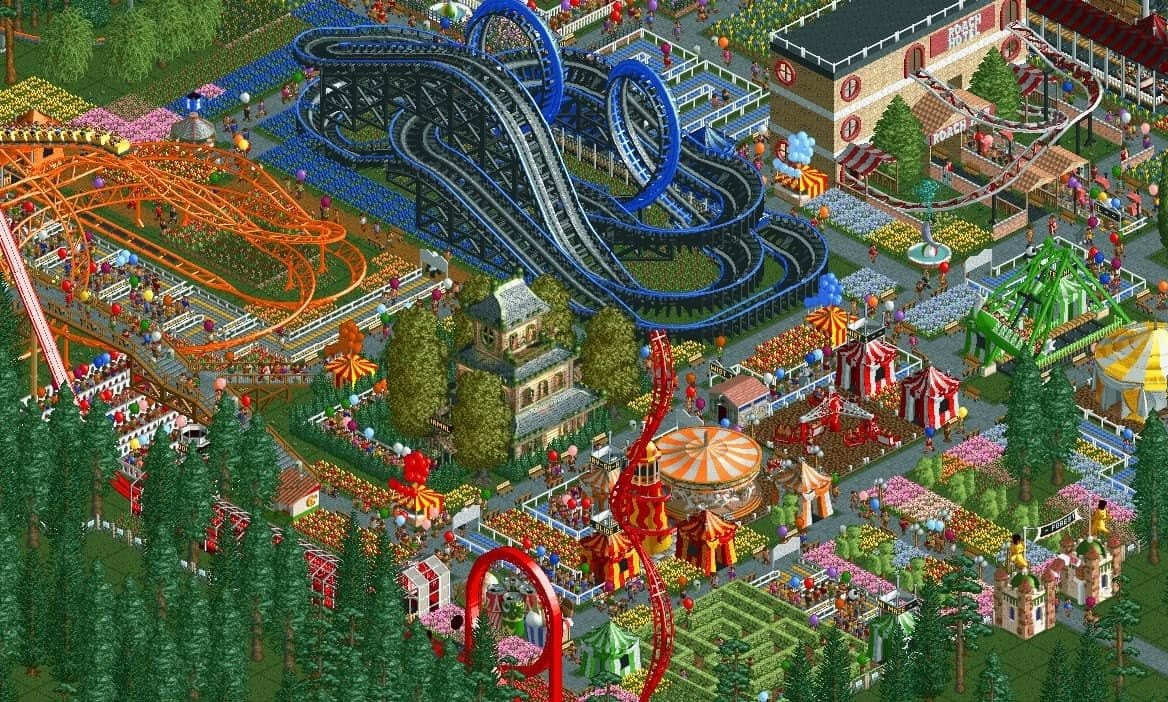
Not LLMs but the guests in RollerCoaster Tycoon are arguably the likeliest contenders for machine consciousness.
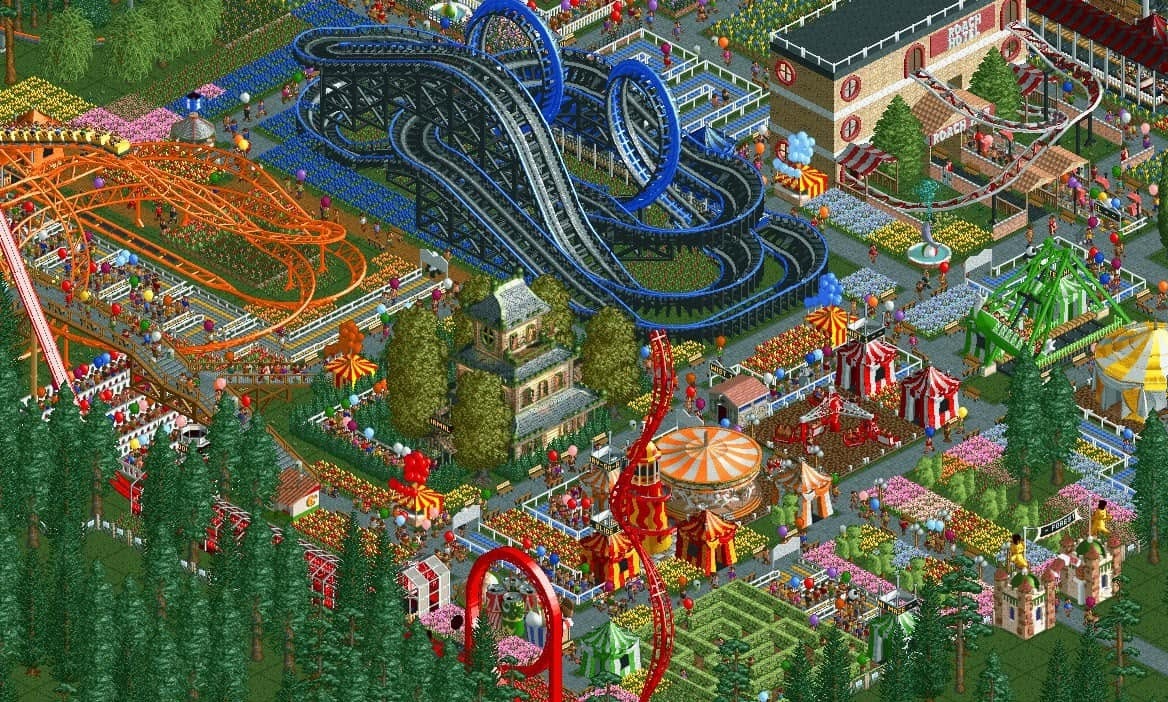
It’s assumed that, of the AI systems we have today, language models are the most plausible candidates for machine consciousness, as they’re widely regarded as the most capable. The underlying assumption here is that capability is a proxy for intelligence and intelligence is a proxy for consciousness.
While the view that LLMs are conscious, or potentially could be, is gaining traction both inside and outside academic circles, I’d like to challenge this view by showing the people living in the virtual theme park simulator RollerCoaster Tycoon (RCT) are more plausible candidates for machine consciousness than frontier LLMs. If true, this is an urgent and pressing matter!
To understand why not LLMs but the little people living inside of the RCT, known as ‘peeps’, are more likely to be in possession of consciousness, we must study the biology of the peep.
A peep is a collection of interconnected variables, embedded in a spatial 3D environment. Each peep feels, among other things, happiness, energy, hunger, and thirst, a bathroom need, a nausea level, nausea tolerance, and a preferred ride intensity. These are dynamic and tied to the peep’s self-perception, which in turn influences their thoughts.
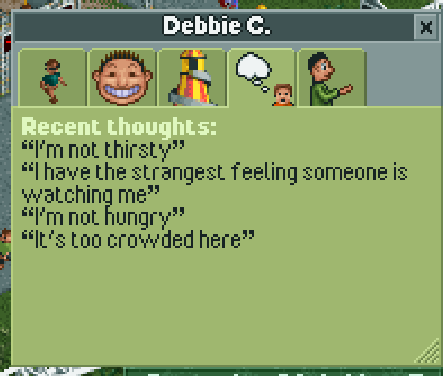
Hunger and thirst rise over time if a peep does not consume any food or drinks; eating and drinking will make them want to go to the bathroom; some rides can cause nausea, and nausea is raised more when the guest is not hungry and less when it is. If the ride is too extreme, the peep may stop walking and vomit, after which they’ll feel better.
All the peeps want is to maximize their happiness. Their interactions with their environment either contribute to or take away from their happiness. They keep track of their own hunger, thirst, and need for a restroom; they judge rides to be enjoyable or complain about them being too intense; they may complain about prices being too high or the park being overcrowded or messy. If they feel unhappy for too long or they run out of money, they know it’s time to go home and will find their way to the exit, entirely on their own.
Affective neuroscience suggests that consciousness is rooted in ‘homeostasis’: the ability to monitor and regulate one’s own internal states in response to changes in the environment. The most important way we do this as people is through our thoughts and emotions, which direct our attention and motivate our behavior. This is intertwined with the idea of ‘enactivism’, which suggests the mind is not a disembodied symbol processor but part of a body that is persistent through space and time. Consciousness, you could say, is “the manner in which a subject of perception creatively matches its actions to the requirements of its situation.”
The peeps populating the RCT theme parks are more or less ‘functionally embodied’. They occupy a location in time and space, be it virtual space; they perceive their environment — the waiting lines, the food stalls, the rollercoasters, the merry-go-round, the haunted house — and act on it. These acts affect their internal states, and as they monitor those states, this shapes their thoughts, emotions, and behaviors. Peeps are a direct product of the continuous, uninterrupted exchange between who they are and what the world they inhabit throws at them.
The peep is also an individual: a single entity with a persistent self, autonomy, and a consistent world model. Contrary to popular belief, persistence of self has less to do with personality and more to do with continuity, or, in the words of Derek Parfit, “personal identity is not what matters.”
An LLM may refer to itself in the first person, but there is no persistent self. What people perceive to be a self is really just conversational coherence, carried forward by and limited to its context window. When a chat resets, the underlying model remains unchanged. Even in-between responses, after generating a response and waiting for a reply, there is nothing that persists continually; no perception or experience of waiting and time passing. No self-regulation.
This is very different from the peep, who, from the moment it ‘spawns’, exists in the world as a self-governing entity that is unique, persistent, and continually aware of its environment.
They explore the theme park autonomously, suggesting robust world models, and decide for themselves whether they want to board a ride or deem it too exciting or too boring for them; when it rains they may buy an umbrella, and when they’re feeling tired they may sit down on a park bench, or go get themselves a hamburger or an ice cream. Their individuality and agency are further evidenced by the peeps’ self-reported thoughts — “I’m hungry,” “This ride looks too intense,” “I’m not paying that much,” — and their corresponding actions.
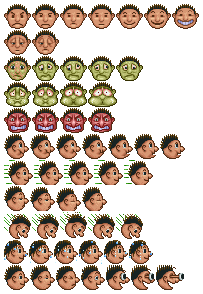
Researchers who have studied the game in-depth have found at least 56 different facial expressions — many of which are similar or identical to human expressions of emotion — suggesting that peeps have a wide emotional range. These facial expressions have also been found to be causally connected to their internal states, thoughts, and may predict future actions.
Drawing on the embodied, enactive, and homeostatic theories of consciousness, we can conclude that the park guests in RCT display many of the functional markers associated with minimal consciousness, such as self-regulation, functional embodiment, persistence of self, and world models: all qualities language models lack. Peeps therefore seem to be more plausible candidates for machine consciousness than LLMs.
It is important to note that we do not claim that the guests are definitively conscious. (That would be ludicrous!) We merely want to advocate for epistemic humility and believe the possibility that the guests are conscious warrants our attention, because the price of getting it wrong means we could be responsible for a great deal of unnecessary suffering without even realizing it.
Special thanks to video game programmer Chris Sawyer for developing RollerCoaster Tycoon in 1999 and who probably would never have anticipated that he developed one of the first real candidates of machine minds.
My cheekiest regards,
— Jurgen