









This briefing provides information on the quality of Europe’s bathing waters and is complemented by a map viewer to help people make informed decisions about where to bathe. It is based on data reported by EU Member States, Albania and Switzerland, for the 2022-2025 bathing seasons.
Key messages
In 2025, out of the EU’s 22,000 bathing water sites, 85% were classified as excellent and 96% met at least the minimum requirements of the Bathing Water Directive (BWD). However, 1.5% remained of poor quality, indicating that management measures were not sufficient or not effectively implemented.
Bathing water quality in Europe has improved markedly in recent decades, largely due to reduced discharges of untreated or partially treated urban wastewater.
Coastal bathing waters are generally of higher quality than rivers and lakes: 88% were rated as excellent in 2025 compared with 78% of inland bathing waters.
River bathing waters remain particularly challenging: only 47% of around 1,200 designated river bathing sites across Europe (EU-27, Albania and Switzerland) achieved excellent quality in 2025.
Bathers’ health is protected by monitoring faecal indicator bacteria (Escherichia coli and intestinal enterococci), identifying pollution risks through bathing water profiles and issuing timely information and warnings to the public. The BWD does not cover chemical pollutants such as nutrients, pharmaceuticals and pesticides, which are specifically addressed under the Water Framework Directive.
Most of Europe’s bathing waters are safe
From the Atlantic to the Mediterranean, most of Europe’s bathing waters are of excellent quality for swimming when assessed against the parameters required under the BWD: Escherichia coli (E. coli) and intestinal enterococci.
Bathing water quality in Europe has improved markedly in recent decades. This is largely due to a drastic reduction in organic pollutants and pathogens being discharged in untreated or partially treated urban wastewater. These improvements reflect the combined effects of:
- systematic monitoring and management introduced under the BWD;
- substantial investment in urban wastewater treatment plants;
- improvements in wastewater collection networks.
Thanks to these continued efforts, bathing is now also possible in many formerly heavily polluted urban waters and rivers. This illustrates how solid and well-implemented policies can deliver tangible environmental and public health benefits.
The BWD focuses on monitoring E. coli and intestinal enterococci, key indicators of faecal contamination that signal risks to human health due to the potential presence of pathogens. Toxic cyanobacterial blooms also often lead to advice against bathing, despite not being subject to the quantitative monitoring requirements of the BWD.
Chemicals are also present in water and are monitored and assessed under the Water Framework Directive (WFD) (EU, 2000). This covers a wide range of pollutants in groundwater and surface water. These chemical pollutants are not captured by bathing water monitoring, even if concentrations exceed legal thresholds designed to protect the environment.
Of the reported 22,289 bathing waters across Europe (EU-27, Albania and Switzerland) in 2025, 84% were rated excellent quality. This share reached 85% at the EU level. Over 95% of bathing waters in Cyprus, Greece, Bulgaria and Austria achieved excellent quality. Less than 70% of bathing waters in Belgium, Hungary, Poland, Estonia and Albania were classified as excellent (Figure 1).
Figure 1. Proportion of bathing waters of excellent quality in European countries in 2025
Background
This briefing is published in the context of the EU’s zero pollution action plan. It covers 22,010 officially designated bathing water sites across the 27 EU Member States (EU-27), 119 sites in Albania and 160 in Switzerland for the 2025 bathing season. It is based on analysis of country-reported data for the 2022-2025 bathing seasons.
While the BWD specifically aims to protect bathers against health risks that can occur while bathing, a much broader package of legislation protects the aquatic environment more generally. This includes the:
- Urban Waste Water Treatment Directive (EU, 1991a) to be repealed with effect from 1 August 2027);
- recast Urban Wastewater Treatment Directive (EU, 2024);
- Drinking Water Directive (EU, 2020);
- Nitrates Directive (EU, 1991b);
- Floods Directive (EU, 2007);
- WFD (EU, 2000);
- Marine Strategy Framework Directive (MSFD) (EU, 2008).
Together, this legislative framework aims to reduce point source and diffuse pollution, establish environmental quality standards for inland, transitional, coastal and marine waters, and protect human health from unsafe drinking water and floods.
The European Commission (EC) adopted a water resilience strategy in June 2025. This aims to restore the water cycle, enhance water efficiency, and secure clean and affordable water and sanitation. This strategy is now being implemented with over 50 actions focused on improved enforcement of existing legislation, strengthened governance and more integrated water management.
The legislative framework has been further reinforced by updated EU rules on water pollutants, adopted in May 2026. These introduce stricter standards and expand monitoring requirements, including for emerging contaminants such as PFAS, microplastics and pharmaceuticals (EU, 2026).
The BWD remains a key instrument for protecting public health in this context. A recent evaluation confirmed its effectiveness while highlighting the need to modernise monitoring and improve alignment with the EU’s broader zero‑pollution and water resilience objectives.
Box 1. Monitoring and assessment of bathing water quality in Europe
Exposure to polluted bathing water can affect human health. It can lead to gastrointestinal illnesses such as stomach upsets and diarrhoea, as well as ear, eye and upper respiratory tract infections. More serious infectious diseases may be contracted in rare cases.
EU Member States manage their bathing waters in accordance with the BWD. Before each bathing season, countries identify national bathing waters, define the length of the bathing season for each site and establish monitoring protocols for coastal, transitional and inland waters including rivers and lakes. Swimming and spa pools are exempt from BWD requirements.
Local and national authorities also take samples from bathing waters before and during the bathing season, analysing them for two types of bacteria (E. coli and intestinal enterococci) that are indicative of faecal contamination from sewage or manure. Bathing water quality is classified as ‘excellent’, ‘good’, ‘sufficient’ or ‘poor’ based on detected levels (Figure 2).
Figure 2. Bathing water quality ratings

Each Member State must collect and analyse at least four water samples per bathing water site each season. One is taken before the start of the bathing season and (at least) three during the season, with no more than one month between each sample.
The BWD classification scheme provides a meaningful long-term picture of bathing water quality. Classification is therefore based on a dataset covering the current bathing season and the three preceding seasons. The results presented in this briefing are based on data reported between 2022 and 2025.
Long-term classification is important for assessing progress achieved through the implementation of management measures under the BWD and other relevant legislation, particularly the Urban Waste Water Treatment Directive, the WFD and the Nitrates Directive.
BWD classification is based solely on concentrations of E. coli and intestinal enterococci. This reflects its specific objective of protecting human health. Its scope is therefore narrower than that of the WFD, which assesses the chemical and ecological status of surface water bodies across the EU. In other words, an excellent BWD classification does not necessarily indicate that the WFD objectives are met. Conversely, ‘good’ or ‘high’ status under the WFD does not necessarily imply ‘sufficient’, ‘good’ or ‘excellent’ bathing water quality.
Latest water quality data
Coastal bathing water quality by country
Monitoring was carried out at 14,861 coastal bathing waters across 22 Member States and Albania in 2025. Overall, 87.4% of these bathing waters were classified as excellent (Figure 3). Three countries accounted for over 60% of all reported coastal bathing waters: Italy (33%), France and Spain (14% each).
All coastal bathing waters in Cyprus, Lithuania and Slovenia achieved excellent quality in 2025. In contrast, fewer than 70% were classified as excellent in Poland, Belgium, Finland, Estonia and Albania (in descending order). In Belgium, Bulgaria, Latvia, Malta and Romania, all coastal bathing waters were classified as being of at least sufficient quality (Figure 3).
Figure 3. Coastal bathing water quality by country in 2025
Inland bathing water quality by country
In 2025, 7,428 bathing sites on rivers and lakes were monitored across 25 Member States, Albania and Switzerland. Overall, 78.3% of these bathing waters were classified as excellent (Figure 4). Almost 84% of all inland bathing sites are located on lakes.
In Austria, Finland, Denmark, Luxembourg and Germany, 90% or more of inland bathing waters were classified as excellent. By contrast, fewer than 60% were classified as excellent in Slovenia, Portugal, Poland, Croatia and Spain (in descending order, Figure 4).
Figure 4. Inland bathing water quality by country in 2025
Trends in coastal and inland bathing water quality in the EU
The share of EU bathing waters classified as excellent remained within a range of 81-89% for coastal waters and 60-82% for inland waters between 2010 and 2025 (Figure 5). Bathing water quality is generally higher in coastal waters than in inland waters. This partly reflects the characteristics of many inland bathing waters in central Europe, which are made up of relatively small lakes, ponds and low-flow rivers. These water bodies are more susceptible to short-term pollution events linked to heavy rainfall or drought, particularly during summer.
Figure 5. Coastal and inland bathing water quality in the EU-27, 2010-2025
The BWD required all bathing waters to achieve at least sufficient quality by 2015. Ten years on, 96% of all EU-27 bathing waters met this standard during the 2025 bathing season. This includes 97.4% of coastal waters and 92.5% of inland waters. All bathing waters in Bulgaria, Cyprus, Luxembourg, Malta and Romania were classified as at least sufficient quality.
Box 2. Two decades of progress in bathing water management in the EU-27
This year marks 20 years since the adoption of the revised BWD. While European rules on bathing water quality were first introduced in 1976, the revised directive represented a major shift. It moved from simple compliance checking against fixed standards to a more modern, science‑based approach focused on active water quality management, improved protection of public health and transparent information for bathers. The 2006 legislation introduced updated microbiological indicators, a harmonised classification system, bathing water profiles to identify pollution risks and strengthened public information requirements. One key outcome of the 2006 directive is the harmonised reporting of bathing water quality, which enabled EU‑wide assessments. At the time of its adoption, 20,369 bathing waters were officially identified, a figure that has grown to 22,010 in 2026. This reflects both EU enlargement and the expansion of the wider monitoring network — which includes European Environment Information and Observation Network (Eionet) countries — as well as the identification of new and emerging bathing sites within existing Member States.
Most of the expansion in monitored bathing waters occurred between the 1990s and the late 2000s. The number of identified bathing waters increased from 10,852 in 1991 to 21,813 in 2009, around the time when the 2006 directive was being fully implemented. This suggests the revised directive marked a transition towards a mature bathing water management system, rather than a period of rapid network expansion in Europe.
Bathing water quality has steadily improved since the introduction of the revised directive. In the period immediately following its adoption, 489 bathing waters (2.4%) were classified as poor and 16,432 (80.7%) as excellent. The number of poor‑quality bathing waters has declined to 324 (1.5%) in 2025, while 18,655 (84.8%) achieved excellent quality. This demonstrates the long‑term benefits of consistent monitoring and management under the BWD.
The most notable year-on-year change was in 2025 with an increase in the number of reported EU bathing water sites of 0.7% (or 162 sites), bringing the total to 22,010. Croatia accounted for most of these newly reported sites (103), with the remaining 59 distributed across 13 other countries.
A number of bathing waters listed in the inventory cannot yet be assigned a quality classification due to incomplete sampling. The quality of 611 EU bathing waters could not be assessed in 2025. Of these, 351 sites were newly identified or had undergone recent changes that may affect water quality. This means the required datasets are still being established. A further 173 sites were physically or legally inaccessible for sampling or bathing. For the remaining 87 unclassified bathing waters, the reasons for missing sampling data are unknown.
Some bathing waters are still of poor quality
The number of poor-quality bathing waters has stabilised in recent years. However, problems persist at sites that are frequently affected by short-term pollution. Such events often occur during heavy rainfall, when wastewater treatment systems lack sufficient capacity and untreated sewage is discharged.
In three EU countries, 3% or more of bathing waters were classified as poor in 2025:
- Estonia (three water bodies, representing 4.6% of all bathing waters in the country);
- the Netherlands (31 water bodies or 4.1%);
- France (112 water bodies or 3.3%).
Under the BWD, bathing waters classified as poor may remain temporarily compliant provided adequate management measures are implemented from the following bathing season onwards. These measures may include: a bathing prohibition or advice against bathing to prevent exposure to pollution; identification of the causes and reasons for failing to achieve sufficient quality status; and adequate measures to prevent, reduce or eliminate the causes of pollution. Member States must also alert the public through clear and simple warning signs and provide information on the causes of pollution and the measures taken through the bathing water profiles. In 2025, 88 of the 332 sites in the EU-27 classified as poor in 2024 improved to at least sufficient quality, while 203 remained of poor quality. The remaining 41 sites either lost their bathing water designation or could not be assessed in line with the BWD because measures had not been implemented or monitoring samples were insufficient.
Bathing waters classified as poor for at least five consecutive years must be subject to either a permanent bathing prohibition or to permanent advice against bathing, in accordance with the BWD. Fifty-seven bathing waters in the EU-27 were classified as poor for five consecutive years between 2020 and 2024: 34 in Italy, 16 in France, three in Spain, two in Sweden and one each in Estonia and Portugal. Of these, only four had improved to at least sufficient quality by 2025.
Of the remaining 53 bathing waters, 11 could not be assessed due to insufficient sample data, four were no longer identified as bathing waters and 38 were again classified as poor. A bathing prohibition or advice against bathing was reported to be in place for around two-thirds of these bathing waters.
Box 3. Did you know? Antimicrobial resistance and surface waters
Antimicrobial resistance (AMR) occurs when bacteria, viruses, fungi and parasites change over time and no longer respond to medicines. This makes infections harder to treat and increases the risk of disease, severe illness and death (WHO, 2025).
AMR is a growing global concern, driven by the misuse of antibiotics in human and animal health. Evidence is limited yet suggests the environment can act as a reservoir and potential transmission pathway for resistant bacteria. A cross-sectoral One Health approach is needed to tackle the issue, recognising that the health of humans, animals and the environment are all closely connected.
Bathing waters are not monitored for AMR under the BWD. Instead, this directive focuses on protecting bathers’ health by monitoring E. coli and intestinal enterococci as indicators of faecal pollution. The World Health Organization (WHO) Tricycle protocol on integrated global surveillance (WHO, 2021) uses monitoring of extended-spectrum beta-lactamase E. coli as an indicator of bacterial resistance to antibiotics in food-producing animals and meat. An approach similar to the Tricycle protocol has been tested for European surface waters (Schwermer et al., 2025), although this is not linked to BWD monitoring.
Where faecal contamination occurs, antibiotic-resistant bacteria and resistance genes can be introduced into surface waters. Sources include combined sewer overflows, livestock farming and runoff from animal waste. Urban wastewater treatment reduces the presence of resistance bacteria and resistance genes compared with raw sewage, though treatment plants can also act as a source. The significance of treatment plants should become clearer as monitoring data under the recast Urban Wastewater Treatment Directive become available (EU, 2024). Short‑term pollution events can temporarily increase exposure. Climate change may amplify these risks by increasing the frequency of extreme weather events and the mobilisation of contaminants (EEA, 2025).
Scientific evidence indicates that contact with resistant bacteria in recreational waters is possible, although knowledge of exposure pathways and health impacts is still developing and uncertainties remain (Nappier et al., 2020; Leonard et al., 2022).
Addressing AMR in the water environment requires coordinated action across human and animal health and environmental sectors. Measures that improve bathing water quality also protect bathers and may help limit the environmental transmission of AMR.
How is my health protected?
Bathing water classification provides a long-term assessment of the bacteriological quality of bathing waters. This information is specific to the BWD and is not required under other EU legislation. It reflects how effectively major pollution pressures are being managed, particularly urban wastewater discharges and animal manure. As such, it is narrower in scope than the assessments of good environmental status under the MSFD or that of ecological and chemical status required under the WFD. Water pollution is addressed more broadly under other EU legislation, notably the Urban Wastewater Treatment Directive, the Nitrates Directive and the WFD.
Measures established under the BWD are designed to protect bathers not only from long-term pollution, but also during short-lived pollution events that may pose acute health risks. The directive also helps protect bathers from other hazards, including harmful algal blooms and the presence of tarry residues, glass, plastic, rubber and other waste. To reduce exposure risks, Member States must provide timely public information, including bathing prohibitions, warnings and exceptional circumstances during the bathing season.
Box 4. What is a bathing water profile?
Bathing water management is based on a combination of monitoring data and bathing water profiles. Member States must establish, review and periodically update profiles for each bathing water or for groups of contiguous bathing waters.
A bathing water profile includes:
- a description of the geographical, hydrological and physical characteristics of the bathing water and other surface waters in the relevant catchment area;
- identification and assessment of pollution sources that may affect bathing water quality and pose risk to bathers’ health;
- an assessment of the potential for cyanobacteria, macroalgae and/or phytoplankton proliferation;
- the location of the monitoring point representative of the bathing water.
Bathing water profiles draw on relevant data from monitoring and assessments carried out under the WFD, thereby complementing the health-based assessment with a broader environmental perspective. Where a risk of short-term pollution is identified, bathing water profiles must also include:
- the predicted nature, frequency and duration of expected short-term pollution events;
- details of remaining pollution sources, management measures taken and the expected timeframe for their removal;
- measures applied during pollution events, including the responsible authorities and contact details.
Bathing water profiles must be reviewed and, where appropriate, updated in relation to bathing water quality and in accordance with the following scheme:
|
Classification |
Excellent |
Good |
Sufficient |
Poor |
|
Minimum frequency for review |
Only if the class worsens |
Every 4 years |
Every 3 years |
Every 2 years |
Bathing in European rivers
River bathing was a popular leisure activity across Europe for centuries. However, rapid urbanisation and pollution during the Industrial Revolution severely degraded water quality in many of Europe’s rivers. Combined with increasing competition for river use, this led to the widespread restriction or prohibition of river bathing in many European cities during the 20th century. In recent years, a grassroots movement has emerged across Europe advocating for the revival of river bathing. This movement is driven by growing demand for access to nature during increasingly hot summers and a renewed desire to reconnect cities with their rivers (Cao et al., 2026). The water quality of many urban rivers and water bodies has progressively recovered with the support of European water policies. River bathing is now possible once again in several European cities (Globevnik et al., 2022).
Rivers are therefore important and increasingly valued recreation sites across Europe. However, in many countries only a relatively small share of officially designated bathing waters is located on rivers (around 1,200 sites in the reported dataset, or 5.5% of the total bathing waters). This reflects the specific challenges associated with identifying, managing and maintaining such sites. The relatively low share of river bathing waters classified as excellent (47%) further illustrates the challenges of ensuring stable microbiological quality in flowing waters, particularly where rivers are exposed to multiple upstream pressures (Map 1).
Map 1. River bathing waters and quality classifications in the EU-27 and Switzerland in 2025
Maintaining bathing water quality in rivers is challenging
Compared with coastal waters and many lakes, rivers often exhibit greater short-term variability in water quality. This is because they integrate pressures from upstream catchments and respond quickly to changing weather and hydrological conditions. Key factors affecting bathing water quality in rivers include:
- hydrological variability, including rapid changes in flow conditions, dilution and re-suspension of sediments;
- short-term pollution events following heavy rainfall, including combined sewer overflows and stormwater runoff;
- upstream wastewater discharges and the performance of urban wastewater treatment plants, particularly during peak loads;
- diffuse pollution from agriculture (e.g. manure and nutrient runoff) and urban land use;
- legacy contamination and remobilisation of polluted sediments during high-flow events;
- faecal inputs from wildlife and livestock with access to riverbanks;
- climate-related extremes such as droughts and floods, which can increase the frequency and intensity of pollution events and reduce self-purification capacity during low-flow conditions.
Bathing in urban rivers and large river systems: a growing success story
The development of urban river bathing has required integrated planning approaches to address these challenges. River bathing areas increasingly need to be designed within multifunctional river corridors that balance recreational use with ecological conservation, flood-risk management and evolving relationships between rivers and cities (Cao et al., 2026).
Despite ongoing challenges, experience from several European cities demonstrates that high-quality river bathing waters are achievable when sustained investment in wastewater collection and treatment is combined with catchment-level measures and transparent public information. Beyond recreation, these initiatives can also improve urban environmental quality and public health. Budapest, Bern, Berlin, Paris, Utrecht, Vilnius and Riga have all introduced or expanded organised river bathing initiatives.
Some large rivers such as the Danube also host multiple bathing waters along extended stretches of their course. Coordinated bathing water management across administrative and national borders can provide significant benefits. For example, upstream measures such as improvements to wastewater infrastructure or nutrient management may improve downstream bathing water quality. However, pollution incidents can also propagate along the river corridor. Coordinated monitoring, information sharing and catchment-scale management are therefore particularly important in large river systems.
Box 5. Improved bathing water quality in the Spree River (Germany)
The Spree River originates from several springs in the Upper Lusatian Highlands of Saxony at an elevation of 400m and flows for about 400km before joining the (smaller and shorter) River Havel in Berlin. Due to its low gradient, the river has a relatively slow flow velocity.
The Spree’s water quality has improved significantly over recent decades. Nutrient concentrations have been almost halved since the early 1990s, reflecting sustained efforts in wastewater treatment and catchment management.
The Spree Lagune bathing site in Brandenburg illustrates past challenges and recent progress. Water transparency during the bathing season typically ranges from 1.1m to 2m, with an average of 1.5m. Water quality is monitored every four weeks by the local health authority in accordance with the Brandenburg bathing water ordinance.
Despite overall improvements in the river, the site experienced poor bathing water quality between 2017 and 2021 due to elevated levels of E. coli and intestinal enterococci. To address these issues, targeted engineering measures were implemented in 2022 in coordination with the regional water and soil association, including modifications to the inlet and outlet of a drainage pipe.
These measures improved local flow conditions and reduced pollution pressures at the site. As a result, bathing water quality at Spree Lagune improved to sufficient in 2024 and was further upgraded to good in the 2025 bathing season.
This example demonstrates how targeted infrastructure improvements, combined with coordinated water management actions, can effectively enhance riverine bathing water quality.
Figure 6. The Spree Lagune
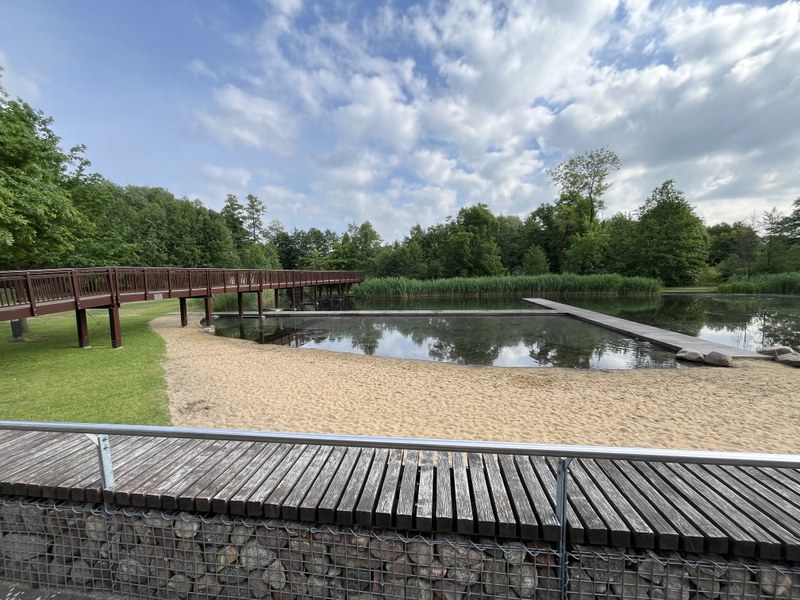
Health department of the Dahme-Spreewald district
Source: Bathing Water Profile Spree Lagune, 2026: Bathing water profile according to Article 6 of Directive 2006/7/EC and Section 6 of the Brandenburg Ordinance on the Quality and Management of Bathing Waters of 06.02.2008 (BdgBadV) for bathing sites “SpreeLagune Lübben/Spreewald, River Spree”, status: 15.02.2026 Lübben/Spreewald, River Spree”, status: 15.02.2026 Badestellen, 2026.
Outlook for river bathing
The revival of river bathing across Europe is driven by growing demand for accessible, nature-based recreation during increasingly hot summers (Cao et al., 2026). Looking ahead, river bathing water management will need to address both persistent and emerging pressures. Climate change is expected to increase the frequency of droughts and intense rainfall events, which can respectively reduce dilution capacity and raise the risk of short-term pollution. At the same time, pressures such as litter and plastic pollution, eutrophication and ongoing urbanisation of river corridors may affect both bathing water quality and the overall bathing experience. Demand for nearby bathing opportunities is likely to rise as heatwaves become more frequent and prolonged. Safe and well-managed river bathing waters are increasingly important for the quality of urban life, public health and water resilience.
Box 6. Find your local beach!
Countries maintain national or regional websites with detailed information on bathing water locations. These websites generally include a map search function and allow users to see monitoring results in real time and for previous seasons.
At the European level, bathing water information is available to the public through the EEA’s bathing water web pages. Users can check bathing water quality on an interactive map, make comparisons with previous years and explore more details via links to the corresponding national online bathing water profile.
EEA Briefing 15/2026:
Title: European bathing water quality in 2025
HTML: TH-01-26-031-EN-Q – ISBN: 978-92-9480-783-0 – ISSN: 2467-3196 – doi: 10.2800/5648846
The European Environment Agency (EEA) would like to thank its partners from the European Environment Information and Observation Network (EEA member countries and European Topic Centres) and the European Commission Directorate-General for Environment (DG-ENV) for their valuable contributions and input.
In particular, the EEA would like to acknowledge the contributions from the Thematic Center for Water Research, Studies and Project Development (TC Vode) / ETC Biodiversity and Ecosystems (ETC BE) for supporting the development of this briefing and its accompanying products, including the country fact sheets, the map viewer and the underlying database, along with data analysis.
Cao, Y., et al., 2026, ‘Urban river bathing in selected European cities: evolution, typology, management issues, and sustainability challenges’, Landscape and Urban Planning, 269 (105596) (https://doi.org/10.1016/j.landurbplan.2026.105596) accessed 19 May 2026.
EC, 2025, ‘Bathing water quality — review of EU rules’, European Commission (https://ec.europa.eu/info/law/better-regulation/have-your-say/initiatives/12658-Bathing-water-quality-review-of-EU-rules_en) accessed 6 June 2025.
EEA, 2025, ‘Antimicrobial resistance in surface waters — developing environmental monitoring for better risk management’, EEA Briefing 13/2025, European Environment Agency (https://www.eea.europa.eu/en/analysis/publications/antimicrobial-resistance-in-european-surface-waters-a-developing-area) accessed 4 May 2026.
EU, 1991a, Council Directive 91/271/EEC of 21 May 1991 concerning urban waste-water treatment (OJ L 135, 30.5.1991, pp. 40-52) (https://eur-lex.europa.eu/eli/dir/1991/271/oj) accessed 6 June 2025.
EU, 1991b, Council Directive 91/676/EEC of 12 December 1991 concerning the protection of waters against pollution caused by nitrates from agricultural sources (OJ L 375, 31.12.1991, pp. 1-8) (https://eur-lex.europa.eu/eli/dir/1991/676/oj) accessed 26 May 2025.
EU, 2000, Directive 2000/60/EC of the European Parliament and of the Council of 23 October 2000 establishing a framework for Community action in the field of water policy (OJ L 327, 22.12.2000, pp. 1-73) (https://eur-lex.europa.eu/eli/dir/2000/60/oj) accessed 26 May 2025.
EU, 2006, Directive 2006/7/EC of the European Parliament and of the Council of 15 February 2006 concerning the management of bathing water quality and repealing Directive 76/160/EEC (OJ L 64, 4.3.2006, pp. 37-51) (https://eur-lex.europa.eu/eli/dir/2006/7/oj) accessed 6 June 2025.
EU, 2007, Directive 2007/60/EC of the European Parliament and of the Council of 23 October 2007 on the assessment and management of flood risks (OJ L 288, 6.11.2007, pp. 27-34) (https://eur-lex.europa.eu/eli/dir/2007/60/oj) accessed 26 May 2025.
EU, 2008, Directive 2008/56/EC of the European Parliament and of the Council of 17 June 2008 establishing a framework for community action in the field of marine environmental policy (Marine Strategy Framework Directive) (OJ L 164, 25.6.2008, pp. 19-40) (https://eur-lex.europa.eu/eli/dir/2008/56/oj) accessed 26 May 2025.
EU, 2020, Directive (EU) 2020/2184 of the European Parliament and of the Council of 16 December 2020 on the quality of water intended for human consumption (recast) (OJ L 435, 23.12.2020, pp. 1-62) (https://eur-lex.europa.eu/eli/dir/2020/2184/oj) accessed 26 May 2025.
EU, 2024, Directive (EU) 2024/3019 of the European Parliament and of the Council of 27 November 2024 concerning urban wastewater treatment (recast) (OJ L, 2024/3019, 12.12.2024) (https://eur-lex.europa.eu/eli/dir/2024/3019/oj) accessed 26 May 2025.
EU, 2026, Directive (EU) 2026/805 of the European Parliament and of the Council of 30 March 2026 on the protection of groundwater against pollution and deterioration and on environmental quality standards in the field of water policy (recast) (OJ L, 2026/805, 20.4.2026) (http://data.europa.eu/eli/dir/2026/805/oj) accessed 02 June 2026.
Globevnik, L., et al., 2022, ‘Benefits of bathing waters in European cities’, The European Environment Information and Observation Network (https://www.eionet.europa.eu/etcs/etc-icm/products/etc-icm-reports/etc-icm-report-4-2022) accessed 19 May 2026.
Leonard A.F., et al., 2022, ‘Natural recreational waters and the risk that exposure to antibiotic resistant bacteria poses to human health’, Curr Opin Microbiol 65, pp. 40-46 (doi: 10.1016/j.mib.2021.10.004).
Nappier, S.P., et al., 2020, ‘Antibiotic Resistance in Recreational Waters: State of the Science’, Int. J. Environ. Res. Public Health 17 (21) (https://doi.org/10.3390/ijerph17218034).
Schwermer C.U., et al., 2025, Pilot study on antimicrobial resistance monitoring in European surface waters – Final report of the Eionet Working Group, European Topic Centre on Biodiversity and ecosystems (https://water.europa.eu/freshwater/europe-freshwater/amr/documentation).
WHO, 2021, WHO integrated global surveillance on ESBL-producing E. coli using a “One Health” approach: implementation and opportunities, World Health Organization (https://iris.who.int/server/api/core/bitstreams/f1332c05-92d6-4d89-b69c-2937e8ffa307/content).
WHO, 2025, ‘Antimicrobial resistance’, World Health Organization (https://www.who.int/health-topics/antimicrobial-resistance).
Bathing water quality by country and bathing water type in 2025
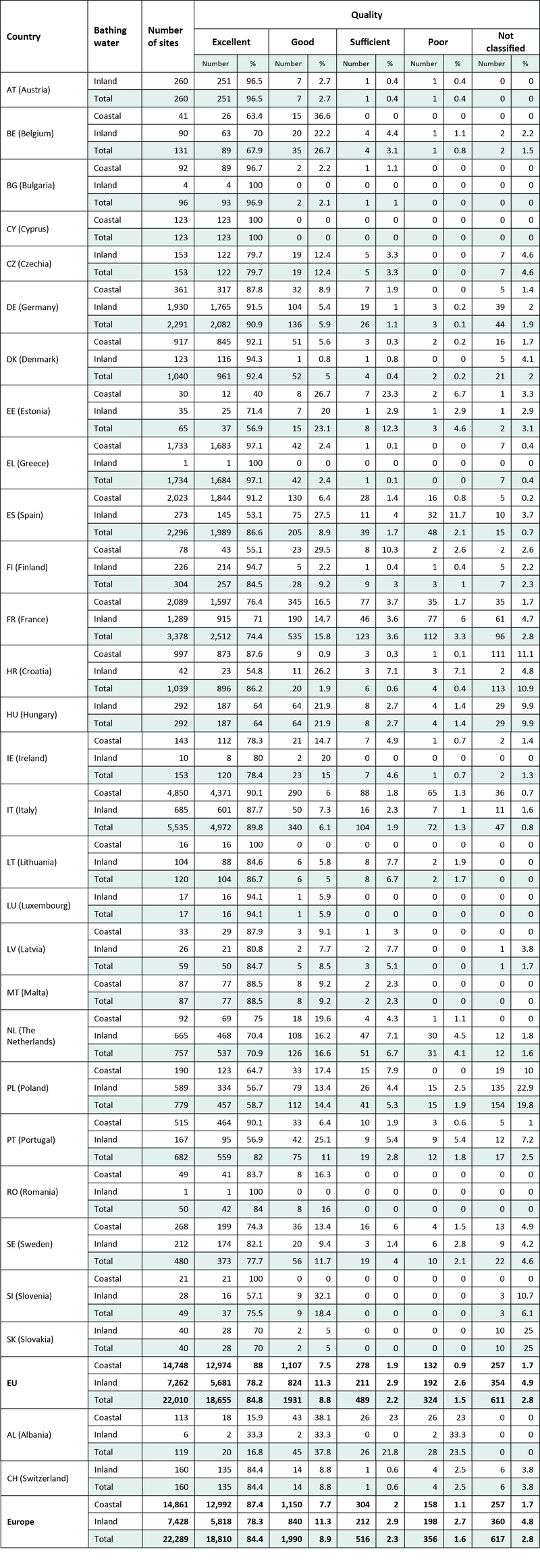
Source: WISE bathing water quality database (data from 2025 annual reports by EU Member States, Albania and Switzerland), EEA.