





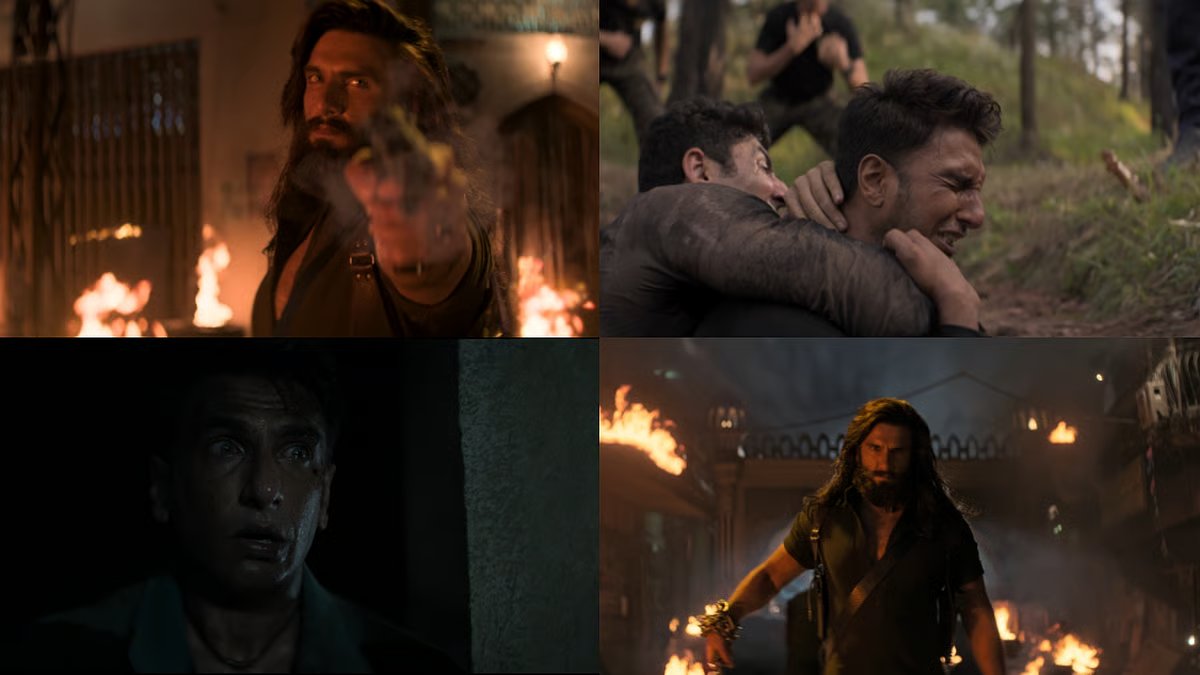
We see it repeatedly in Dhurandhar: The Revenge. When Rangi confronts his sister, tied like an animal in a pump house, or when he tries to return to a home that can never be his now. His face is a mask of tears, sometimes unshed and at other times flowing freely. When we see his training, where trainers teach him how to harness his breath and control his emotions, we understand its origins.
An action man who cries is in sync with the song that is the star of the sequel’s soundtrack. Nusrat Fateh Ali Khan’s classic lines, Dil pe zakhm khate hain, jaan se guzarte hain, jurm sirf itna hai, unko pyaar karte hain (We carry the wounds in our hearts, when we sacrifice our lives, our only crime is this, that we love them). Jaskirat/Hamza is many paradoxical things—a monster whose heart bleeds for his country, a wounded lion (babbar sher). But he is not a misogynist. When he leaves his sister in the hands of his friend, he tells her she has to complete her education before she marries, and then too, it is not mandatory that she attach herself to him. When confronted by his wife, he gets down on his knees, his head bowed and his hands offered in a plea for understanding. This is not a stalker who pulls his beloved from her class like a rag doll in Kabir Singh or orders his lover to lick his boots as a test of her loyalty in Animal.