







The summer of 1976 brought a record-breaking two-month heatwave, widespread drought, an insect plague and impromptu street floods to Merseyside

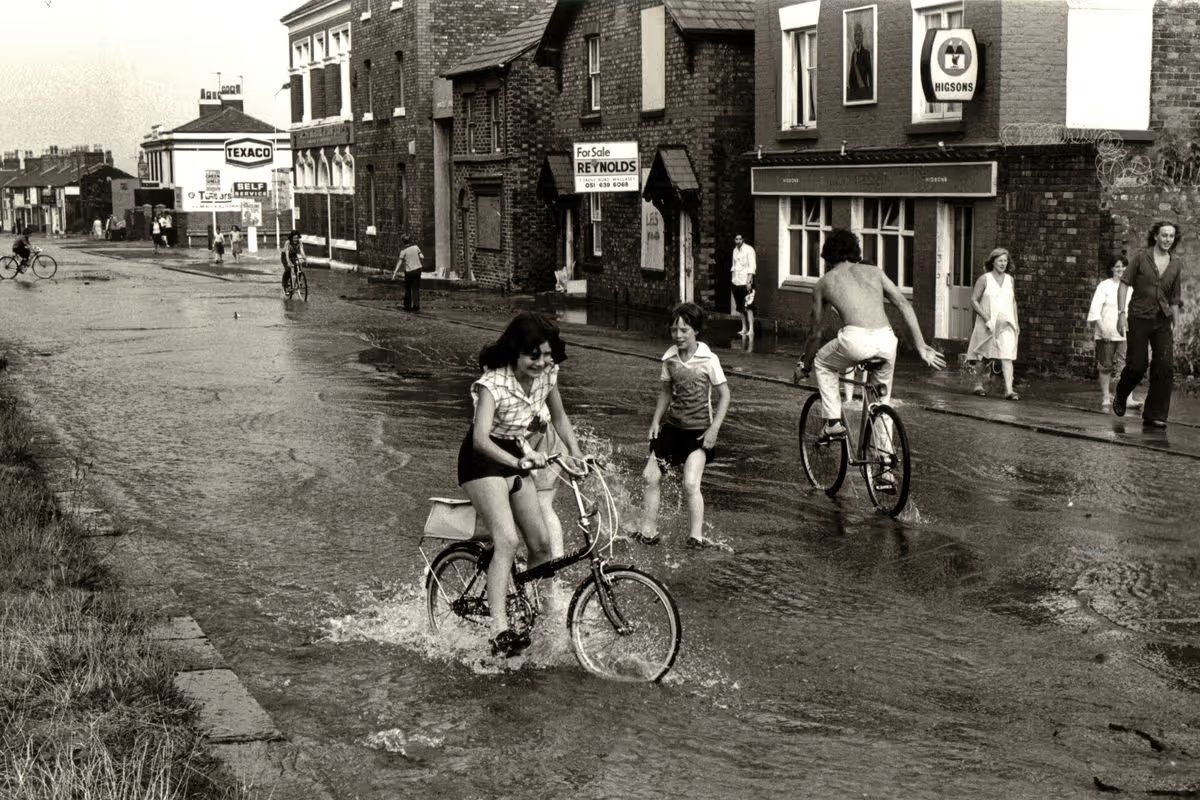
The hot summer of 1976 – and a flood in East Prescot Road outside the Lord Nelson pub provided one way of cooling down(Image: TMC)
Liverpool is expected to experience sweltering temperatures this week. As the Met Office issues extreme heat alerts for Wednesday and Thursday, people in Merseyside are bracing for a midweek scorcher, with forecasters predicting that temperatures could reach 37C.
As temperatures begin to rise, the recent heat has sparked memories for many who lived through one of the UK’s most legendary summer heatwaves. The summer of 1976 saw the hottest weather in the UK since records began and is one of the most remarkable and enduring in UK memory. Today, it is still used as a benchmark against which hot, dry summers are measured.
The iconic summer is remembered for its prolonged heat and lack of rainfall across much of the UK. From June 23 until August 27, a sustained hot spell saw temperatures regularly exceed 30°C across England, with temperatures reaching as high as 35.9C.
For two months, the country basked in record-breaking heat, leading to one of the longest droughts on record, with parts of the country going 45 days without rain.
The impacts were widespread. Water shortages led to hosepipe bans and the use of standpipes in some communities, including Liverpool. Fountains in Liverpool city centre were also switched off.
Crops and agriculture were severely affected, wildfires broke out and extreme heat increased heat-related illnesses and hospitalisations.
A smoking ban was introduced in Formby Pinewoods. National Trust wardens joined forces with colleagues at Ainsdale to provide round-the-clock fire watches to protect 2,000 acres of woodland. Householders living nearby were also briefed to be on the lookout for tell-tale wisps of smoke.
But some fires did break out in the countryside areas of Merseyside and North Wales. Ecologists warned that some locations may be irretrievably damaged, with grazing lands ruined and animals forced to move habitat.
In large areas of Merseyside, gardens were beginning to turn into dust bowls and lawns were scorched out of existence.
A major event severely affected by the 1976 heatwave was the Open Golf Championship, held at Royal Birkdale in Southport. Frequent grass fires around the course in the days before the start of the competition led officials to say the course was “a tinderbox”. A warning was issued to spectators about discarding smouldering matches and cigarettes due to the dry gorse.
Massive swarms of seven-spotted ladybirds also plagued the city for weeks. The population explosion was a result of the warm weather, causing aphids to flourish, the ladybirds’ food prey. But as scorching temperatures dried the plants on which the aphids fed, their population collapsed, causing ladybirds to swarm to try and find food elsewhere.
Children across Merseyside found relief from the heat in the city streets when a burst water main in Prescot caused impromptu floods.
In an attempt to tackle the widespread issues, the government introduced emergency measures, including water restrictions, and appointed a Minister for Drought, Denis Howell.
Environment Agency Director of Water and Chair of the National Drought Group, Helen Wakeham, said: “The 1976 drought saw widespread major impacts to the public water supply, dying wildlife, crop failures, and restrictions on businesses.
“It was a defining moment and changed both our attitude to water scarcity and the way the water industry manages our finite resources.
“While 1976 is remembered as extreme, our changing climate means that drought in this country is a new normal.
“We must continue to adapt and be wise with our water use. Simple steps like using a water butt, taking shorter showers, and turning off taps when brushing your teeth can make a real difference to the demands on our local rivers and the nature that depend on them.”
What set 1976 apart was not just the intensity of the heat, but its persistence. A “blocking” high-pressure pattern trapped hot, dry conditions over the UK for weeks, while prolonged dry weather since May 1975 had already depleted soil moisture and water resources, intensifying the event.
Met Office Senior Climate Information Scientist, Mike Kendon, said: “The summer of 1976 is still talked about because of how unusual it was in both its intensity and duration.
“Fifty years on, it provides an important historical context for understanding how the UK’s climate can behave and how extreme weather can affect people, infrastructure and the environment.
“In recent years, the absolute extremes of temperatures seen in 1976 have been exceeded multiple times.
“For example, in today’s warmer climate, temperatures of 36°C have been recorded on multiple occasions, including six days in the past decade, and the UK’s highest record temperature now stands at 40.3°C, recorded at Coningsby in 2022.
“But the reason 1976 stands out is because of the persistence of the warm, dry, sunny conditions.
“1976 is still the UK’s hottest summer on record for average maximum temperatures, the UK’s sunniest summer on record and an exceptionally severe event in terms of lack of rain for a prolonged period extending through the preceding winter and back to summer 1975.”
Do you have memories of the 1976 heatwave? Let us know in the comments below. Got a story? Get in touch rebecca.mcgrath@reachplc.com