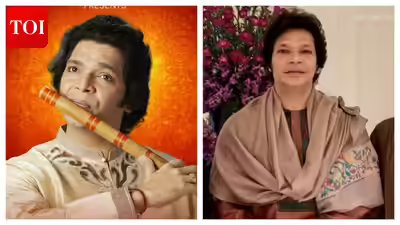
As a Grammy-winning flautist who has successfully navigated both the classical and film music worlds, Rakesh Chaurasia believes young musicians should embrace diverse experiences without losing sight of their roots. While acknowledging that technology has transformed the music industry, the artist, who was awarded the Sangeet Natak Academy Aard on June 10, remains convinced that the emotional power of live instruments can never be replaced.“EXPERIENCE IS A GREAT TEACHER” For young flautists dreaming of a career in Bollywood, Chaurasia’s advice is clear: explore widely, but stay grounded in classical music. “In my opinion, experience is a great teacher,” he says. “I would advise every artiste to expand his musical horizon and imbibe as many lessons as possible.” At the same time, he believes that a strong classical foundation is essential for any serious musician. “The focus on classical music is non-negotiable,” he says. For aspiring artistes, that means committing to regular riyaz, listening to the music of legendary masters and attending live concerts while remaining aware of changing trends in the industry. For Chaurasia, versatility and tradition are not opposing forces. Rather, one strengthens the other.“LIVE MUSICIANS WILL ALWAYS HAVE A PLACE” The rise of digital technology has dramatically altered the way film music is created. Songs today are often shaped by software, programming and production tools in ways that were unimaginable during the era of his guru and uncle, Pandit Hariprasad Chaurasia. Chaurasia acknowledges that reality. “Technology has transformed film music, and digital tools are now an essential part of the creative process,” he says. He admits there may be fewer opportunities for live instrumentalists today than there were in previous decades. Yet he remains optimistic about the future of musicians who bring human expression to their craft. “While there may be fewer opportunities for live instrumentalists today than in the era of my Guru Pandit Hariprasad Chaurasia, the emotional depth and nuance of a live performance remain irreplaceable.” For Chaurasia, technology and musicianship need not be rivals. Trends may evolve and production methods may change, but authenticity continues to matter. “Whenever authenticity and expression are needed, live musicians will always have a place,” he says. It is a belief rooted in decades of experience—one that reflects both his faith in tradition and his willingness to embrace the future. Even in an age of loops, algorithms and digital consumption, Chaurasia remains convinced that the soul of music ultimately lies in the human touch.