








This anallysis was prepared for commonspace.eu by Ahmad Alili, Director of the Caucasus Policy Analysis Centre (CPAC) in Baku, Azerbaijan,
For much of 2025, analysts discussing the future of Armenia-Azerbaijan relations, largely focused on the substance of the Armenia-Azerbaijan negotiations: constitutional reform in Armenia, border delimitation, transport connectivity, and the eventual peace agreement. Yet an equally important question received far less attention – the international environment that made these negotiations politically possible.
Peace processes rarely develop in geopolitical isolation. They require not only willing local actors but also an external strategic environment that allows them to advance. Some call it ‘permissive geopolitics’. The Armenia-Azerbaijan peace process benefited from precisely such an environment. That environment, however, appears to be changing.
The Trump Window
One of the paradoxes of President Trump’s return to power was that a politician widely viewed as a disruptor of the Western alliance system unintentionally created favourable geopolitical conditions for regional peace diplomacy in the South Caucasus.
Trump’s early foreign policy placed significant emphasis on reducing confrontation with Moscow while simultaneously seeking a broader strategic accommodation with Russia. Although this approach generated considerable anxiety among many European allies, it also temporarily reduced Russian incentives to challenge every American diplomatic initiative across the post-Soviet space.
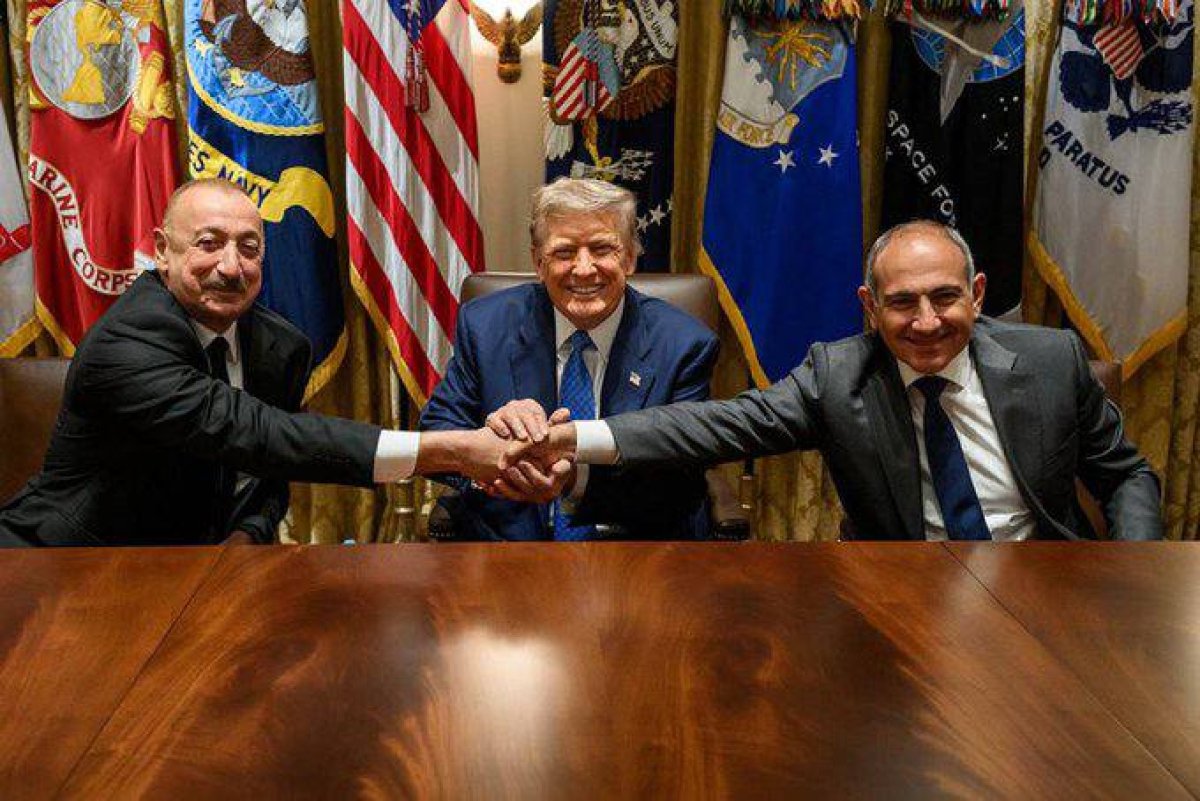
The Washington initiative that produced the Armenia-Azerbaijan peace framework emerged during precisely this geopolitical window – the Trump Window. Russia, while certainly not enthusiastic about an expanding American diplomatic role in what it traditionally considers its neighbourhood, had relatively little interest in turning the South Caucasus into another arena of confrontation with Washington while broader US-Russia relations remained comparatively manageable
This helps explain why initiatives that under different circumstances might have generated immediate geopolitical resistance instead advanced with surprisingly limited external obstruction. Even the proposed transport initiative known as TRIPP (Trump Route for International Peace and Prosperity) – whose very name symbolised American political ownership of the process – failed to trigger the level of Russian opposition that many observers would previously have expected.
Now, we are witnessing that the geopolitical context is evolving, and this geopolitical window is beginning to close.
Recently, Washington has gradually moved towards stronger political and military support for Ukraine and many elements of the earlier US-Russia understanding have weakened. As President Macron of France said “as for the first time the US has signed a joint statement with us that clearly states that it is no longer a neutral mediator but stands alongside us in supporting Ukraine’s territorial sovereignty and territorial integrity, as well as providing military and energy assistance and imposing sanctions against Russia”. Russian commentators increasingly argue that “the spirit of Anchorage is evaporating (or dead)” – a phrase that has become shorthand for the diplomatic atmosphere surrounding the Alaska meeting between the US and Russian leaders. As Washington gradually returns to a strategic approach more closely resembling its pre-2025 policy towards Ukraine, Moscow’s rhetoric towards the United States has become noticeably more confrontational.
This broader deterioration inevitably affects the South Caucasus.
Recent public criticism by Russian officials of the TRIPP initiative – particularly by Russian Deputy Foreign Minister Mikhail Galuzin and earlier Deputy Prime Minister Alexey Overchuk – illustrates this changing atmosphere. What was previously tolerated now increasingly appears to be viewed as an unacceptable expansion of American geopolitical influence.
In other words, the regional peace process may now face a very different external environment from the one that existed between late 2024 and much of 2025. The peace in the South Caucasus is entering a more difficult phase.
Ironically, this geopolitical deterioration comes precisely when the bilateral relationship between Armenia and Azerbaijan has arguably become more stable than at any point in decades. Both governments have invested considerable political capital in maintaining direct negotiations. Despite inevitable disagreements, Baku and Yerevan increasingly appear to recognise that the costs of returning to confrontation significantly exceed the political difficulties of continuing negotiations.
Nevertheless, the durability of any peace agreement depends not only upon local political will but also upon whether major external actors perceive the emerging regional order as compatible with their strategic interests.
This challenge becomes particularly significant following Armenia’s parliamentary elections. Even if the governing party remains in office, a result below an absolute majority (49,81%) would inevitably complicate domestic political consensus on implementing long-term peace arrangements.
The second major external uncertainty lies to the south.
Iranian decision-making has become increasingly complex following recent regional conflicts. One important question is whether Tehran still possesses a sufficiently unified foreign policy apparatus to guarantee consistent implementation of its own strategic preferences.
There are growing indications that different power centres inside Iran may not always share identical priorities. While the civilian leadership may continue to favour avoiding another regional confrontation and preserving existing diplomatic understandings, various elements within the Islamic Revolutionary Guard Corps (IRGC) appear to possess increasing operational autonomy in certain regional theatres.
If such institutional fragmentation continues, an important strategic question emerges. Could certain factions conclude that creating difficulties for American-sponsored projects in the South Caucasus would strengthen their broader regional position? If elements within Iran increasingly define competition with Washington as their primary strategic objective, American-backed transport corridors and diplomatic initiatives could become attractive targets for indirect pressure. A second Hormuz Strait, which could be disrupted.
The Armenia-Azerbaijan peace process is therefore entering a fundamentally different phase.
The principal challenge is no longer simply negotiating an agreement. The greater challenge is ensuring that the agreement remains resilient as the geopolitical conditions that originally enabled it gradually disappear.
The period between late 2024 and 2025 may ultimately be remembered as an unusually favourable geopolitical window – a rare moment during which the interests of regional actors and major powers temporarily aligned sufficiently to make diplomatic progress possible.
That window – the Trump window – now appears considerably narrower.
The future of peace in the South Caucasus will increasingly depend on whether Armenia and Azerbaijan have developed enough political ownership of the process to sustain it even as external geopolitical competition intensifies once again.
source: Ahmad Alili, Director of the Caucasus Policy Analysis Centre (CPAC) in Baku, Azerbaijan, He contributed this analysis to commonspace.eu