







Live updates: Follow the latest news on US-Iran war
In India, a liquefied petroleum gas (LPG) cylinder is typically delivered to households in metro cities the same day or the next after booking, and within three to five days in smaller towns. Now, many cities and towns across the country are reporting significant delays, with delivery times stretching from seven days to as long as a two weeks.
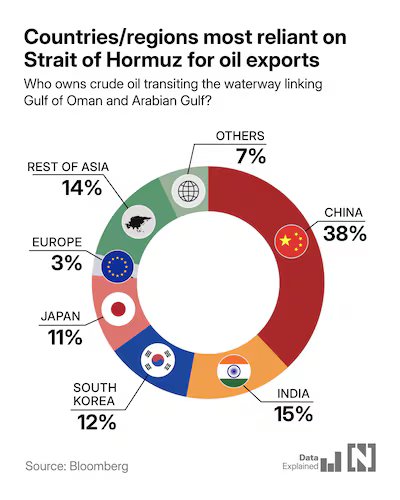
People are waiting in queues for days in some regions, in the third week of disruption to the gas supplies due to a shortage primarily caused by the Iran war, which has effectively closed the Strait of Hormuz. The maritime corridor is critical because approximately 90 per cent of India’s LPG imports – accounting for about 60 per cent of total domestic consumption – uses this route.
LPG is a by-product of crude oil refining and also natural gas processing, comprising mainly propane and butane. India sources most of its LPG from Qatar, the UAE and Saudi Arabia.
India’s exposure is especially high because LPG is a mass household fuel that is import-dependent. And the LPG supply crisis in India is playing out on two different fronts: domestic households and commercial establishments. The hospitality sector has been hit the hardest, leaving hotels, restaurants and caterers scrambling for alternatives.

While the government prioritises domestic supply, consumers are reportedly experiencing longer delivery timelines and a mandatory 25-day minimum gap between bookings in urban areas and 45 days in rural.
However, to protect households, the government has reportedly slashed commercial LPG allocations by up to 80 per cent – a move which has resulted in forcing thousands of restaurants and hotels across metro Indian cities such as Delhi, Mumbai, Bengaluru and Kochi to either shut down or switch to firewood and coal.
Providing further relief to commercial establishments facing shortages of LPG cylinders, starting Monday, the Ministry of Petroleum and Natural Gas (MoPNG) has approved an additional allocation equivalent to 20 per cent of the states’ average monthly commercial LPG requirement. The move will bring states up to half of their monthly commercial cooking gas needs through the combined allocations under this and the two previous orders, according to the ministry.
Measures in place to tackle the shortage
The government has started taking measures to contain the consequences. The Essential Commodities Act has been invoked to conduct thousands of raids against hoarding and black marketing, leading to thousands of cylinder seizures. The petroleum ministry said recently it has conducted more than 12,000 raids and seized more than 15,000 LPG cylinders in a crackdown on hoarding and black marketing.
Delays in supply have created opportunities for black-marketing of domestic cylinders. Residents in some Indian localities say a domestic LPG refill cylinder, which normally costs around Rs900 ($9.57) to Rs1,000, is being sold illegally for Rs1,800 to Rs2,500.
The petroleum ministry has also urged consumers to avoid panic bookings, use digital booking platforms and avoid visiting LPG distributors, as home delivery continues.
Indians are also being encouraged to use alternate fuels such as piped natural gas (PNG), and electric or induction cooktops and to conserve energy.
PNG, which comprises mainly methane, offers a relatively stable alternative in urban areas, reducing the need for cylinder logistics. While it is the lightest hydrocarbon used in cooking, it does not address long-term sustainability goals.
The LPG shortage has also led to a sudden surge in demand for induction cooktops and electric kettles in the country, with many models already going out of stock on e-commerce platforms. Induction stove sales jumped 30-fold on Amazon, while another electronics marketplace, Flipkart, reported a four times increase in demand. Quick-commerce platforms, including Blinkit, Zepto and Swiggy Instamart, sold out in major metros, and retailers in Chennai reported a 300 per cent jump in sales of induction cooktops and electric kettles.
Meanwhile, to manage LPG cylinder demand, a minimum booking gap of 25 days in urban areas and 45 days in rural areas has been enforced to prevent panic buying.
Refineries have also been directed to maximise LPG output by diverting other hydrocarbon streams, boosting domestic production reportedly by 25 per cent to 40 per cent.
Among all major importers through the strait, India is most acutely exposed. It holds 25 days of crude reserves and a further 25 days of petroleum products – the smallest cushion of any big buyer. India’s energy crisis prompted the US Treasury to issue a 30-day sanctions waiver allowing Indian refiners to purchase Russian oil rerouted from stranded vessels. Qatar accounted for between 41 per cent and 46 per cent of its LNG imports before the shutdown, according to shipping analytics firm Kpler, creating a supply deficit equal to about 28 per cent of domestic gas consumption.
A cascade effect
The energy crisis has triggered a cascade of force majeure declarations. Petronet LNG, India’s largest LNG importer, notified supplier QatarEnergy and domestic buyers that contracted cargoes cannot be fulfilled. India has also begun restricting gas to industrial users to protect household and power sector supply. Mangalore Refinery and Petrochemicals has suspended fuel exports to preserve domestic supply.
Indian oil refiner Bharat Petroleum said recently that due to the current geopolitical disruptions affecting global fuel supply, steps have been taken to enhance LPG production and prioritise its availability for domestic consumers and essential non-domestic sectors such as hospitals and educational institutions.
“Requests from other non-domestic sectors will be reviewed by a committee of executive directors from oil marketing companies and prioritised based on merit, necessity, and product availability,” the company said in an Instagram post.