





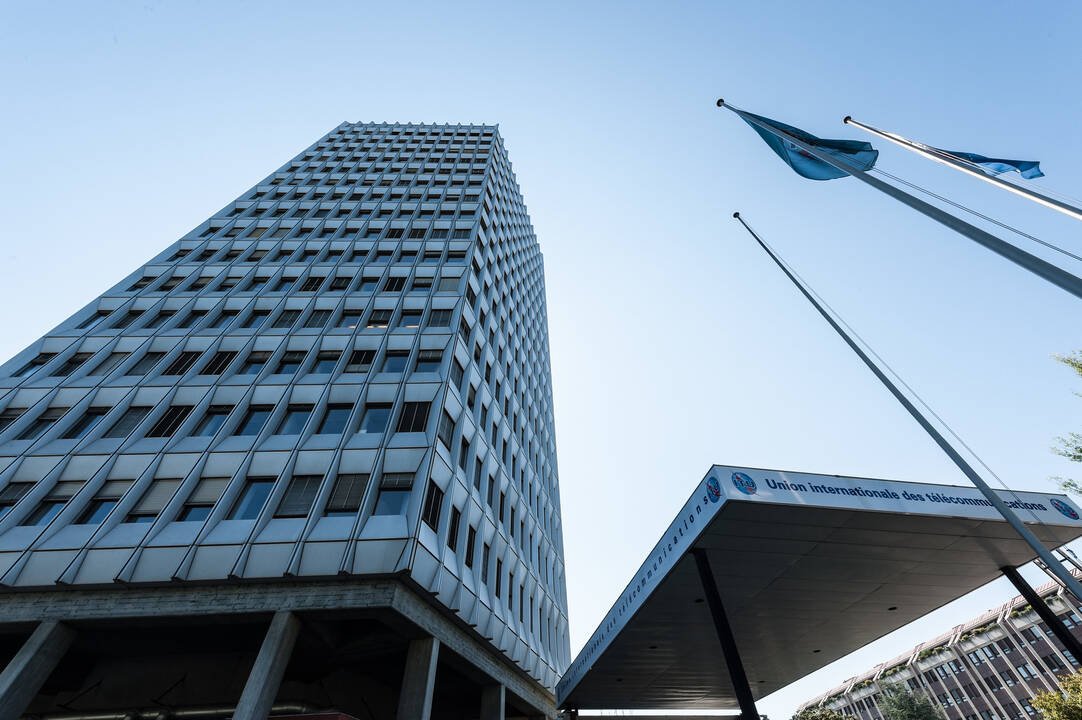
Two European candidates are running to lead the UN’s spectrum body, and neither will step aside. If they don’t resolve their standoff before the November ITU plenipotentiary in Doha, they risk handing the post to India.
Candidates from France and Germany are jostling for the top position overseeing the world’s spectrum allocation at the United Nations’ technology agency, in a move that risks splitting the vote and weakening Europe’s claim against India’s frontrunner.
The Radiocommunication Bureau governs who gets to use what slice of the electromagnetic spectrum, from mobile networks and satellite constellations to frequencies for science. Its outgoing director, Mario Maniewicz, is completing his second and final mandate after steering the bureau through the dramatic surge in satellite mega constellations, the scramble for spectrum ahead of 6G, and rising geopolitical competition over the airwaves.
Read also: [Satellite overload: astronomers look to the UN to preserve night sky](Satellite overload: astronomers look to UN to preserve the night sky)
Three names are on the ballot taking place in Doha in November, with the winner taking office in January 2027: Eric Fournier of France’s national spectrum agency ANFR, Alexander Kühn of Germany’s Federal Network Agency, and Revathi Mannepalli of India.
The bureau role is one of the five top seats at the International Télécommunication Union (ITU) that will be up for renewal later this year. However, it is the only one anyone is actually fighting for. The heads of the development and standardisation bureaus, from Zimbabwe and Japan respectively, will walk back into their offices unchallenged. So will secretary general Doreen Bogdan-Martin, the American who four years ago became the first woman to lead the 160-year-old agency. So far, only a Brazilian candidate has stepped forward for the deputy secretary-general post.
The three candidates are expected to work the room at two key meetings in Geneva this month, starting with this week’s Radio Regulation board, a key quarterly gathering of spectrum experts that irons out disputes between countries. This time, the board will have to handle a US-Iran clash over Starlink services in Iranian territory, among other complaints.
“Having two candidates from Europe weakens our position and reduces the chances of electing a European”, Fournier told Geneva Solutions. Unlike the other two candidates, he will not be at the board reunion but will be in Geneva for an advisory group meeting later this month. Asked whether one candidate might step down, the French candidate, with nearly 30 years of ITU experience spanning terrestrial, satellite, and radio navigation, says: “There are still some discussions”, implying some diplomatic manoeuvering is underway.
Meanwhile, Kühn, who has attended every World Radiocommunication Conference since 2007 and led the German delegation at WRC-23 in Dubai, is equally determined and told Geneva Solutions that he plans to bring his experience, knowledge, and engagement “into the ITU at the highest level,”. Asked about the mood of the electoral race, he was measured: “I know Eric very well and we have a longstanding working relationship, and I look forward to a good competition with him.”
An opportunity for India
How did Europe end up on course to squander its own best chance to secure this key position? European countries indicated their preference for Fournier at a regional meeting in Budapest in February. But the narrow victory margin and non-binding vote persuaded Kühn that he still had a shot at becoming the first German to hold such a position. And now there are no signs he intends to stand down – a point underscored by the presence in Geneva last month of Germany’s state secretary, Dr. Markus Richter, from the Federal Ministry of Digital and Government Modernisation, who came to support his candidacy.
Observers warned that the continuing standoff could strengthen India’s hand. A solid candidate, Mannepalli is a sitting member of the Radio Regulation Board with nearly two decades of ITU radio conference experience representing India. On her personal website, she wrote that she “has helped strengthen developing countries’s presence in global decision-making on spectrum and orbital resources”. Mannepalli and the Indian Mission in Geneva were not available to respond before publication of Geneva Solutions’ article.
High stakes
The new director will take the helm as satellite filings to the ITU reach record levels, bringing with them a mounting pile of coordination disputes and interference complaints. The winning candidate will also need to finalise the groundwork for the next Radio Conference in Shanghai in 2027, ITU’s quadrennial conference where spectrum rules are updated.
Read also: US digs heels in over China’s bid to host major ITU conference
Having a European leading the radio sector will not influence how space technology is developed – that is driven by the industry – nor would it counterbalance American and Chinese dominance. But it could have an effect on how the rules of the game are enforced. “What is important for Europe is to have rules that apply to everyone, regardless of whether you operate 10,000 satellites, 1,000 satellites, or just a few” said Fournier, “and that rules are decided by all member states collectively based on technical analysis”.
Both Fournier and Kühn told Geneva Solutions they want to be chosen on their merits and not their geographical origin. On the concentration of power in space, for example, both men are cautious about regulatory intervention, but for different reasons. Fournier points to the sheer scale of the challenge.
“You have one constellation with 10,000 satellites, two thirds of all satellites in orbit, which is somewhat disruptive in terms of the resilience of regulations and ensuring correct enforcement,” he said, referring to Starlink. “But from the radio sector’s perspective, what is important is having radio regulations that enable everyone to enter the market if they have the economic means, with a proper coordination process ensuring each constellation can function.”
Read also: Inside the UN tech agency role in Musk’s space conquest
Kühn echoes the reluctance to act as an antitrust authority, but frames his priorities around lowering barriers to entry. “It is important to keep the door open for new ideas and newcomers,” he says “That requires adapting rules to make access simpler, easier, and less costly.”
Asked whether the European Commission would back one candidate, a spokesperson said it was for individual member states to decide.