








The Geneva Environment Network’s weekly newsletter includes the latest information on the global environmental agenda, main events, job vacancies, as well as other useful resources and updates. The Geneva Environment Network is not responsible for the content of any linked site or any link contained in a linked site. Stay tuned and follow us on X (Twitter), Facebook, LinkedIn, Instagram, Bluesky, Youtube, and WhatsApp, or visit our website regularly for additional updates.
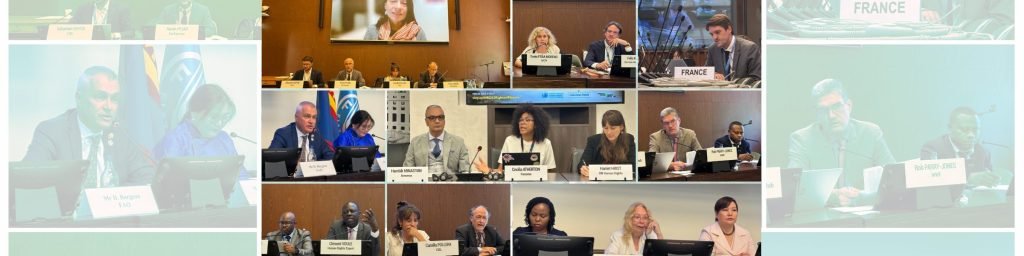
Image of the week | A non-exhaustive snapshot of events and key moments from last week at Palais des Nations, convened on the margins of the Human Rights Council and in celebration of the International Year of Rangelands and Pastoralists, highlighting contributions to advancing the global environmental agenda. © UNEP/GEN
Geneva Digital Week 2006 | AI’s Environmental Footprint in Focus
This week, the Geneva Digital Week 2026 brings together more than 12,000 participants – including Heads of States, Ministers, Heads of Agencies – to engage in critical discussions on our shared digital future. Launching with the first UN-mandated Global Dialogue on AI Governance and followed by the WSIS Forum 2026 and the AI for Good Global Summit, the week convenes governments, international organizations, the private sector, academia and civil society to address the opportunities and challenges of the digital age. As artificial intelligence (AI) continues to reshape economies and societies, many countries are still adapting to its rapidly evolving impacts. At the same time, building an inclusive and sustainable digital future requires progress across the broader digital ecosystem — from connectivity and digital skills to governance, trust, innovation and shared prosperity. Together, these landmark events provide a unique platform for advancing international cooperation and ensuring that digital technologies benefit everyone, everywhere. → Learn more in ITU’s dedicated article
Further information on the conferences and their environmental-related activities:
- Global Dialogue on AI Governance | 6 – 7 July 2026 | Palexpo
Committed to in the Global Digital Compact and established by the UN General Assembly, the AI Dialogue is the UN platform where governments and stakeholders will convene to discuss international cooperation, share best practices and lessons learned, and facilitate open, transparent and inclusive discussions on artificial intelligence governance.
For the first time, every country has a seat at the table of AI to engage in the meaningful conversation the world needs. The President of the General Assembly has appointed H.E. Ms. Egriselda López of El Salvador and H.E. Mr. Rein Tammsaar of Estonia as Co-Chairs.
The Dialogue will address various thematic clusters, including respecting, protecting and promoting human rights: transparency, accountability and human oversight.
During the Dialogue, the findings of the first report of the Independent International Scientific Panel on Artificial Intelligence will be presented. Launched on 1 July 2026, the Preliminary Report of the Independent International Scientific Panel on AI: Evidence-based assessment of opportunities, risks and impacts of AI is a first-of-its-kind independent scientific assessment of the capabilities, emerging opportunities and risks associated with artificial intelligence. As the UN Secretary-General’s remarks stressed during the press conference, “The more AI advances without shared rules, the less say governments and people will have in the outcome.” → Read more in the press release and in the UN News dedicated article
→ Consult the full programme and the list of side events - World Summit on the Information Society (WSIS) Forum 2026 | 6 – 10 July 2026 | ITU Headquarters (6 – 7 July) & Palexpo (8 – 10 July)
Co-organized by ITU, UNESCO, UNDP, and UNCTAD, in partnership with more than fifty United Nations entities and co-hosted by ITU and Switzerland, the WSIS Forum serves as the central multistakeholder convening platform mandated to advance the implementation of the WSIS Action Lines and support global digital cooperation. As the first Forum convened after the WSIS+20 UNGA review, it will play a vital role in supporting Member States as they begin implementing commitments set out in the December resolution. The 2026 edition will feature an expanded High Level Track, strengthened ministerial participation, the WSIS Prizes 2026, thematic exhibitions, and a programme shaped through the Open Consultation Process.
→ Consult our dedicated page for an outlook of WSIS 2026 environment-related events - AI for Good Global Summit 2026 | 7 – 10 July 2026 | Palexpo
AI for Good is presented as a year-round digital platform where AI innovators and problem owners learn, build and connect to help identify practical AI solutions to advance the UN Sustainable Development Goals. The AI for Good Global Summit is the leading action-oriented United Nations platform promoting AI to advance health, climate, gender, inclusive prosperity, sustainable infrastructure, and other global development priorities. The 2026 edition is held under the theme Unlock AI’s potential to serve humanity.
→ Consult list of sessions of interest for the global environmental agenda.
Spotlight on AI Environmental Footprint
AI can be a powerful tool for helping to solve global issues, including tackling the triple planetary crisis of climate change, nature loss and pollution. But when it comes to the environment, there is a negative side to the explosion of AI and its associated infrastructure, according to a growing body of research. Recent analyses and reports provide additional insights include:
- The report “Environmental Cost of AI’s Energy Use: Carbon, Water and Land Footprints,” issued last month by the United Nations University Institute for Water, Environment and Health (UNU-INWEH), shows that AI is a material system with measurable environmental costs.
The benefits of AI often flow across borders and sectors, while the environmental burdens of data centre siting, electricity demand, water withdrawals, land use, mineral extraction, and e-waste can be concentrated in specific communities and regions.
The authors quantify the carbon, water and land footprints of AI’s electricity use across the globe and highlight the big differences between these footprints in the world’s 20 largest data centre hubs. By 2030, the global data centres powering AI are projected to consume 945 terawatt-hours of electricity. This is nearly triple the combined annual electricity use of Pakistan, Bangladesh, and Nigeria — countries collectively home to more than 650 million people. Their associated water footprint will equal the basic annual domestic water needs of all 1.3 billion people in Sub-Saharan Africa, and their land footprint will exceed 14,500 square kilometres, roughly twice the Jakarta metropolitan area, home to more than 32 million people.
The report calls for a responsible AI ecosystem grounded in transparency, efficiency by design, equity and environmental justice, lifecycle responsibility, global cooperation, and sustainable use. - The findings and recommendations of the report, calling for greater transparency and accountability across the sector, inspired the launch of the AI Environmental Transparency Initiative, announced by the UN Secretary-General António Guterres during an address at London Climate Action Week, last month. The initiative calls on major artificial intelligence companies in the private sector to publicly disclose the full environmental impacts of their systems and commit to powering all data centres with renewable energy by 2030. “No more hidden costs. If AI is to help build a better future, it must be honest about what it costs us now”, highlighted UNSG António Guterres in his announcement. → Learn more in UNU-INWEH article
- The Preliminary Report of the Independent International Scientific Panel on AI: Evidence-based assessment of opportunities, risks and impacts of AI launched last week, mentions that environmental impacts are growing significantly and are heterogeneous, with documented increasing energy and water consumption, greenhouse gas emissions, pressure on critical minerals and downstream e-waste.
- The publication “Measuring what matters: Closing the gaps in assessing AI’s environmental impact” released by ITU earlier this year, calls for international collaboration to establish standardized metrics, reporting frameworks, and open data sharing, enabling cross-sector transparency and comparability. The report emphasizes closing data gaps on under-reported metrics such as water consumption, Scope 3 supply chain emissions, and infrastructure impacts, alongside efforts to empower consumers and stakeholders through accessible environmental impact dashboards and labels. Policymakers are urged to integrate sustainability scoring into regulatory and procurement decisions while fostering circular economy incentives for AI hardware.
UNEP, IMF, IEA, OECD, and the UN Special Rapporteur on Water and Sanitation published reports and articles on the environmental impacts of AI. Recent additional resources include:
Fourth Gathering of the Geneva Water Community | Advancing Preparations for the 2026 UN Water Conference
The Geneva Water Community – an informal platform co-facilitated by Bangladesh and the Netherlands, bringing together UN Member States and international organizations in Geneva working on water across humanitarian, human rights, climate, environment, development and other policy areas – continues to promote Geneva’s contribution to global water governance and preparations for the 2026 UN Water Conference, convening in Abu Dhabi, United Arab Emirates, from 8–10 December 2026.
This week, the fourth gathering of the Geneva Water Community, takes place at an important stage in the preparatory process, following the release of the SDG 6 Synthesis Report at the High-Level Political Forum on Sustainable Development (HLPF) and ahead of further consultations towards the Water Conference. The programme will feature a briefing by UN-Water on the SDG 6 Synthesis Report and an update from the Conference co-chair sherpas from Senegal and the United Arab Emirates, on the preparatory process. Germany and Mexico, as co-chairs of the Interactive Dialogue on Water in Multilateral Processes at the upcoming UN Water Conference that aims to trace the path on how the future of water in multilateralism should look like, will also hold a consultation under the umbrella of the Geneva Water Community. By connecting Geneva’s unique concentration of water-related expertise and institutions, the Community provides a space for dialogue, collaboration and input to the global water agenda. → Confirm participation for the gathering on 9 July, at 10:00 CEST to permanentmission.geneva@mofa.gov.bd
Environment @ 62nd session of the UN Human Rights Council
The 62nd session of the UN Human Rights Council (HRC62) comes to a close this week in Geneva as the Council begins their deliberations on draft resolutions, including those that address the environment. The Human Rights Council is also expected to appoint environment-related expert mechanism and special procedure mandate holders, including the UN Special Rapporteur on toxics and human rights, as well as the UN Special Rapporteur on freedom of opinion and expression.
→ Regular updates on key environmental issues at HRC62, side events, and further resources are available on our dedicated HRC62 and the environment update.
This week, the Office of the United Nations High Commissioner for Human Rights (OHCHR) and the United Nations Environment Programme (UNEP) are also organizing an informal briefing on efforts under an OHCHR-UNEP MoU to advance the right to a clean, healthy and sustainable environment. The session will highlight recent developments related to human rights and the environment. This informal briefing has been extended to all Permanent Missions in Geneva. → The informal briefing is taking place on Thursday 9 July, from 13:00 – 14:00 CEST at Palais des Nations, H-207-208-209 and online via Teams. To participate, kindly RSVP to Emiliana Rickenmann Montes by no later than 7 July.
In Memoriam | H.E. Amb. Gustavo Gallón
On Tuesday 30 June, the government of Colombia announced the passing of H.E. Amb. Gustavo Gallón Giraldo, Permanent Representative of Colombia to the UN Office and other international organizations in Geneva. Known for his “unceasing struggle for the defence, respect, and protection of human rights“, H.E. Amb. Gallón leaves a remarkable legacy spanning more than five decades in defence of human rights, as he advocated tirelessly for accountability, rule of law, and the rights of victims, including on issues related to the environment and climate. He was also “a strong supporter of civil society and proponent of their role in inter-governmental processes and had a reputation as a reflective, kind, and principled leader in the human rights community in Geneva.” During the High Commissioner’s oral update on Colombia at its 62nd session on 2 July, the Human Rights Council held a minute of silence in memory of H.E. Amb. Gallón and paid tribute to “a reputed jurist, committed human rights defender, and defender of peace in his country.” → Watch the tribute on UN Web TV.
The Geneva Environment Network extends its deepest condolences to H.E. Amb. Gallón’s family and friends; to the Colombian mission; to colleagues; and to the broader environmental and human rights communities during this difficult time.
Other tributes include:
WMO Warns of Strong El Niño as Extreme Heat Grips Europe
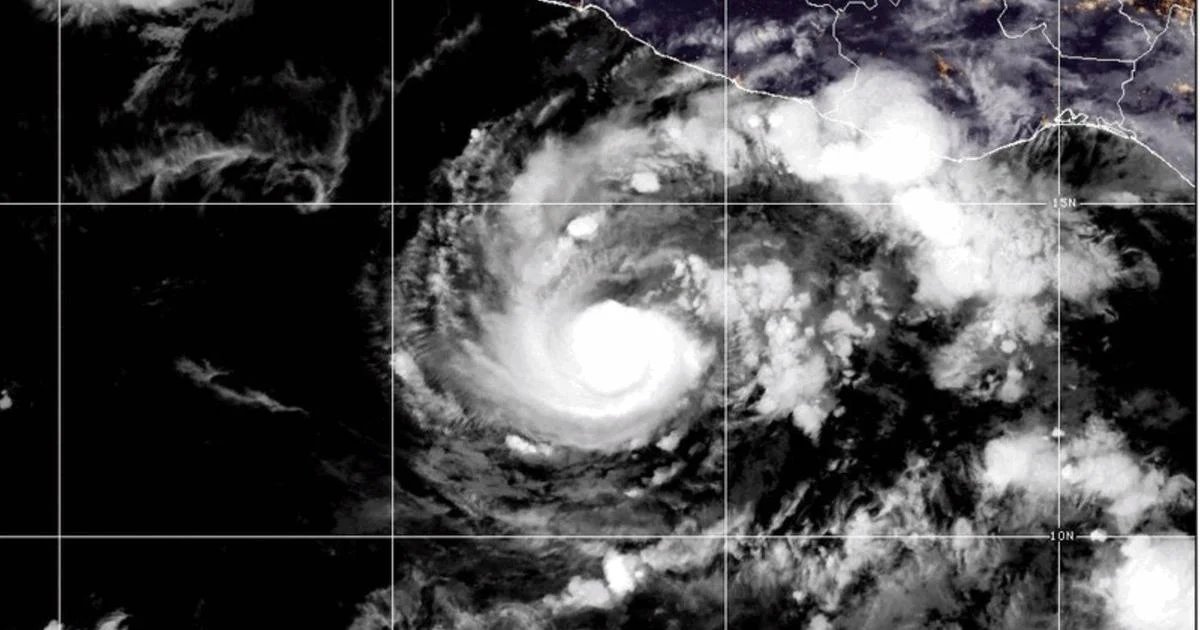
As Europe experienced record-breaking early summer heat, with temperatures exceeding 41°C in parts of Germany, the World Meteorological Organization (WMO) confirmed the rapid development of a strong El Niño event for July–September 2026, in its new Global Seasonal Climate Update. Expected to intensify through the end of the year, El Niño is likely to increase the risk of extreme weather worldwide. While El Niño is a naturally occurring climate phenomenon, its impacts are being amplified by human-induced climate change. Forecasts point to drier-than-normal conditions across parts of Central America, the Caribbean, northern South America, South Asia and Southeast Asia, alongside wetter conditions in East Africa, with effects expected to extend into 2027.
In response, WMO has intensified coordination across the UN system to support governments, humanitarian organizations and climate-sensitive sectors. Seasonal forecasts are helping guide preparedness and early action, particularly in agriculture, energy and humanitarian response, as the narrowing window for early action underscores the need for timely planning. Since 2022, WMO has provided more than 700 forecasting products to support UN and humanitarian partners and is further strengthening these services in anticipation of heightened climate risks.
The Copernicus Climate Change Service (C3S) and the Copernicus Marine Service (CMEMS) have also confirmed that the global sea surface temperatures have now exceeded the record levels for the time of the year observed in 2023 and 2024. This new global sea surface temperature record for the time of year was expected with the onset of El Niño conditions in the Equatorial Pacific, in addition to unusually high sea surface temperatures observed in several ocean regions over recent months. This record is expected to have consequences for both weather patterns, global climate, and marine ecosystems.
Read more at:
Strengthening Multilateral Efforts to Deliver a Global Plastics Treaty
The process towards the fourth part of the fifth session of the Intergovernmental Negotiating Committee to develop an international legally binding instrument on plastic pollution, including in the marine environment (INC-5.4) resumed last week, as delegates convened in Nairobi for the first Informal in-person Heads of Delegation (HODs) meeting.
Observers participating in the process have continued to contribute to discussions by sharing position papers and analytical inputs. Recent contributions include:
Update on UN80 Work Package 27 on the Environment
In June, Member States were briefed in Nairobi and New York by UNEP Executive Director Inger Andersen on recommendations being put forward under Work Package 27 of the UN80 Initiative, which she co-chairs alongside the UNFCCC Executive Secretary. It was announced that the group had identified three goals and ten recommendations, while the recommendations remain under review and are expected to be finalized by August, when the UN Secretary-General is expected to present an Information Brief on work package 27:
- A. Elevate the environment in the multilateral system
1. Recognize that a healthy environment undergirds all three UN Charter pillars
2. Enable UNEA to achieve its potential as the UN universal body serving as the convening platform for coherent, system-wide environmental action.
3. Reposition environmental science as a shared UN asset
4. Elevate the environmental coordination function: EMG 2.0 - B. Strengthen multilateral environmental governance
5. Explore consolidation options where feasible
6. Strengthen Programmatic Synergies Across MEAs
7. Advance Administrative Synergies Across MEAs and harmonized reporting - C. Scale implementation of country commitments and priorities.
8. Establish a coordination architecture for UN system wide policy coherence and delivery
9. Create AI-enabled Support Centres, starting with a pilot through a Climate Support Centre, as “one-stop shops” that make implementation support easier for Member States to access
10. Institutionalize direct engagement with real-economy actors to accelerate implementation and shift private capital toward sustainable outcomes
Happening Abroad
The 2026 High-level Political Forum on Sustainable Development (HLPF) convenes under the auspices of the Economic and Social Council (ECOSOC) from 7 to 15 July 2026, at the UN Headquarters in New York. Held under the theme “Transformative, equitable, innovative and coordinated actions for the 2030 Agenda for Sustainable Development and its Sustainable Development Goals for a sustainable future for all”, the 2026 HLPF will conduct in-depth reviews of: SDG 6 (ensure availability and sustainable management of water and sanitation for all); SDG 7 (ensure access to affordable, reliable, sustainable and modern energy for all); SDG 9 (build resilient infrastructure, promote inclusive and sustainable industrialization and foster innovation); SDG 11 (make cities and human settlements inclusive, safe, resilient and sustainable); and SDG 17 (strengthen the means of implementation and revitalize the Global Partnership for Sustainable Development). → Follow the IISD Earth Negotiations Bulletin Live Coverage
Enjoying a Green Summer in Geneva
Schools are now officially closed in Geneva and neighbouring France, and the holiday season has begun for many. For those staying in the region, there is no shortage of opportunities to enjoy a green summer in Geneva while exploring the region’s rich cultural and natural offerings. Suggestions for this week include:
- CinéTransat 2026 | 9 July – 19 August 2026 | Perle du Lac
Pack a picnic, grab a spot on the grass, and enjoy one of Geneva’s favourite summer traditions. Set in the beautiful Parc de la Perle du Lac, CinéTransat brings free open-air screenings, live entertainment, and a lively atmosphere throughout the summer. The season opens on 9 July with the iconic film Back to the Future, making it the perfect excuse to spend a warm evening under the stars. - Reading in the Park | 9 July 2026 | MAH | Promenade du Pin
Come and enjoy a quiet summer morning surrounded by books and stories in the heart of the park Promenade du Pin. Children aged three and above, accompanied by an adult, are welcome to listen to a reading or simply browse the Bibliomobile’s collection at their own pace. Drop in whenever you like, stay for one story or several, and spenda relaxed moment dedicated to reading. - Future Explorers | 11 July 2026 | CERN
This CERN’s Future Explorers festival brings together astronauts, scientists, sailors, artists, and explorers for an evening of talks, workshops, live music, and interactive activities for all ages. Whether you’re looking to learn something new, meet inspiring speakers, or simply enjoy science in a fun atmosphere, this summer festival has something for everyone. - Science, Nature et littérature à la Rousseau | 11 July 2026 | Jardin botanique de Genève
Step into the fascinating world of plants with an afternoon of hands-on science and storytelling inspired by Jean-Jacques Rousseau’s herbarium. Explore plant cells under a microscope, discover the art of herbarium-making, enjoy captivating story readings and take part in fun biodiversity-themed activities for all ages. - | Until 29 August 2026 | Parc La Grange
Join the unmissable musical event of the Geneva summer! A free open-air festival, open to everyone. - | Until 5 September 2026 | Parc La Grange
The Théâtre de l’Orangerie returns for its summer season with a diverse programme of theatre, music, dance, exhibitions, and family-friendly performances. Taking place in the scenic setting of Parc La Grange, the festival gathers artists from a variety of disciplines, offering audiences a vibrant cultural programme during the summer - Exhibition “Quel froid!” | Until 30 August 2026 | Maison Tavel
This exhibition explores the theme of winter in Geneva and beyond, bringing together traditions, artists’ perspectives, and visual archives. Visitors are guided through popular practices, urban scenes, and majestic landscapes, from Lake Geneva to the Alps. - Temporary Exhibition – « Jamais la nature ne nous trompe » | Until 23 December 2026 | Jardin Botanique de Genève
Discover a scientific and aesthetic object that bears witness to Jean-Jacques Rousseau’s passion for nature and botany: one of his rare portable herbariums, designed to deepen knowledge of plants and awaken an interest in botany. - Exhibition “Art et évolution” | Until 31 January 2027 | Jardin Botanique de Genève
Through the Jardin Botanique’s scientific collections, visitors will be invited to discover how plants and fungi have evolved over time and how biodiversity can be interpreted through an artistic perspective. The exhibition highlights the importance of understanding and preserving living ecosystems while fostering dialogue between science and society.
What (Else) to Read Next?
- A decade of addressing disaster displacement | UNOPS | 1 July 2026
This month, the Platform on Disaster Displacement formally marks 10 years of promoting international cooperation to protect people displaced in the context of disasters and climate change. From its foundations to its current role as a global partnership, the platform’s mission is more critical than ever. - Art, Policy and Partnership: Marking 10 Years of the Platform on Disaster Displacement | Platform on Disaster Displacement | 1 July 2026
Established to carry forward the work of the Nansen Initiative and support implementation of the Nansen Initiative Protection Agenda, PDD continues to promote cooperation to enhance protection for people displaced in the context of disasters and the adverse effects of climate change. - Earth has two football pitches of land for every human. Much of it is ailing. | UNEP | 1 July 2026
There are nearly 15 billion hectares of land on Earth. This terra firma is crucial to humanity’s well-being, providing most of our food, filtering our water and storing planet-warming carbon. But around the world, landscapes are in trouble. During the 2026 Football World Cup, the planet’s attention will be drawn to one specific patch of land – 105 by 68 meters, to be precise. The world consists of more than 20 billion of these football fields. With footy fervour reaching a feverish, um, pitch we decided to look at land degradation through the lens of the Beautiful Game. - IUCN World Conservation Congress 2029 – search for Host Country begins | IUCN | 1 July 2026
The search has officially begun for the Host Country of the IUCN World Conservation Congress 2029 – recognized as the world’s largest and most influential gathering focused on nature conservation and sustainable development. This global event offers countries a unique opportunity to demonstrate their leadership and commitment to addressing key environmental challenges. - Adaptation of transport infrastructure needed across Europe, Central Asia and North America in view of increasing climate risks | UNECE | 30 June 2026
Across Europe, Central Asia and North America, inland transport systems — roads, railways, inland waterways, ports and airports — are expected to face significantly more adverse climate conditions by 2051-80. Key risks include flooding, high temperatures, reduced snow, ice and permafrost, and sea level rise. To help countries anticipate these, the report “Assessment of Climate Change Impacts and Adaptation for Inland Transport: Towards climate resilient transport systems” released today by UNECE, maps key inland transport networks and nodes in the region requiring specific attention and calls for strengthened adaptation efforts at all levels. → Read more on UN News dedicated article - How to protect nature and territorial rights from the new mining rush | Greenpeace | 30 June 2026
Biodiversity protection is vital to life on Earth. Healthy oceans and forests provide us with the food we eat, the air we breathe, the water we drink and much more. Indigenous Peoples, local and coastal communities have been protecting these ecosystems for generations. Their cultures, knowledge and livelihoods are centred around a deep connection to nature. - Fresh legal study strengthens case for closing EU market to deep-sea minerals | ClientEarth | 30 June 2026
A new legal analysis commissioned by NGOs Seas At Risk and ClientEarth warns that minerals from deep-sea mining could reach the EU market within the coming years unless action is taken. The study finds that the EU has the legal authority to prevent these minerals from being placed on its market to avoid destroying the ecosystem of one of the least explored and understood places on earth. - Despite Wildfires, Europe’s 2025 Air Quality Improves as Regulation and Tech Advances Pay Off | Health Policy Watch | 30 June 2026
Decades of environmental policies, advances in technology, and cleaner approaches to industry and transportation in Europe have paid off, resulting in a steady decrease in the emission of major air pollutants. Despite the challenge of wildfires, Europe’s air quality improved in 2025, according to the latest data released by Copernicus, the European Union’s (EU) Earth Observation unit. - The hidden environmental cost of your jeans – and what’s being done about it | UNEP | 29 June 2026
But can such a vast and complex system stay in line with environmental boundaries? That is a question UNEP Goodwill Ambassador Amber Valletta recently set out to answer in a new UNEP-produced documentary. She toured Tunisian denim factories to see sustainable manufacturing practices in action and speak with those leading the push for more planet-friendly jeans. - The world needs a strong WMO, says Celeste Saulo | WMO | 29 June 2026
WMO remains one of the most effective examples of technical cooperation in the multilateral system, WMO Secretary-General Celeste Saulo told the closing session of Executive Council (EC), which agreed on a number of resolutions to fine-tune and strengthen the work of the 193-Member UN specialized agency. - Green fuel compromised by dirty trade – a look at Indonesia’s palm oil export scandal | Ben Melling, EIA | 29 June 2026
The Attorney General’s Office in Indonesia has named 11 individuals and 12 associated companies as suspects in fraudulent exports of crude palm oil (CPO). Investigators allege that between 2022-24, shipments of CPO were deliberately misdeclared as palm oil mill effluent (POME) – the liquid waste from palm oil mills – or other derivatives, obscuring their true nature in international trade. - European Commission backtracks on promise to end EU exports of banned and dangerous pesticides | Pesticide Action Network | 29 June 2026
NGOs from the ‘End Toxic Pesticide Trade Coalition’ called out the European Commission following media reports that it would not hold its promise to end the toxic export of EU-banned pesticides to countries in the Global South. The promise for a legislative proposal was announced in 2020 under the Chemicals Strategy for Sustainability (CSS) to put an end to this double standard. By doing so, the Commission committed to set an example in protecting public health and natural resources and moving away from hazardous pesticides. - La CIPEL dresse un bilan à mi-parcours de son plan d’action 2021-2030 : des progrès majeurs sur le phosphore, et de nouveaux défis pour la protection des eaux du Léman | CIPEL | 26 June 2026
Le 26 juin 2026, à Genève, dans le cadre unique du domaine Barton, au bord du Léman, la CIPEL a réuni des experts français et suisses de premier plan pour une matinée dynamique, riche en images et en échanges, consacrée à la protection des eaux du Léman et de son bassin versant. Alors que la maîtrise du phosphore illustre les succès de la coopération franco-suisse, l’événement « HORIZON LÉMAN 2030 » a mis en lumière les enjeux émergents qui façonneront cette ressource essentielle. Devant près d’une centaine d’élus, de scientifiques, de représentants des administrations, d’associations et d’usagers du lac, cette rencontre a permis de dresser un bilan à mi-parcours du plan d’action 2021-2030 et d’ouvrir la réflexion sur les priorités des années à venir. - UN experts : Ocean governance related to the deep-sea bed, must be grounded in human rights and international law | Statement by special procedures mandate holders ahead of the second part of the ISA session | 26 June 2026
A group of UN experts today reminded States and the International Seabed Authority (ISA), that any decision related to ocean governance, including a mining code regulating potential extraction of the deep-seabed minerals, must be aligned with international law obligations and international human rights law, especially with the precautionary principle. - Déclaration sur l’urgence à reconnaître le droit à un environnement sain par le Conseil de l’Europe | Commission Nationale Consultative des Droits de l’Homme | 26 June 2026
Dans une déclaration adoptée le 25 juin 2026 et dans le contexte de la triple crise planétaire, la CNCDH appelle l’ensemble des États membres à reconnaître rapidement le droit à un environnement sain dans le cadre d’un instrument contraignant du Conseil de l’Europe.