








Whenever a big development in Ireland stalls or when the Government wants to signal it is “open for business”, the blame for all our woes is laid at the feet of environmental regulation. Last week, the Government’s Infrastructure Taskforce chairman Sean O’Driscoll warned in The Irish Times that Ireland has “gone to extremes on environmental impact assessment” and that our “gold-plated” environmental laws are being “weaponised” against big infrastructure schemes. Not for the first time, the public is being warned the only path to national progress is to sidestep the rigorous environmental assessments required by EU directives.
But delays, overruns and logjams are not caused by over-regulation. Instead they are caused by a profound and systemic failure of strategic planning and a highly reactive administrative state. There has also been a lack of serious political commitment over many decades to bridging Ireland’s infrastructure deficits in an environmentally sustainable manner.
Many of the delays in delivering large projects are directly related to Ireland’s boom and bust economic model, not environmental over-regulation. We are still living under the long shadow of the financial crash of 2008-11, which resulted in the collapse of the Irish State’s capacity to conceive, fund and execute complex long-term infrastructure projects. We appear to have forgotten that major transport, housing, water, and energy projects were effectively removed from the policy pipeline entirely for about a decade between 2008-2018. Many of these major projects have long lead-in times and financing requirements so mothballing them has led to years of delays and additional costs and a loss of expertise.
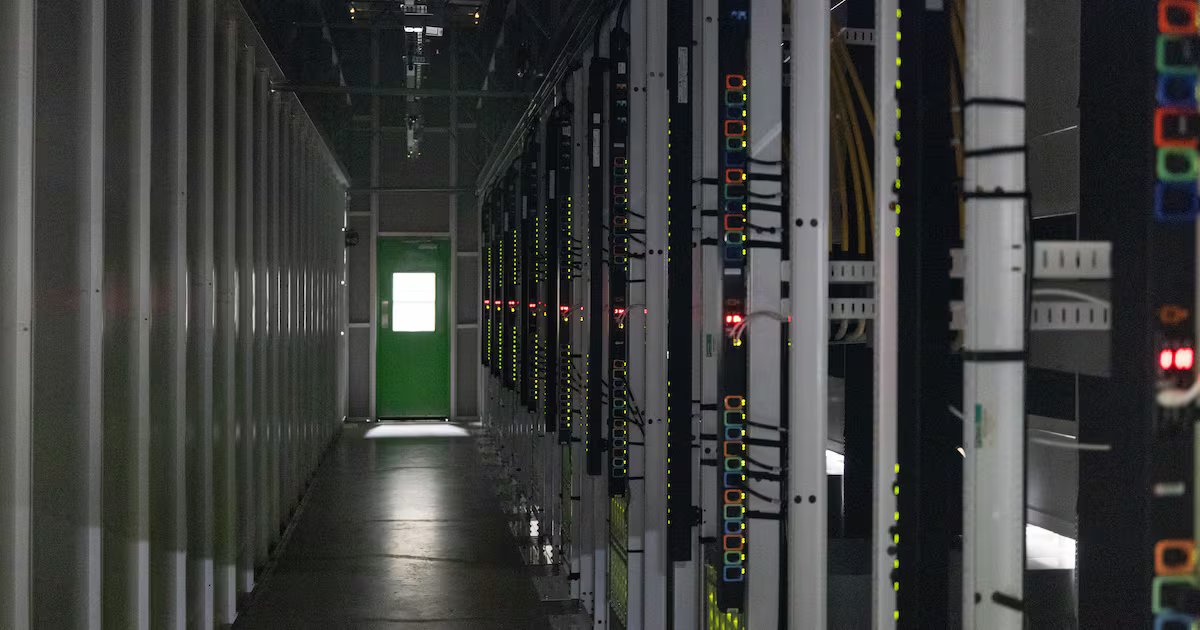
But not everything ground to a halt. Consider, for example, the data centre sector. If we are to believe the prevailing rhetoric that Ireland is an impossible place to build because of environmental assessments and planning hurdles, then the country would not be home to 126 existing or planned data centres with a per capita presence that, according to Tasc, is 10 times higher than the European average. Energy-intensive projects have navigated our planning and regulatory landscape, including judicial reviews, with relative ease. Securing grid access has proven to be a more significant barrier to data centre development than their climate impact, which surely points to the weak effect of Ireland’s climate law in “holding up” development.
Our natural environment is under increasing pressure, and Government policy is often contradictory. In the absence of a plan-led approach, local authorities and An Coimisiún Pleanála often take a reactive and administratively defensive approach by requiring environmental assessments where they might not be mandatory.
The State’s official position is to both protect and restore biodiversity as well as undermining the planning process that is designed to protect it; we want to reduce our climate impact while building energy and transport infrastructures that will lock in more energy demand and fossil fuel use.
Without detailed policy guidance and an approach to infrastructure that is coherent and based on science – rather than short-term political demands – the merits of a project from an environmental perspective will end up being debated in the context of legal compliance with EU directives in the planning system. There are many areas of environmental law where guidance and policy direction is completely absent, unlike in the UK, where there is comprehensive planning guidance on biodiversity, climate mitigation and adaptation. The environmental screening framework should be seen as a form of quality assurance rather than a roadblock. It should be embraced by developers and State agencies as a way to examine the long-term environmental benefits and impacts of a proposed project and its alternatives.
It is essential that we carefully scrutinise developments whose environmental impacts are likely to be long term, cumulative and irreversible. After all, the Water Framework Directive, the Habitats Directive and the Environmental Impact Directive are often the only thing standing between the public interest and the wholesale degradation of our natural capital.
In fact, developers and state agencies require the certainty that robust, EU-aligned environmental standards provide. More tinkering with planning legislation and Ireland’s climate law could be a recipe for further legal chaos, and yet more delays.
The path to an efficient, decarbonised economy does not lie in deregulation but in what the Brussels NGO the European Environmental Bureau calls “better implementation”, focused on improving resilience, nature restoration and pollution prevention. As long as the State is pursuing projects like road-building, airport expansion and energy hungry data centres, it should expect resistance from the public and from environmental NGOs.
However, public participation and environmental scrutiny are not the enemies of progress. They are the essential mechanisms of a functioning democracy and a healthy environment. Deregulation would weaken both.