








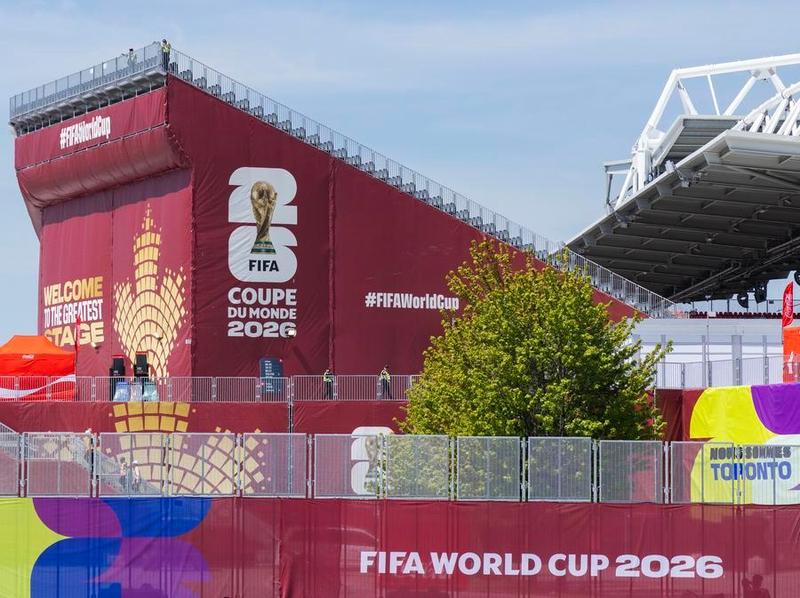
The FIFA World Cup 2026 which began on June 11 and will run till July 19, is set to be the largest sporting event so far in history.
While its scale is unprecedented — with 104 matches hosted across 16 cities in the United States, Canada, and Mexico — its environmental impact is also expected to be the greatest ever.
Numerous scientific studies indicate that transportation accounts for three-quarters of the environmental impact of a sporting event. Although prohibitive ticket prices and strict US visa restrictions may limit international spectators, those wishing to see multiple matches are likely to travel by air between 16 cities that are quite far apart, such as Mexico City, Toronto, New York, Los Angeles, Miami and Seattle.
Traditionally, the World Cup is hosted in a single country over a month-long period, as seen in South Africa (2010), Brazil (2014) and Russia (2018).
This year, it is being co-hosted by three countries of North America. In 2030, the tournament will be held across three continents and six countries. Centenary matches will be held in Argentina, Paraguay and Uruguay, before the tournament moves to Morocco, Portugal, and Spain. The geographical dispersion will end in 2034, when only Saudi Arabia hosts the tournament.
Meanwhile, the expansion in the number of teams in the final tournament from 32 to 48 has increased the number of matches.
While the number of matches has increased from 64 in 2022 to 104 in 2026, teams are based far from the cities where they will play matches. The Iranian team was based in Mexico, and its first match was in the US.
The environmental impact, particularly from transportation, is proportional to the duration of the event and the number of teams, matches and spectators.
With 104 matches, the 2026 World Cup will have a significantly higher environmental impact than the 2022 tournament in Qatar, which featured only 64 matches and took place within an area smaller than Beijing.
FIFA seems more interested in the enhanced ticket revenue that more matches will bring.
The only upside for the environment is that the 2026 World Cup is using existing stadiums, though they are spread out, necessitating considerable travel.
In comparison, the Olympics have traditionally been held over 17 days in a single city or region, with fewer tourists requiring long-distance travel. For instance, the Paris 2024 Olympics attracted about 3 million tourists, of whom only 1.6 million came from abroad, according to statistics from the Paris Tourism Board.
The Tokyo 2020 Olympics and the Beijing 2022 Winter Games were held with very few on-site spectators due to COVID-19 restrictions, and only 1.3 million tickets were sold for the 2026 Milano Cortina Winter Games.
The IOC”s hosting policy stresses the use of existing sports venues connected by efficient and affordable public transportation rather than building “white elephant” facilities that become useless after the Games.
The challenge with the environmental impact of sporting events is their continual growth, rather than stabilization or reduction in scale.
Their frequency has increased, as have the numbers of participants and competition venues. Events like the World Athletics Championships, initially held every four years, now take place every two years.
World Athletics has just announced the creation of the “Ultimate Championships” for years without world championships.
There is no sign of any slowdown in international sports organizations’ quest to expand their activities. But this relentless increase risks exhausting the public’s interest and thus diminishing the socio-cultural impact sought by host cities and the sports organizations themselves.
Paradoxically, the most environmentally friendly sporting event would be one that doesn’t happen, but that would also be the worst from a socioeconomic standpoint.
A balance must therefore be found between environmental and socioeconomic impacts.
Major sporting events should place greater emphasis on sustainability when choosing locations because the proliferation of events cannot continue indefinitely.
Jean-Loup Chappelet is an emeritus professor at the University of Lausanne, Switzerland; Zhang Beier is a Young Olympic Ambassador of the International Olympic Academy (IOA) under the International Olympic Committee (IOC).
The views don’t necessarily reflect those of China Daily.
If you have a specific expertise, or would like to share your thought about our stories, then send us your writings at opinion@chinadaily.com.cn, and comment@chinadaily.com.cn.