








With dangerous levels of heat being forecast for this summer, “green curtains” are gaining renewed attention as an eco-friendly way to filter out the harsh rays of the sun and cool down homes without depending on electricity.
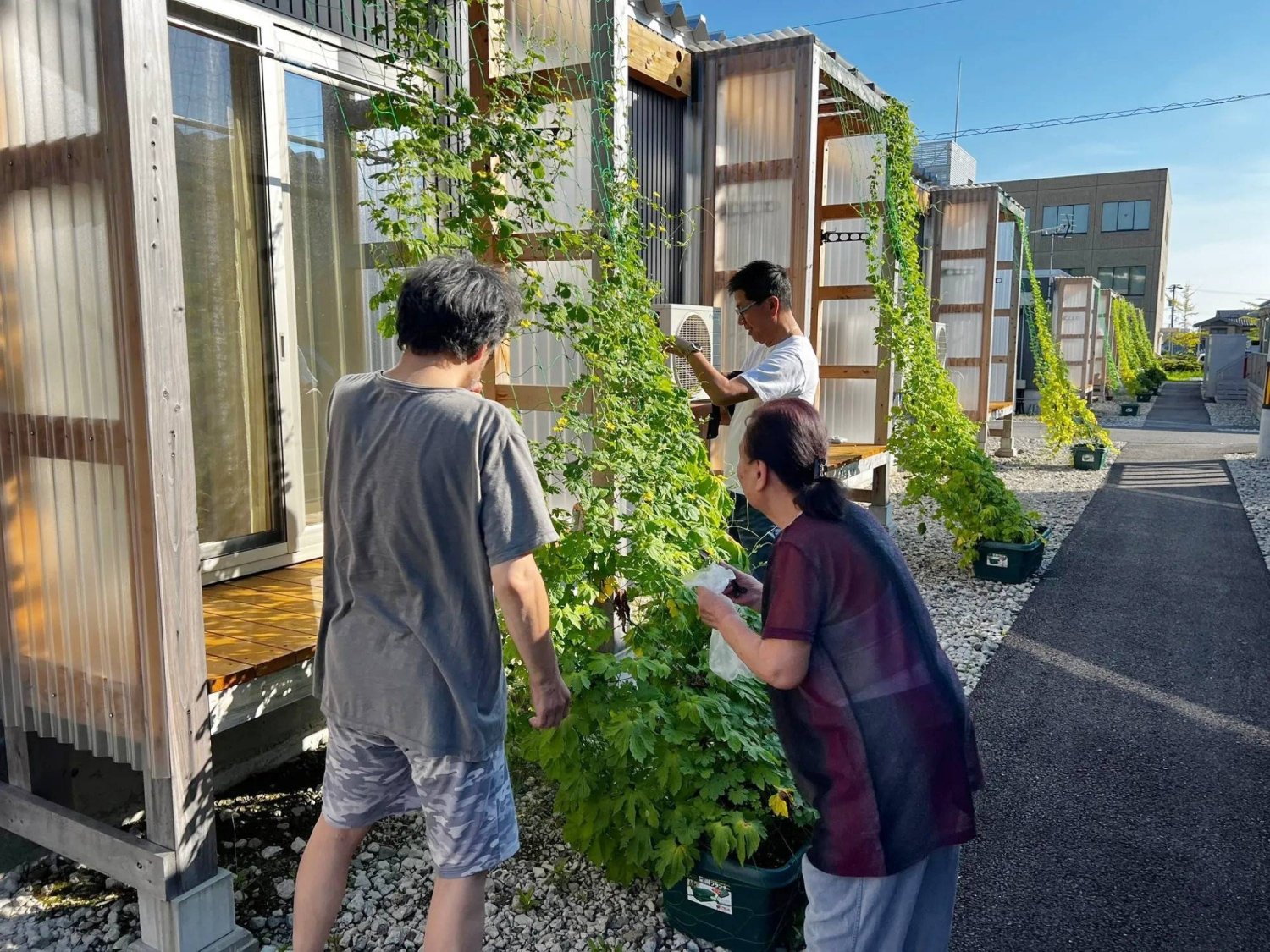
A Tokyo-based nonprofit organization is working on spreading the use of such green curtains — which involve growing vines such as bitter melon and morning glory near windows — by setting them up at schools and at temporary housing in disaster-hit areas.
“We hope that creating green curtains will become a culture,” said Yuji Suzuki, 58, head of Midori no Katen Oendan. The name of the organization roughly translates to “green curtain supporters.”
Green curtains can be used to cool places they cover in a natural way. Plants absorb water from their roots and emit moisture from the underside of their leaves.
Livlan, a real estate firm in Tokyo’s Itabashi Ward, of which Suzuki serves as chairman, conducted an experiment to assess the effects of green curtains on one fine August day just a little past noon. It found that the surface of a balcony exposed to direct sunlight outside an apartment room was over 50 degrees Celsius, while the surface under a green curtain’s shade was between 32 C and 38 C.
Suzuki said a public elementary school in the ward proposed the idea of vine curtains in 2003. His firm helped the schoolchildren bring the idea to fruition.
The setting up of green curtains went on to become an activity that spread from school to school as a part of environment education, and in 2007, Livlan established the nonprofit organization to promote the initiative further.
Following the March 2011 Great East Japan Earthquake and the meltdown at the Fukushima No. 1 nuclear power plant, scheduled power outages in Tokyo and other regions increased awareness on energy conservation.
Bearing in mind that temporary housing built to accommodate disaster evacuees are typically not as well insulated as regular houses, Suzuki decided to launch a campaign to spread the use of green curtains to help cut the risk of heat stroke.
By December 2016, the nonprofit had collected a total of ¥21 million ($130,000) in donations and recruited some 1,000 volunteers to set up green curtains at about 20,000 temporary housing units in the prefectures of Iwate, Miyagi and Fukushima.
Residents of the temporary housing expressed gratitude over the fact that the green curtains not only provided them with a respite from the heat but also offered them a chance to be acquainted with their neighbors while they watered the plants.
Meanwhile, the nonprofit also set up green curtains at 1,356 houses in four municipalities in Ishikawa Prefecture by the end of 2025, following the January 2024 Noto Peninsula earthquake.
Green curtains were set up also at temporary housing for evacuees in Ofunato, Iwate Prefecture, in May, following a wildfire.
Suzuki said that the nonprofit, in putting up green curtains in disaster-hit areas, also looks to provide evacuees with an avenue to get together and let out their feelings, having gone through so much.
Translated by The Japan Times