








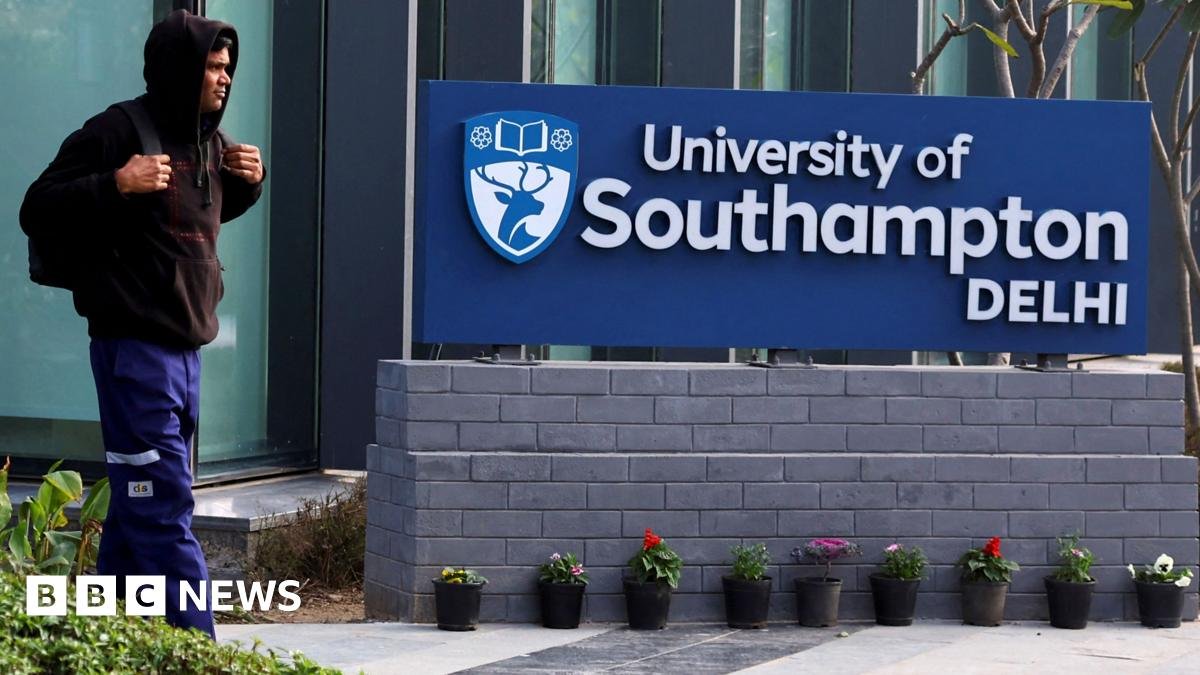
According to UK government’s figures, India has 40 million university students and would need at least 70 million places in the decade to 2035, opening up an incremental market opportunity of 25-30 million seats for British universities.
Moreover there’s a clear supply gap in high-quality education.
“Eleven million students complete Grade 12 [final school year in India] each year, with roughly 1.5-1.7 million falling within the top academic bracket. India’s top-tier institutions admit only about 200,000 of them annually,” Aritra Ghosal of OneStep Global, which helps foreign universities enter the Indian market, told the BBC.
“From an affordability standpoint, an estimated four-five million students can realistically consider degree programmes priced above £10,000 per year,” said Ghosal.
That’s essentially the aspirational upper middle class and not the mass market, but a large enough gap for British universities to exploit.
According to Oades, fees at York’s Indian campus will be priced at around 50% of what it would cost to study at the university’s campus in the UK.
While still much more expensive than many Indian private universities, there is a straight-up “quality justification” for the premium, he says, adding that universities like York follow global standards and focus on the demand for employability skills and industry partnerships.
The courses will also allow students to opt for hybrid learning between the Mumbai and York campuses, a model followed by other British universities as well.
But will this be enough?
For decades millions of Indian students have opted to study abroad, taking loans and using up family savings, mainly to migrate for better work opportunities.
Mumbai-based Ankita Kejriwal, whose son Vivaan is hoping to study finance and economics in the US next year, says most of his friends and cousins are choosing to go abroad primarily for international work exposure.
“That is the main draw. They may choose to come back in a few years, but not without working there at least for a while,” says Kejriwal.
An India-delivered UK degree will not be a substitute for these students. Tighter immigration rules, however, could encourage some to opt for the foreign university experience in India.
“For those seeking brand value with lower financial and visa exposure, it may be an efficient alternative”, says Ghosal.