









There are some tragedies that refuse to leave the cultural imagination. Then there are those that become so familiar in art that familiarity itself begins to blunt their force. The Partition of the Indian subcontinent belongs to that uneasy category. Nearly eight decades after 1947, it remains Hindi cinema’s most reliable shorthand for loss, longing and inherited sorrow. Every few years, another filmmaker returns to the border, convinced there is still an untold story waiting there.
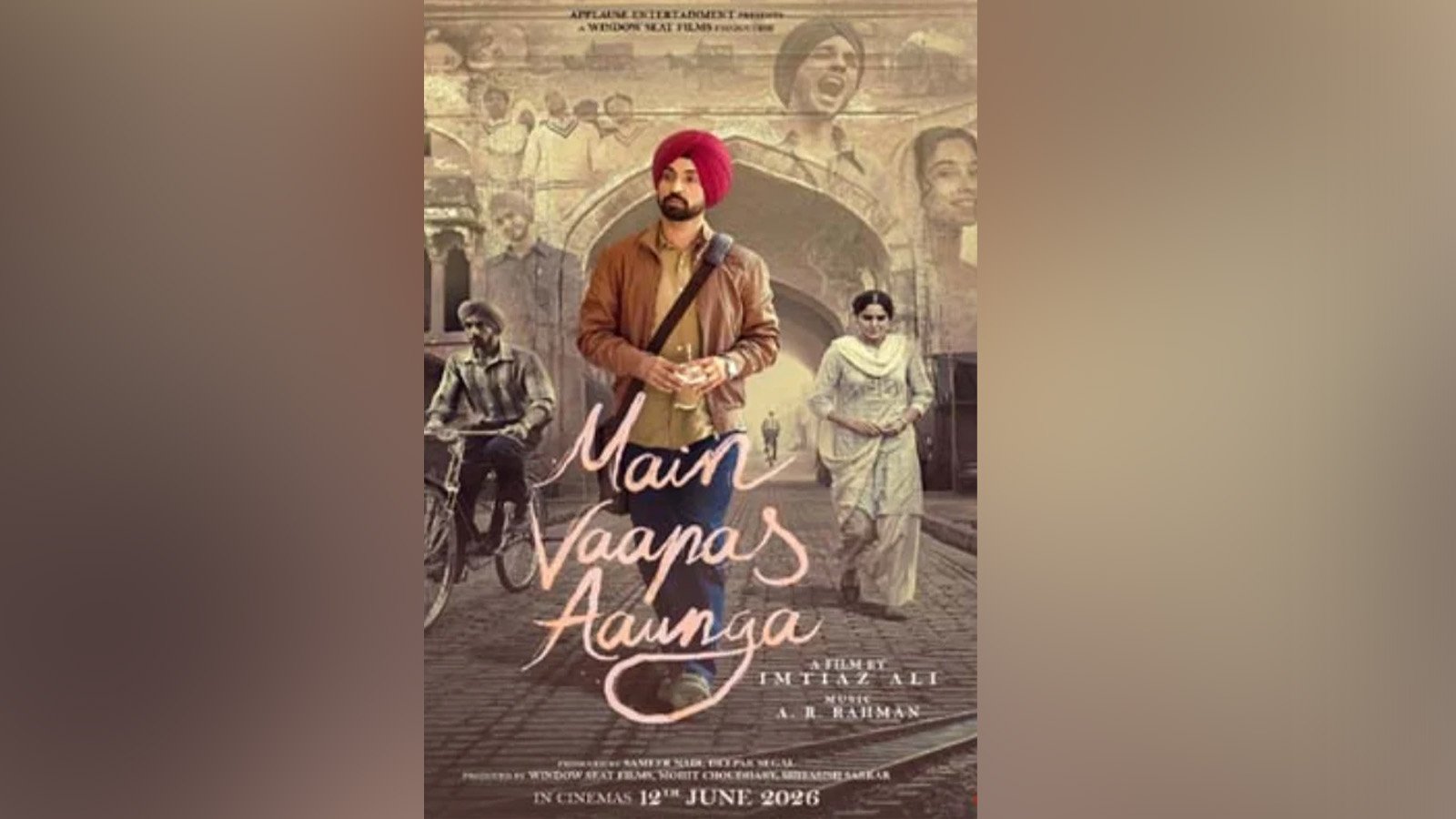
The latest to join that group is Imtiaz Ali — a director who has repeatedly demonstrated an unusual sensitivity to longing, emotional exile and fractured identities — with the recently released Mein Vaapas Aaunga (MVA).
The film was marketed as one of the year’s defining meditations on memory, displacement and reconciliation. We will not delve here into whether the film delivered on that promise. Enough reviews have been written on that. Suffice to say that for a subject that has inspired some of the subcontinent’s greatest cinema, MVA feels surprisingly incurious.
Rather than dwelling on it, however, let’s explore how MVA has revived a conversation not about Partition itself, but about why contemporary Hindi cinema keeps returning to it while struggling to say anything genuinely new.
The Partition film of heroism
Filmmaker and film studies scholar Anupam Siddharth cites the superhit 2001 film Gadar: Ek Prem Katha as an example. For Siddharth, Gadar remains the defining example of how mainstream Hindi cinema has often mistaken the spectacle of nationalism for the experience of Partition and how things have been going steadily downhill since.
“Instead of confronting one of the greatest human tragedies of the 20th century,” he says, “the film transforms it into a fantasy of hypermasculine heroism”.
Siddharth argues that Gadar privileges the invincible male protagonist over the millions whose lives were shattered by displacement and communal violence. “The audience is invited to applaud Tara Singh’s strength, not reckon with Partition’s trauma. Violence becomes a performance of masculinity rather than a source of moral anguish.” Equally troubling, he adds, is the film’s communal lens. “Partition was a catastrophe in which brutality crossed every religious boundary. Gadar flattens that history into a comforting binary.”
“History becomes little more than fuel for patriotic spectacle,” Siddharth says.
Gadar privileges the invincible male protagonist over the millions whose lives were shattered by displacement and communal violence.
The same ideological grammar, he argues, extends to films such as The Hero: Love Story of a Spy (2003) and Ab Tumhare Hawale Watan Saathiyo (2004), which inherit its “militarised muscular nationalism, where patriotism is measured through masculine aggression and Pakistan functions largely as a shorthand for terrorism or betrayal.”
Even Partition (2007), despite its humanist intentions, ultimately reduces the political and social upheaval of 1947 to the familiar contours of romantic melodrama.
What unites these films, Siddharth argues, is not simply their politics but their narrative choices. They divide history into heroes and villains, privilege national triumph over shared suffering, replace displaced civilians with male saviours, and reduce women to symbols of community honour. “The spectacle of violence overwhelms the memory of violence,” he says. “Partition becomes something to cheer through rather than grieve.”
Of loss and displacement
By contrast, Siddharth points to films such as 1947: Earth (1998), Garam Hava (1976), Tamas (1988), Pinjar (2003), Khamosh Pani (2003) and Mammo (1994) as the benchmark for Partition cinema. Rather than celebrating nations, they dwell on fractured friendships, broken families, gendered violence, moral ambiguity and the psychological afterlife of displacement.
“The finest Partition films never ask who won,” Siddharth says. “They ask what humanity lost.”
So why do the greatest films about Partition (except for the notable exceptions of the 2018 release, Mulk and this year’s Ikkis) remain decades old?
Siddharth believes the answer lies partly with the filmmakers themselves.
“Look at the films by MS Sathyu, Govind Nihalani and Ritwik Ghatak. Recent films simply haven’t been made by filmmakers of that calibre.” He also points to an industry increasingly driven by investment logic rather than artistic conviction, “rewarding broad emotional appeal over uncomfortable inquiry”.
But the difference runs deeper than changing economics. The finest Partition films were never really about Partition. They instinctively understood that history matters only insofar as it illuminates the present. Partition was their lens, not their destination.
“Earlier films asked difficult questions and didn’t shy from uncomfortable answers, or even leaving narratives unresolved. Today we’re getting safer, sanitised versions.”
Garam Hawa illustrates this perfectly. When MS Sathyu made the film 53 years ago, he resisted the temptation to stage Partition’s bloodshed. Instead, he captured something subtler yet far more devastating: the slow, invisible violence of choosing to stay. Alongside heralding India’s parallel cinema movement, the film illuminated the human cost of a political decision in which ordinary people had no say.
“Garam Hawa wanted to expose the games politicians play without any thought to its impact on the larger multitude who didn’t want Partition. Look at how they suffered most and how those ugly wounds still keep festering,” Sathyu had said in 2004.
In 1947 Earth, Deepa Mehta adapted Bapsi Sidhwa’s novel not into a grand historical epic but into an intimate tragedy witnessed through the bewildered gaze of a child.
The film’s protagonist, Salim Mirza (Balraj Sahni), is not a refugee crossing a border but a man watching the country beneath his feet quietly recede. Every rejected bank loan, every suspicious glance and every friend who leaves erodes his certainty that he still belongs. The tragedy unfolds not through spectacular violence but through bureaucratic indifference, institutional prejudice and the quiet terror of becoming a stranger in one’s own homeland.
If Garam Hawa explored Partition’s emotional afterlife, Tamas dissected its political manufacture. Govind Nihalani’s landmark adaptation of Bhisham Sahni’s novel remains among India’s most unsparing studies of communal violence because it denies the comfort of easy villains. Hatred is assembled piece by piece, through rumour, cynical political calculation, manufactured outrage and weaponised fear. “We were very clear on not depicting violence,” Nihalani says. “We wanted to anatomise its manufacture.”
Even today Tamas remains unsettling precisely because it refuses to stay trapped in 1947. “Patterns of the same malaise of hate and exclusion are seen all too easily in subsequent decades,” Nihalani observes. “Slogans, flags and those in power change, but the mechanics scarcely do.”
Unsurprising then that the series became such a lightning rod. Nihalani received death threats, spent eight weeks under police protection and watched the Bombay High Court stay its telecast before the Supreme Court of India swiftly overturned the order.
Echoing Sathyu from two decades earlier, Nihalani says, “Unlike the kattarwadis (fanatics), the majority want peace. We should remember that every time we allow ourselves to be swayed in the name of religion. If Tamas drives home that one message, it’ll matter more than any award or acclaim.”
Another landmark Partition film, Train to Pakistan (TTP) reminded audiences that history derives meaning only through the lives it shatters. Pamela Rooks’ adaptation of Khushwant Singh’s iconic novel never loses sight of the ordinary rhythms that precede catastrophe. Before villages burn, people flirt, quarrel, gossip and pray together. Communities have texture before they become statistics. So, when violence erupts, its force comes not from spectacle but from the destruction of recognisable human lives.
Its unforgettable climax is earned through the moral awakening of flawed individuals confronted by impossible choices. History, the film suggests, is measured less by borders redrawn than by consciences transformed.
That conviction also came from Rooks’ own inheritance. In an interview ahead of the film’s release (in 1999), she reflected, “Partition is part of my family’s history. My parents were refugees from Pakistan, but they’ve never spoken bitterly or with prejudice about any community.”
The lingering effects
Perhaps no film traces Partition’s longest shadow with greater political clarity than Khamosh Pani (KP). Rather than recreating the carnage of 1947, Sabiha Sumar deliberately turns to its aftermath, arguing that Partition was never a singular historical rupture but an unfinished political process.
“We made KP with the understanding that Partition is not a standalone event,” Sumar said on email from Karachi. “It represents a process of post-colonial decolonisation in which historical nations, long corralled within artificial imperial borders, begin searching for their place after the imperial power withdraws. The first Partition created Pakistan; the second brought forth Bangladesh. Through Ayesha’s life [the protagonist of KP], we wanted to underline the need to learn from that trauma. So that we are better prepared and potential demands for structural change are handled differently.”
The film’s contemporary resonance, she argues, lies in how the post-1947 state increasingly sought legitimacy through religion. Sumar says those continuities became central not only to KP but also to her later documentary Azmaish: A Journey Through the Subcontinent, which explored “how far religion may serve both to unite and to divide”.
The film also rethinks the place of women within histories of Partition. Rather than portraying them simply as victims, Sumar presents them as characters who are not willing to participate in patriarchal societies that deny them agency.
Partition, she believes, also exposes the intimate relationship between gender and nationalism. “The events around Partition show that men often preferred women to die rather than dishonour their manhood through an inability to protect them. Patriarchal societies then remember those deaths as patriotic sacrifice that restored the nation’s honour.”
That explains why Sumar remains wary of cinema that merely recreates historical spectacle. “The past is the courtroom where the present is judged,” she underlines. “History can’t truly be recreated. Every attempt reconstructs memory, produces half-truths and risks distorting our judgement of the present. We’ve tried to avoid that trap with KP and Azmaish…”
So did 1947 Earth. Deepa Mehta adapted Bapsi Sidhwa’s novel not into a grand historical epic but into an intimate tragedy witnessed through the bewildered gaze of a child. The violence shocks not because it is graphically staged but because it tears apart friendships that had once seemed immune to politics. Love itself becomes infected by ideology. The personal collapses into the political with terrifying inevitability.
One leaves the film mourning not simply lives lost but innocence itself.
In Pinjar, long after borders have hardened into nation-states, the central character, Puro, remains displaced. Not geographically alone, but even existentially.
Then there is Pinjar, perhaps the most profound cinematic meditation on what Partition meant for women. Based on Amrita Pritam’s extraordinary novel, Chandraprakash Dwivedi’s adaptation refuses to reduce women to symbols of communal honour. Instead, it confronts the impossible moral terrain created when women’s bodies became repositories of national pride, revenge and masculine anxiety. Puro’s tragedy lies not merely in abduction but in the terrifying realisation that neither side truly possesses a language for her humanity. Long after borders have hardened into nation-states, she remains displaced. Not geographically alone, but even existentially.
These films differ enormously in style, politics and temperament.
In the current times when muscular nationalism has been made the flavour of the season and franchises like Dhurandhar laugh their way to the bank with Rs 800 crore and counting, some films continue to hold on to both sanity and humanity.
Like Mulk, which takes the thread of Garm Hawa forward and deliberately inverts the binaries that films like Gadar rely upon. “Instead of asking whether Muslims are loyal to India, I wanted the film to expose the prejudice inherent in that question so many years after their forefathers chose India over Pakistan. The protagonist, Murad Ali Mohammed, does not prove his patriotism through violence or military valour but by insisting on his constitutional rights and moral dignity,” director Anubhav Sinha had pointed out in the film’s promotional interviews. “Mulk refuses the idea that nationalism must have an enemy. Its patriotism lies in defending the Constitution, not defeating another community.”
Unlike Gadar, which externalises conflict by locating evil across the border, Mulk internalises it, showing how suspicion, discrimination and majoritarian anxieties can fracture the nation from within. The ‘other’ is not Pakistan but prejudice itself.
In that same vein, Ikkis too tells the story of Arun Khetarpal, the youngest recipient of the Param Vir Chakra. Though a military film, it does touch upon the creation of two nations and how friction on the international border need not necessarily mess up human relationships. “While we don’t scrimp on the emphasis given to sacrifice, duty and the making of a soldier, we wanted to do that without demonising anyone or any country. The conflict in the film might be historical, but the emotional centre is completely personal and solidly human,” Sriram Raghavan has said in his promotional media interactions in December.
Questions beyond 1947
Siddharth echoes him by observing: “Patriotism is strongest when it doesn’t require caricaturing the enemy. A soldier’s courage is diminished when it depends on reducing the other side to monsters.” He adds, “Any film on Partition, war or any geostrategic conflict needn’t automatically be jingoistic unless it wants to abandon the humanity of history in favour of nationalist triumphalism.”
The greatest Partition films share one defining instinct: none treats Partition as emotional wallpaper or assumes the tragedy itself automatically generates profundity. Each uses it to ask a question extending far beyond 1947. What does citizenship mean? How is hatred manufactured? Who gets remembered? Who gets erased? What becomes of women after history has finished using them? How does memory become ideology?
That is precisely where much of contemporary Partition cinema falters. Too often, it appears convinced that visual beauty can substitute for moral complexity. As Siddharth puts it: “Aesthetic is beautiful. Truth can be ugly.”
The iconography has become almost ritualistic: mist-covered railway stations, refugee caravans, abandoned havelis, mustard fields divided by invisible borders, ageing survivors clutching fading photographs. Beautiful images, certainly. But also instantly recognisable.
Siddharth acknowledges that trains, abandoned homes and refugee columns are inevitable visual motifs. “But therein lies the challenge,” he says. “We need to ask what has already been covered and what has not.”
The problem, then, is not that Partition has become an exhausted subject. Quite the opposite. If anything, the anxieties that produced it have acquired renewed urgency.
What has begun to tire is our cinematic imagination.
That is why MVA, despite its sincerity, ultimately feels symptomatic of contemporary Partition cinema. It honours history without seriously interrogating it. Ali believes love offers the most enduring rebuttal to political division, a deeply humane instinct. But cinema cannot stop at empathy. It must also ask difficult questions.
The director has said his interest lies less in Partition’s politics than in the human cost of displacement, a conviction reflected in the film’s closing montage linking 1947 to contemporary refugee crises. The impulse is humane, but the comparison feels asserted rather than earned. The gesture towards Gaza and the West Bank arrives as an underlined thesis instead of emerging organically from the story. Ironically, the film never needed to travel thousands of kilometres in search of Partition’s contemporary echoes.
The next great film about Partition will not be the one that photographs abandoned havelis more beautifully or stages refugee caravans more spectacularly. As Siddharth suggests, it may instead ask about those who crossed over, like Manto; those who never could, like Puro; families divided across generations; or people so poor that Partition scarcely altered their daily struggle for survival.
The tragedy has never lacked stories. It has only begun to lack curiosity.