









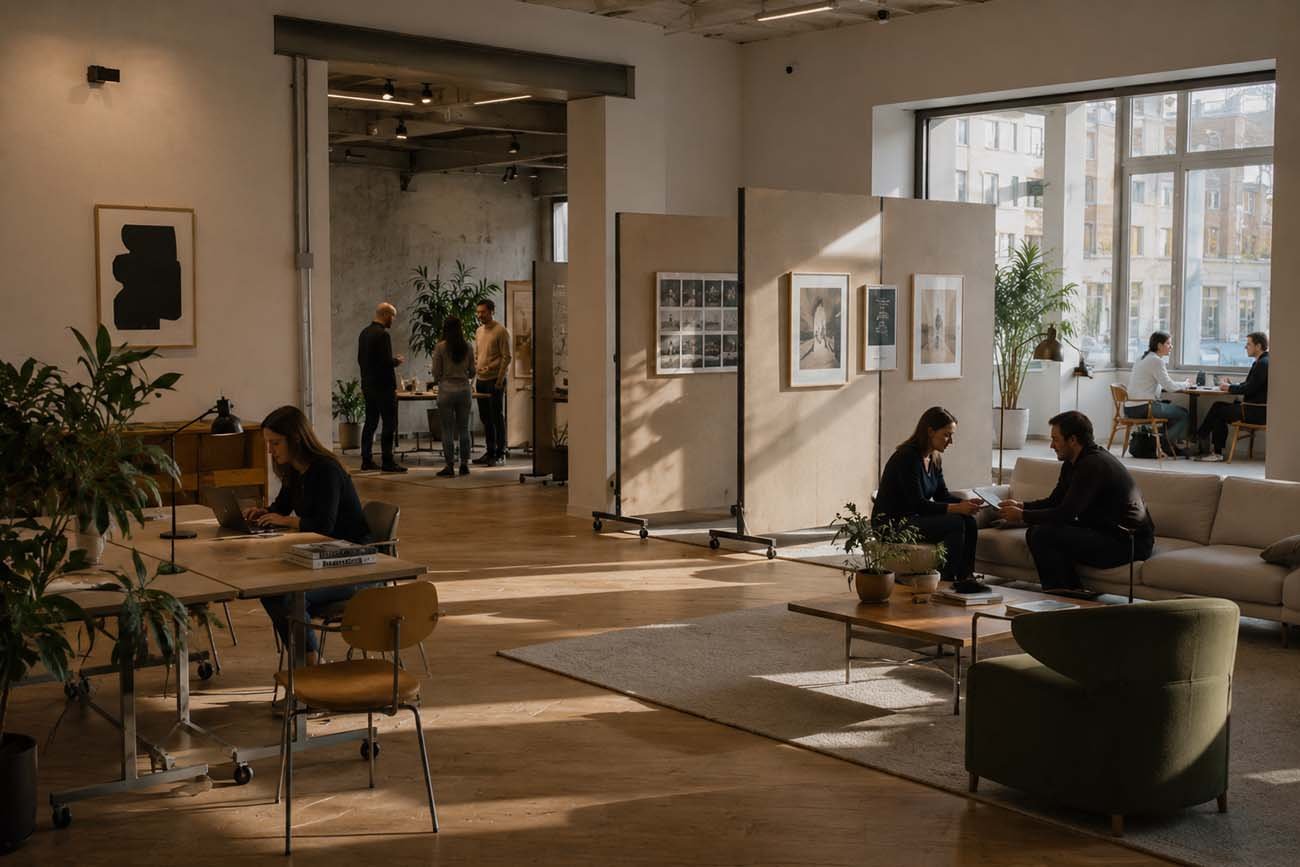
Architect Peter Zumthor has long argued that great architecture should make people feel at ease rather than simply impress them. Increasingly, that philosophy is shaping the design of coworking spaces. Rather than resembling conventional offices and their associations of nine to five drudgery, a new generation of shared workspaces is emerging that feel more like places where people genuinely want to spend time.
These might borrow cues from everything from luxury homes to boutique hotels, but one of the most compelling sources of inspiration is the private gallery. Here, after all, light, materials, artwork and carefully considered proportions work together to create an atmosphere that encourages both creativity and calm.

Curating rather than decorating
The difference between a gallery and a conventional office sounds quite broad. But when you drill down to the basic principles at work, there are interesting parallels. Gallery spaces rarely feel cluttered. Every object has been selected for a reason, whether it contributes texture, colour, balance or narrative. Empty space is treated as an important design element rather than something to be filled.
Coworking environments can benefit from that same philosophy. Instead of covering every available wall with motivational slogans or generic prints, designers are increasingly creating quieter visual moments. Carefully selected artwork, sculptural lighting and tactile materials encourage visitors to slow down and engage with their surroundings. The result is a workplace that feels considered rather than decorated.
Let the architecture breathe
Many successful coworking interiors make excellent use of natural light and generous circulation space. In the late 20th and early 21st century, there was a tendency to divide every square metre into individual workstations. It is little wonder that employees felt like drones in a hive. Contemporary layouts eschew this and instead create a sequence of experiences. For example, open collaborative zones might lead naturally into quieter corners for focused work before transitioning into lounges, cafés and informal meeting areas.
This approach is known as pacing and is a core principle of gallery design. In the office setting, it gives occupants greater choice throughout the day while helping the space feel larger than its footprint might suggest.

Natural materials that improve with age
Private galleries tend to favour materials that develop character over time rather than those that simply look pristine on opening day. Solid timber, natural stone, brushed metals, linen upholstery and textured plaster all bring depth while ageing gracefully through daily use. Minor imperfections often become part of the story instead of something that immediately requires replacement. The same approach makes all sorts of sense in creative workspaces. This emphasis on longevity reflects a broader movement away from disposable office fit-outs towards interiors designed to evolve over many years.
The same principle can be applied to smaller details. The use of artwork obviously provides the most obvious connection between an office and a gallery, but the way it is presented matters just as much as the work itself. A carefully chosen frame can elevate photography, original prints or contemporary illustrations into focal points that define an entire room. Rather than treating framing as an afterthought, many designers now consider it part of the architectural language of an interior.
Natural timber remains particularly popular because it introduces warmth without competing for attention. High-quality wooden picture frames have the additional benefit that they can naturally complement a wide variety of design styles. Repeating similar framing styles throughout a coworking environment also creates consistency, helping different rooms feel connected without becoming repetitive.
Flexible spaces designed for creativity
One challenge for coworking operators is accommodating a wide variety of users without creating visual inconsistency. Movable furniture, modular displays and adaptable meeting spaces allow environments to support workshops, exhibitions, networking events and everyday work with minimal disruption.
Gallery-inspired interiors solve this problem by establishing a clear visual framework. Neutral architectural elements provide continuity while artwork, furniture and temporary installations introduce change over time. It means that members experience a workplace that feels dynamic without ever becoming chaotic.
Good design is not going to manufacture creativity, but it can certainly support it. Natural light reduces reliance on artificial illumination. Comfortable furniture encourages longer conversations. Carefully considered acoustics make collaboration easier without overwhelming quieter areas. Perhaps most importantly, visually stimulating surroundings communicate that ideas matter. Creative professionals often respond positively to environments that demonstrate attention to detail because they reflect the same care people hope to bring to their own work.
Beyond the conventional office
As flexible working continues to evolve, the distinction between offices, galleries, hospitality venues and cultural spaces is becoming increasingly blurred. The most successful coworking environments recognise that productivity is influenced by far more than desks and technology. Atmosphere, craftsmanship, materiality and thoughtful curation all contribute to how people experience a space.
By borrowing lessons from private galleries, where every object has purpose, every material contributes to the overall composition and artwork is integrated rather than simply displayed, designers are creating workplaces that feel less transactional and more inspiring. For the growing community of creatives, entrepreneurs and independent professionals who spend much of their working lives in shared environments, that shift is proving every bit as valuable as the latest office technology.