







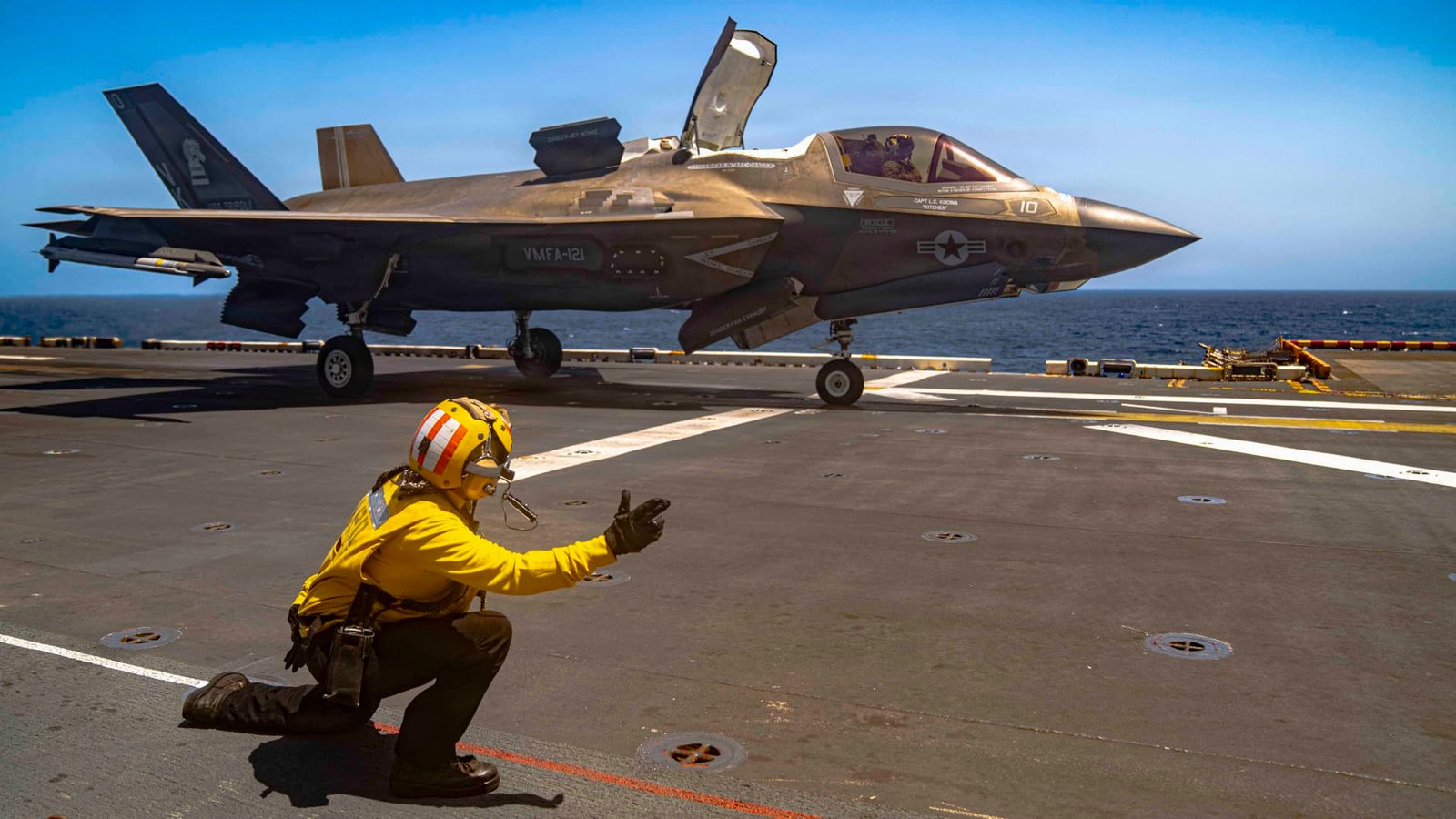
An F-35B Lighting II, attached to Marine Fighter Attack Squadron (VMFA) 121, takes off from the flight deck of America-class amphibious assault ship USS Tripoli (LHA 7), May 13, 2026.
Courtesy: U.S. Navy
U.S. forces launched strikes against Iranian targets shortly before the U.S. resumed its naval blockade of Iranian ports in and around the Strait of Hormuz, U.S. Central Command said Tuesday.
The latest round of strikes, aimed at “degrading Iranian capabilities used to attack commercial shipping” in the economically vital strait, began at 3 p.m. ET, CENTCOM said in an X post.
The naval blockade in the Gulf of Oman is set to restart at 4 p.m. ET.
The blockade was lifted after the U.S. and Iran struck a temporary ceasefire deal as part of a 14-point memorandum of understanding signed last month. But President Donald Trump last week declared the ceasefire was “over” after multiple flare-ups of hostilities in the region, and as each side accused the other of violating the terms of the deal.
Trump announced Monday that the U.S. would reimpose the blockade against Iran, whose efforts to take control of the strait by force appear to have ramped back up as the ceasefire has fallen by the wayside.
Commercial shipping traffic through the waterway, which was far below prewar levels even when the ceasefire was in effect, has dropped sharply in recent days, ship tracking firms have found.
Before the U.S. and Israel launched the war against Iran in late February, the strait saw 20% of the world’s oil pass through it.
“The Hormuz Strait is OPEN, and will remain OPEN, with or without Iran,” Trump insisted in a Truth Social post announcing the blockade was back on.
In the same post, Trump said that the U.S. will start demanding reimbursement “at the rate of 20% on all cargo shipped” through the strait.
The policy proposal met with deep skepticism from energy experts and swift opposition from shipping industry groups, including the United Nations’ International Maritime Organization. Critics quickly resurrected recent clips of Trump administration officials declaring that it would be illegal for a country to impose tolls in an international waterway.
One day after announcing the 20% fee plan, Trump reversed course. He claimed on Truth Social Tuesday morning that he would “replace” the proposed toll with “Trade and Investment Deals that the various Gulf States will be making into the United States.”
At the White House later Tuesday, Trump said that he had fielded calls from world leaders who told him “we’d love to do it a different way.”
“I like that, actually, because I don’t think anybody should be able to charge a fee for the strait,” Trump said. “I don’t think anybody should be really in that position, but we were doing it as a reimbursement.”
He said that he spoke with Saudi Arabia, the United Arab Emirates, Qatar, Bahrain, Kuwait and others. None of those countries have yet revealed plans this week to boost investment in the U.S.
This is breaking news. Please refresh for updates.