








It’s been a rough winter. Profound personal loss, multiple global crises, surgery to remove a chunk of my thigh affected by melanoma and a perimenopausal body and brain that simply don’t bounce back like they used to have left me feeling not broken exactly, but fragile.
Much as I did in the Covid lockdowns, I’ve been shifting my focus to nearby nature for a distraction and solace. A few days in bed, a few more propped in the kitchen window seat that I wisely insisted on when we rebuilt several years ago, then incrementally extending my hobble range to the front garden, I’ve experienced the arrival of spring in ways that are both limited and infinite, focusing closer and finding, once again, that seemingly small things expand exactly in proportion to the attention you give them.
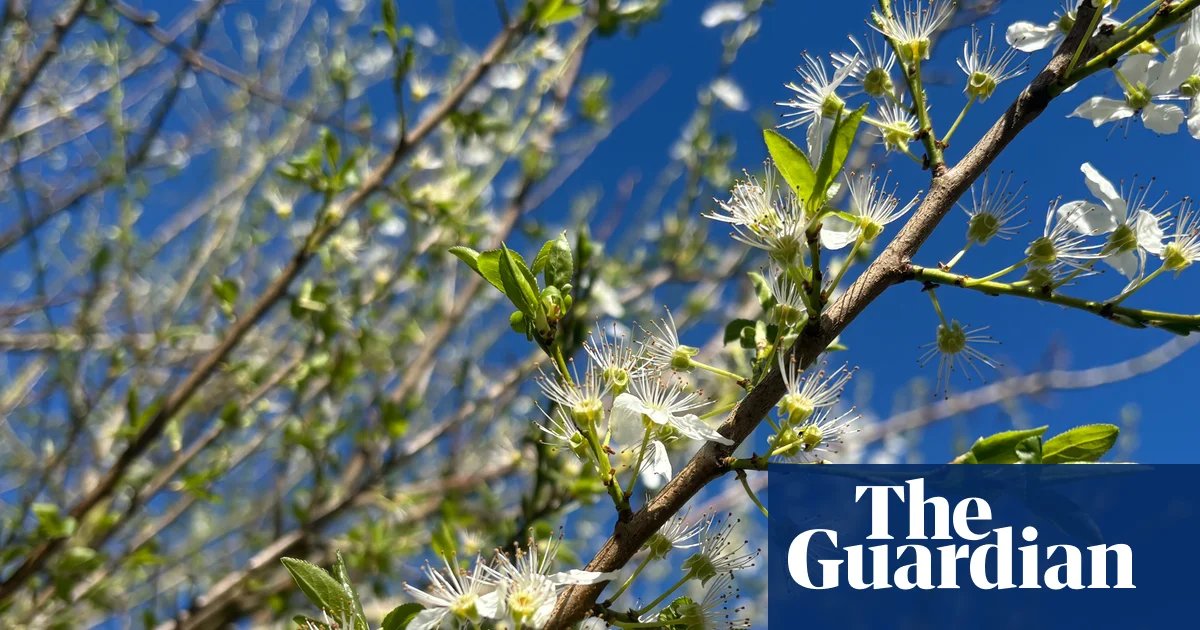
This week, I’ve been enjoying early butterflies, wild garlic in sudden abundance, the first migrant bird arrivals and the extraordinary reverse origami of bud burst. Full greening of the woodland canopy opposite our house is a few weeks off, but there’s a Frankenstein tree on our lawn that put out blossom a fortnight ago and is now coming into leaf. It’s supposed to be a greengage, but after a bit of an accident a couple of years back, the blackthorn rootstock to which it must have been grafted escaped, and now there are stems of both species growing from one base. Sloes and greengages from one tree is fine by me, and I can’t help but admire an organism so determined to be itself.
Bud burst is one of the most powerful forces in nature. Once out, there is no way those leaves are ever going back. The hydraulic pressure (or turgor) inside the epidermal cells of an unfurling leaf can exceed the inflation pressure of a car tyre severalfold, exceeded only by that in growing tips of root and shoots that can burst through tarmac.
I love these slightly absurd but arresting comparisons, the staple of children’s reference books: spider silk has the tensile strength of steel; an ant can carry 50 times its body weight; a leaping froghopper generates and survives acceleration forces 500 times that of gravity (fighter pilots black out at 10). It’s good to remember that fragile things can have hidden superpowers.