








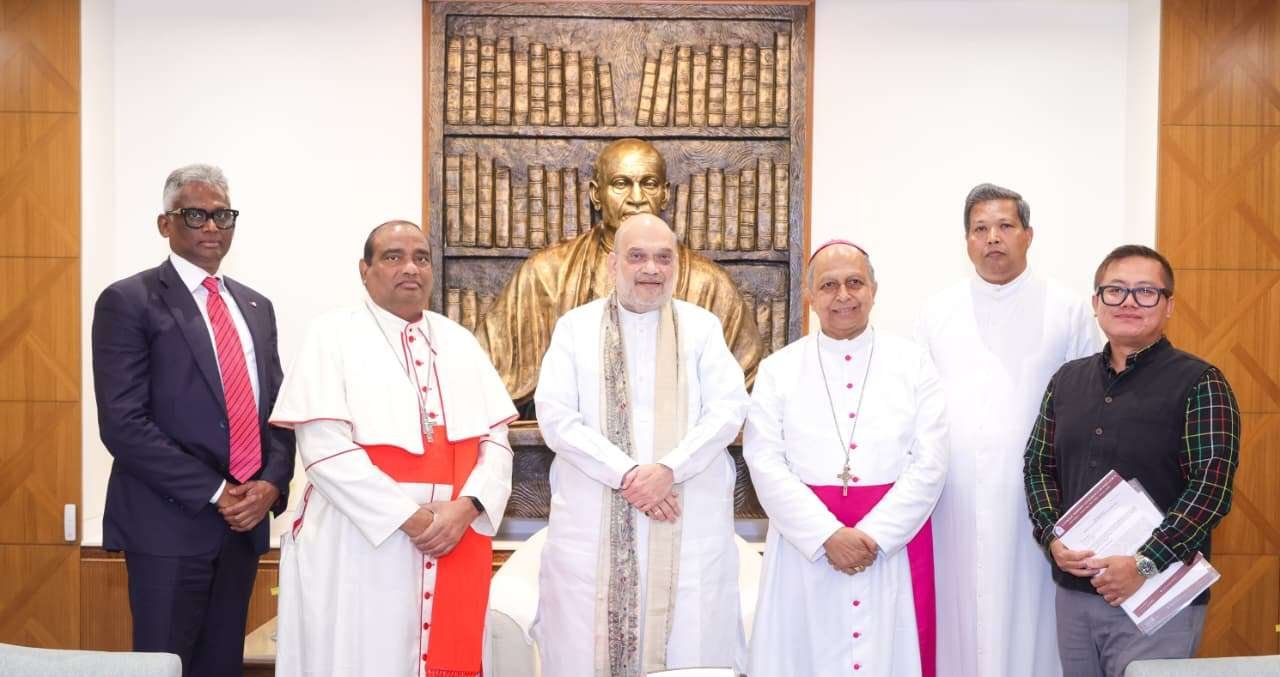
Left to right: Antos Anthony, vice-president of the Catholic Council of India; Cardinal Poola Anthony, CBCI president; Amit Shah, India’s federal Home Minister; Archbishop Anil J. T. Couto of Delhi, CBCI secretary general; Fr Mathew Koyickal, deputy secretary general; Jonathan Lalremruata, adviser to the CBCI
CBCI
The delegation reaffirmed the Church’s commitment to the unity, integrity and constitutional values of the nation, partnering successive governments in serving millions of Indians of all faiths, particularly the poor and the marginalised.
India’s Catholic bishops expressed their concern to the federal government over the provisions of proposed legislation for receiving foreign funding and the continued violence in the north-eastern state of Manipur.
A delegation of the Catholic Bishops’ Conference of India (CBCI) led by its president, the Archbishop of Hyderabad Cardinal Anthony Poola, visited the federal Home Minister Amit Shah on 10 July and handed him a memorandum on the proposed amendments to the Foreign Contribution (Regulation) Amendment (FCRA) Bill, 2026 among other issues.
These included Manipur’s humanitarian crises, anti-conversion laws, increased hate-crimes against Christians, scheduled caste status for religious minorities of scheduled caste origin, according to CBCI deputy secretary general Fr Mathew Koyickal, who accompanied the delegation.
He told The Tablet that the bishops urged the government to withdraw or redraft the proposed FCRA Bill, notified on 22 June, as it would “adversely affect the organisations that are registered” and harm institutions serving millions of poor and vulnerable citizens of all faiths.
The proposed bill raised alarms over provisions that would allow the federal government to take over, manage or dispose of assets created from foreign contributions if an organisation’s registration is surrendered or cancelled.
The bishops opposed the provision, stating that it could be applied retrospectively. They said the takeover of assets should only take place after finalisation of the process of adjudication.
Fr Koyickal said the minister assured the delegation that the proposed amendments will not be applied retrospectively, will not affect legally acquired assets, and are not intended to target Christian organisations.
The bishops also requested the removal of the undefined term “proselytisation” from the rules, saying it could lead to possible misuse.
The minister told them that “if we face any problem, we can write to him or meet him. ‘I am the home minister. I will take care of you,’ he assured [us],” said Fr Koyickal.
The delegation drew Shah’s attention to continuing violence in Manipur, where thousands have lost access to their houses and lands, children have suffered educational disruption besides psychological trauma and large numbers have migrated.
He urged the Church leadership to help broker peace in Manipur and directed them to report any aggression or cases of police inaction directly to the Ministry of Home Affairs.
On the question of hate crimes against Christians, the minister asked that police reports be filed against hate crimes: “If the police don’t oblige, bring the matter to me.”
The delegation reaffirmed the Church’s commitment to the unity, integrity and constitutional values of the nation. It said that through its institutions, it has partnered with successive governments in serving millions of Indians of all faiths, particularly the poor, the marginalised and those living in remote regions.
CBCI secretary general Archbishop Anil J. T. Couto of Delhi, CBCI advisor Jonathan Lalremruata and Antos Anthony, vice-president of the Catholic Council of India, were the other members of the delegation.
Hindu nationalists will turn on Christians, Indian bishops warned
Indian bishops elect first Dalit cardinal as conference president
Stay updated — add us as a preferred news source on Google: