









| Updated:
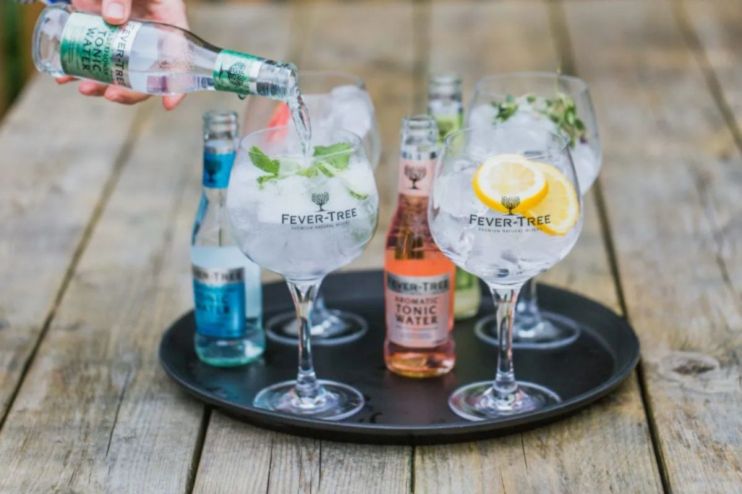
Fevertree has launched a legal challenge against the Environment Agency over its application of a sustainability packaging tax, which is charged on glass bottles.
The premium drink mixer brand claims the glass used in some of its products should be classified as non-household packaging and be exempted from the Extended Producer Responsibility (EPR) levy, and is set to take the Environment Agency to court over its position on the levy.
Fevertree pays the levy for its “off-trade” products, sold on supermarket shelves, but says it should not be charged the tax on the “on-trade” products it sells to pubs and bars.
The company’s packaging should be exempt “in line with the position taken by the UK government in relation to other packaging regulations,” Fevertree said.
“As previously disclosed, the Environment Agency has challenged this view, and in recent weeks we have launched a formal legal challenge,” the board said.
The EPR tax is charged on large businesses to contribute for the disposal of their packaging, with heavy materials like glass incurring significant charges.
The drinks maker said it is accounting for a £2.8m potential hit from the EPR levy, despite the ongoing legal challenge.
The levy has proved unpopular with retailers, as retail giant John Lewis and sausage maker Heck have highlighted the costs of the tax.
Fevertree’s pre-tax profit dipped 16 per cent to £30m this year, but the firm said its merger with US beer maker Molson Coors means it is now reporting less of its profits than in previous years.
Fevertree goes sober as Brits ditch booze
The drinks maker is expanding into soft drinks to grow its resilience, with consumers cutting down on spending on spirits as they feel the squeeze.
The AIM-listed firm said lower discretionary spending in the UK means Brits are swapping gin-and-tonics for soft drinks, with Fevertree expanding its non-alcoholic range to match the trend shift.
Describing a “challenging” UK environment, the firm said: “Higher labour costs, duty increases and ongoing consumer caution continued to pressure discretionary spending, weighing on spirits volumes, particularly gin, and by extension the mixer category.”
Chief executive Tim Warrillow said: “Across our markets, the long-term trends shaping adult socialising, namely premiumisation, moderation and longer, lighter serves, continue to play directly to our strengths.
“Fever-Tree is increasingly enjoyed as the world’s leading premium mixer, but also as a premium soft drink.”
Fevertree’s US revenue grew by three per cent year on year to £132m, while its revenue dropped two per cent in the UK to £108m.
Mark Crouch, market analyst at eToro, said: “Revenue momentum improved in the second half, and diversification beyond tonic is gaining real traction, now accounting for nearly half of group sales.
“Still, challenges linger. The UK packaging levy dispute adds a bitter twist, while inflationary pressures, cautious consumers and the ripple effects of geopolitical tensions are all potential hangovers for Fevertree going forward.”
The Environment Agency has been contacted for comment.