









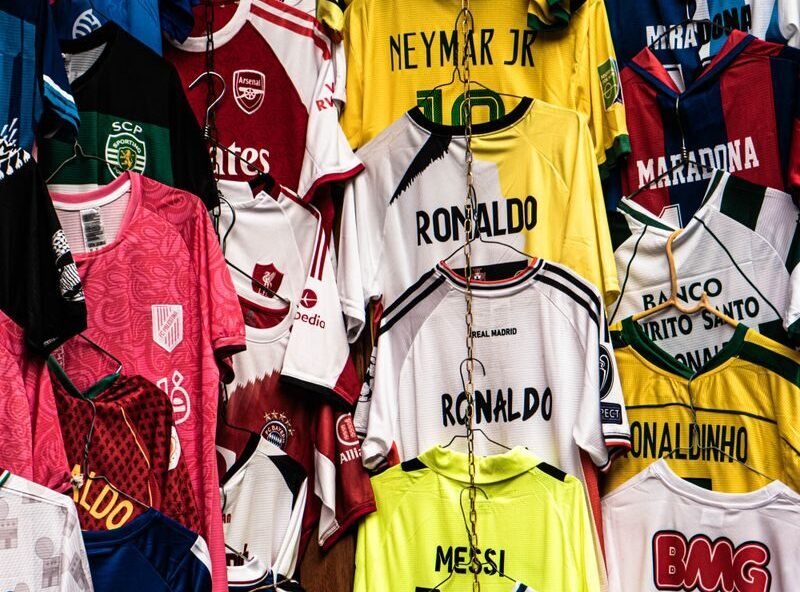
Researchers at the University of Portsmouth are launching the first study to examine whether counterfeit football shirts release more harmful microplastics than genuine kits.
The project, funded by the UK Intellectual Property Office (IPO), will explore the environmental impact of fake football shirts, including whether they shed more microplastic fibres during use and contribute more to textile waste than authentic products.
The research comes as the FIFA World Cup comes to a conclusion, an event during which sales of both genuine and counterfeit kits increase dramatically.
Scientists from the University’s Revolution Plastics Institute will carry out a full environmental assessment, measuring the energy use and carbon footprint of both genuine and counterfeit shirts throughout their life cycle. The study will also investigate how counterfeit garments are disposed of and test which public messages are most effective at discouraging consumers from buying fake goods.
While the social harms of counterfeit products, including links to organised crime and worker exploitation, are well documented, researchers say there is little scientific evidence on their environmental impact.
The findings are expected to help policymakers, environmental organisations and sports brands develop stronger public awareness campaigns and strategies to reduce demand for counterfeit goods. Researchers also hope the study will provide new evidence on the role fake clothing plays in microplastic pollution and the wider environmental costs of the counterfeit market.
Dr Kate Whitman, from the Revolution Plastics Institute at the University of Portsmouth and project lead, said: ‘Textile waste is a growing environmental challenge, yet the contribution of counterfeit clothing is often overlooked. We suspect it plays a much larger role than is currently recognised. At the same time, the public can be sceptical of claims about the harms of counterfeiting because they often come from organisations with a commercial interest in selling authentic products. Our goal is to generate independent, scientific evidence that is credible and trusted by both industry and the public.’
Felicity Webster, Research Associate, at the Revolution Plastics Institute, University of Portsmouth said: ‘The textile industry is a significant source of microplastic pollution as synthetic garments shed tiny plastic fibres during manufacturing, everyday wear and most notably laundering.
‘Many of these fibres are too small to be fully captured by wastewater treatment systems, allowing them to enter aquatic environments and agricultural soils. Over time, these microplastics accumulate in the environment, posing risks to wildlife and human health. This study will explore whether there are measurable differences in microplastic shedding between counterfeit and genuine football shirts, providing new insight into the environmental impacts of sportswear production.’
The project will produce a report for the Intellectual Property Office, an academic publication and a stakeholder workshop, providing new evidence to support future policy and public engagement on counterfeit goods and their environmental impacts.
Photo: Bilal Yahya