










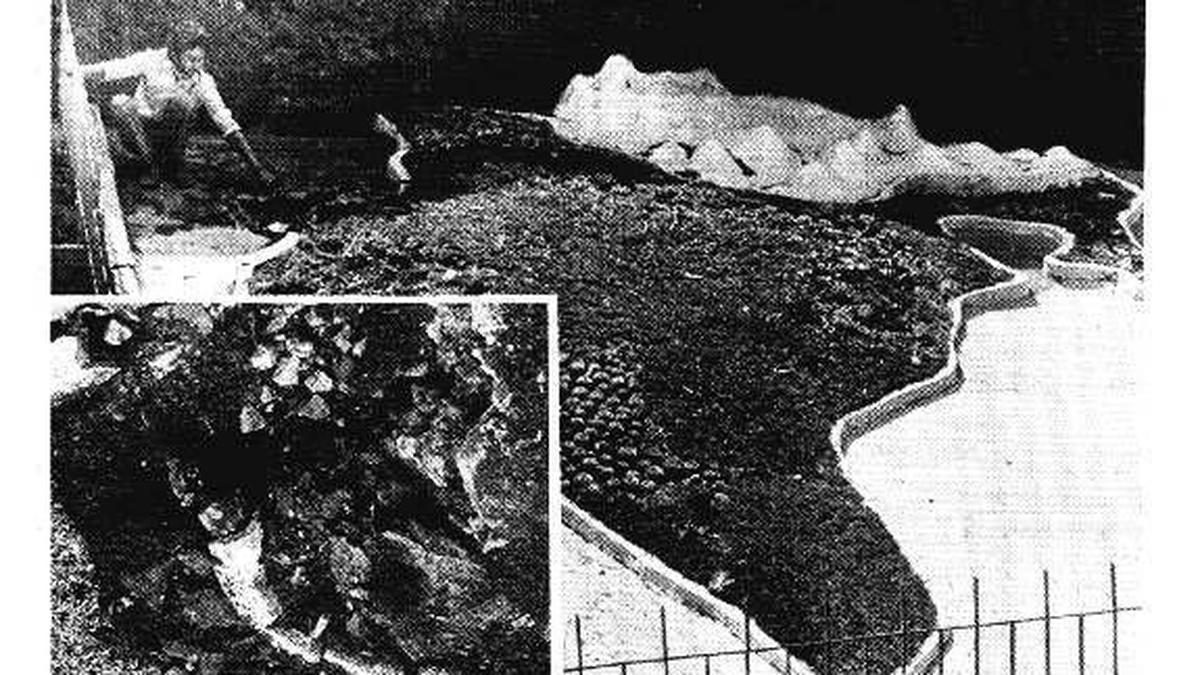
In the bomb explosion at the Ooty Botanical Gardens, a hole was created in the map of India laid on the ground. The inset shows a close-up of the damaged portion.
| Photo Credit: The Hindu Archives
A guarded tranquil prevailed in Ooty before dawn break on May 18, 1988. An explosion around 4:30 a.m. in the famed Botanical Garden, a must-visit spot in the itinerary of visitors, sent jitters among local residents and tourists alike. The tourism and hospitality industry went into panic mode as Ooty, one of the most favourite destinations of tourists in India, was targeted by extremists.
Considering the nature and magnitude of the offence, the case was transferred to the Crime Branch CID of the Tamil Nadu police for investigation. The bomb was buried in the map of India created with flowers and plants in the Botanical Garden. The explosion triggered by a timer device caused a dent in the map, damaging its flowerbed, which the investigating agency said sent a chilling and symbolic message about the intent of the perpetrators.
Seeing some pamphlets strewn around the scene of the blast and the modus operandi of the accused persons, investigators suspected the role of the Tamil Viduthalai Padai (Tamilarasan faction) in the incident. They were actively engaged in violent methods of registering their protest against the imposition of Hindi and demanding Tamil Eelam. The then Tamil Nadu Governor P.C. Alexander, who was staying in Udhagamandalam, visited the scene of the blast.
Combing operation
A thorough conning operation was conducted in and around the hill station in search of the suspects and possible storage of explosive substances. Going by the modus operandi and circumstantial evidence, the special team headed by Inspector M. Vellingiri reconstructed the sequence of events preceding the explosion. Besides intelligence inputs, their acquaintance with former cadres and other sources led to the arrest of nine members of the Tamil Viduthalai Padai.
During interrogation, the accused persons gave confessional statements that they had planted the bomb “to shake up and sensitise the people to the need for a separate Tamil Eelam and as a protest against the alleged imposition of Hindu,” the agency recorded in a journal published in 2010.
On completion of the investigation, the CBCID filed a chargesheet on October 6, 1988, against the accused for their acts of subversion and attempts to cause disaffection in the minds of the public towards a legitimately established government. The accused were convicted and sentenced to 7 years rigorous imprisonment by the trial court in Coimbatore.
TV Station targeted
The Ooty blast came almost a month after the Kodaikanal explosion, where a powerful bomb was set off at the Television Relay Centre. On April 11, 1988, one person was killed in the blast. He was later identified as Maran, the man who had planted the explosive. Some posters and pamphlets containing seditious content were found scattered around the scene of the crime. Investigators believed that the TV Relay Station blast was also in protest against the alleged imposition of Hindi in Tamil Nadu. The previous day of this blast, there was another explosion near the Nehru Statue at Kathipara Junction in Chennai.
A few years later, in 1991, cadres of the Tamil Viduthalai Padai attacked the Puthur police station and killed a police constable and injured the Sub-Inspector on duty. The attack was executed around midnight on April 6, 1991, with the intention of looting arms and ammunition from the police station. When the Is and the constable offered resistance, the accused attacked them, indiscriminately killing one. They fled the scene after local villagers woke up to the unusual noise and rushed towards the police station.
The Tamil Eelam link
Investigators believed that the support for the Tamil freedom struggle in Sri Lanka was one of the reasons for the emergence of Tamil extremist groups in Tamil Nadu. The Tamilar Viduthalai Padai was one among them. The powerful bomb blast on the Marudayar Bridge derailing the Rockfort Express on March 15, 1987, in which 26 passengers were killed and 140 others injured, the Ooty Botanical Garden explosion and other incidents of violence conspired and executed by the Tamil Viduthalai Padai found mention in the Jain Commission of Enquiry in the chapter that dealt with “Growth of Sri Lankan Tamil militancy in Tamil Nadu.”
Published – March 25, 2026 07:00 am IST