








Ambulance Victoria’s health guide
Finding the right medical help can be confusing, especially for new migrants still navigating the Australian healthcare system. To make it easier, Ambulance Victoria (AV) has released a new General Health Information Sheet which explains who to contact in health emergencies.
The ‘who to call for help’ information sheet is available in 17 languages including: Arabic, Chinese (Simplified and Traditional), Dari, English, Greek, Hazaragi, Hindi, Italian, Karen, Macedonian, Pashto, Persian, Punjabi, Swahili, Tigrinya and Vietnamese.
It adds to Ambulance Victoria’s already translated health resources, with a range of emergency, no-emergency, membership COVID-19, and Call, Push, Shock, all available in multiple languages and simplified English.
“The General Health Information Sheet provides a guide to help Victorians decide the best care option for themselves and their loved ones,” AV Acting Metropolitan Regional Improvement Lead Brad Gin said.
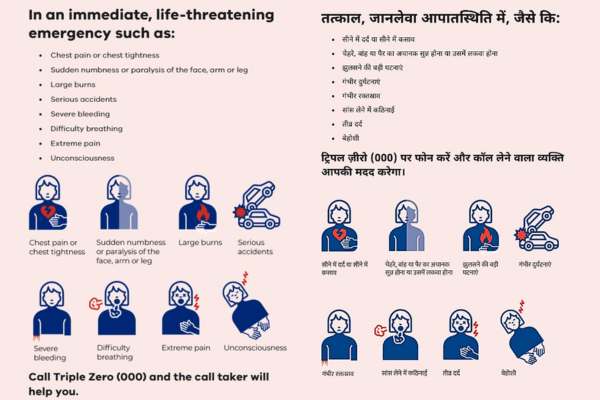
“The first section shows a range of immediate, potentially life-threatening emergencies, with graphics to help people identify if their symptoms fall into this category.
“If they do, the advice is simple: call Triple Zero (000).
“For other symptoms that don’t fit into the first category, the information sheet guides users to a range of health care options.
“This includes visiting an Urgent Care Clinic, video calling the online Victorian Virtual Emergency Department (VVED), ringing Nurse-on-Call, or consulting a local doctor or pharmacist.”
The information sheet also features a handy ‘who you can call for help’ section, with space to fill in contact details for local care providers. It includes phone numbers for crises and other support lines.
Brad said the information sheet will make a real difference helping people in the community connect with the right care at the right time. Ambulance Victoria’s health guide
“The sheet has been developed with all Victorians in mind, to simplify the decision-making process when you’re worried that yourself or someone else is unwell or injured,” he said.
Paramedics can provide patients with an information sheet – either by email or in print – when they are assessed as safe to remain at home, rather than requiring transport to a hospital emergency department.
“This supports the conversations paramedics already have with patients about care options available in the community,” Brad said.
“Paramedics can now provide a consistent, standardised written resource that patients and their families can easily refer to after paramedics have left and serves as a helpful guide they can keep for future use.
“It also helps paramedics clearly communicate who to contact for urgent support and which symptoms to watch for in case they need to call an ambulance again.”
READ ALSO: Breaking barriers, saving lives: Truckie First Aid goes multilingual