





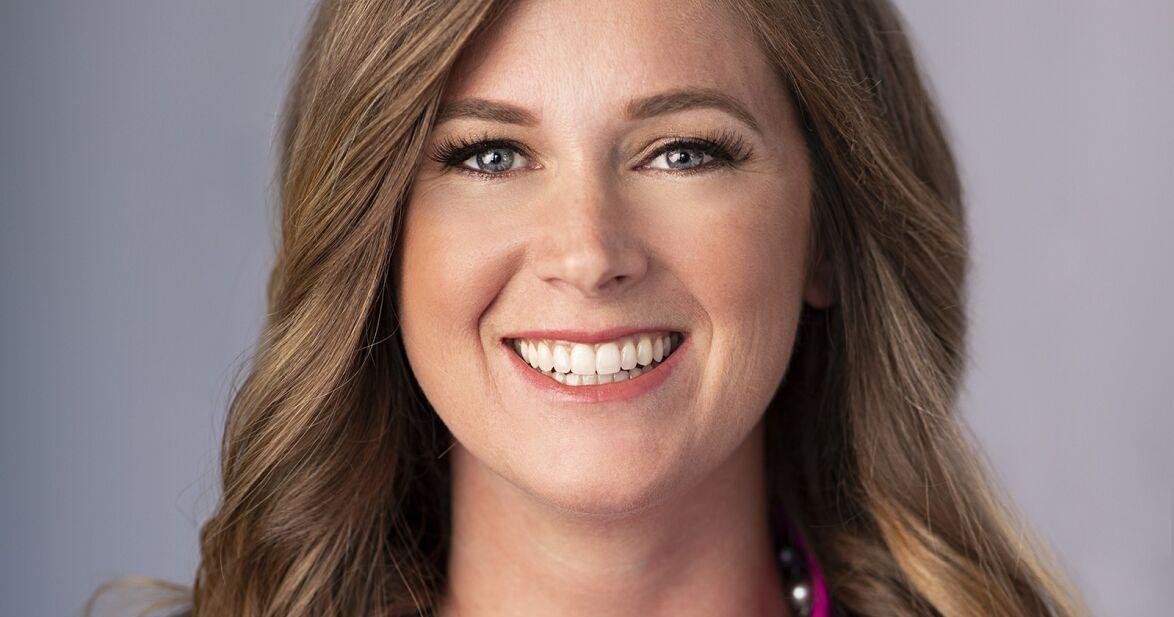
Gibbs Construction, founded in 1976, was already a dominant general contractor in town before Lauren Gibbs took over the business from her father, Larry Gibbs, in 2019.
The Elmwood firm’s reputation and expertise grew as it racked up major projects, including significant renovations to the exterior of the Superdome following Hurricane Katrina and the $55 million Poydras Apartments, a 21-story high-rise, in 2010. Later, the firm was a partner on the Louis Armstrong New Orleans International Airport’s $1 billion north terminal, which opened in 2019.
Under the younger Gibbs’ leadership, the second-generation leading the business, the company has achieved new heights and landed bigger projects. Gibbs works alongside her husband, Matt Moore, who has been president of the firm since 2016.
Currently, Gibbs Construction is the general contractor on the $100 million Clearview City Center redevelopment and the $64 million Rivana Apartments, an affordable housing complex in the planned River District. The firm, which typically does projects ranging from $1 million to $30 million, is on track to grow by about 5% this year and reach projected revenues of $100 million.
Gibbs spent almost 10 years climbing the ranks at Gibbs Construction, rising from an estimator to a vice president before buying the business from her father and becoming CEO. Prior to that, she launched her career at a construction firm in Nashville, where she worked for several years before coming home.
“It gave me an opportunity to be in an environment where I wasn’t the boss’s daughter,” Gibbs said. “I gained a lot of confidence, a lot of knowledge, that was very portable to bring home.”
In this week’s Talking Business, Gibbs discusses how the firm competes for work in a crowded construction industry, the local talent pipeline and projects the firm is tackling.
This interview has been edited for length and clarity.
Commercial construction is one of the most competitive industries. How has Gibbs Construction managed to stay competitive?
There’s a business strategy about working in a blue ocean or a red ocean, and construction is very much a red ocean — it’s filled with blood because there is so much competition. We compete by being very selective about the jobs we take on, and we follow whatever building trends are happening in New Orleans.
When there was a ton of multifamily development between 2015 and 2019, we built around 25% of the new units in the region. We do a ton of historic renovations, schools and medical offices, but we don’t do a lot of industrial work, like constructing plants. There have been times in our past where we made decisions because we were hungry, meaning we felt like we needed the work. Usually when you make a decision that way, those jobs don’t go as well because you didn’t match-make.
What’s a project that you’re excited about that Gibbs is currently working on?
I’m excited about the Rivana Apartments, the affordable, multifamily housing project that should start construction in September. This project, a part of the larger River District plans and the (Ernest N. Morial) Convention Center’s efforts, is a really important one for the city. It will provide affordable housing to the hospitality industry, which is such a big economic engine for us. Paired with the planned Omni New Orleans hotel (adjacent to the planned River District), it should bring more conventions and people to the city.
While our firm isn’t involved with the Omni Hotel, that job will also create a need for more construction. Other hotels are going to have to do renovations to keep up with the Omni. Developers around the country are paying attention to the River District project, and they’re wondering: Can we get this done? Because if we can’t get it done, it makes us not very attractive for outside investment. But I feel really good about the energy and the support around it.
It’s been difficult for the city to retain recent college graduates and recruit employees in New Orleans. Does the city have a strong talent pipeline to recruit and retain employees in construction?
Our pipeline’s OK. Our firm does a lot of recruiting at LSU, and we do some recruiting at LSU New Orleans (formerly the University of New Orleans), which launched a new construction management program about six years ago.
The hardest part about recruiting and retaining employees is the livability of New Orleans, the school systems, the quality of the streets and the crime, which is sometimes blown out of proportion. All of that stuff — quality of life — is important to attract and retain people to the city, and I can’t control that.
I’ve lost some really good employees because they didn’t want to stay on the south shore. They wanted to move to the northshore, and there are great contractors on the northshore. Why commute an hour, hour and a half from the northshore to the city, when you can drive 10 minutes to work with another contractor?
What could be done to improve that pipeline?
While there are a lot of great workforce development programs, more can be done to connect construction firms with young people before they go to college. How can we connect with middle schoolers and high schoolers and get them thinking about these careers earlier on?
Another thing is improving our education system, which could attract families to the area. Parents don’t want to have to pay an arm and a leg for private education because the public school system is inadequate.
With environmental challenges and other unique roadblocks to development in the city, like a slow zoning and permitting process, does Gibbs Construction feel any pressure to grow by looking out of the state?
Where we are today, it’s not necessary or desired to leave. We know the players. We know how to handle project bidding. We know our subcontracting community. We do have one project in Mississippi right now, a repeat client, but the majority of our work is in the Greater New Orleans area.
My team members also came to Gibbs Construction because they wanted to work on projects in the city and the region. It’s very hard to take that person and say, “We’ve got a job in Jackson, Mississippi, and you’ve got to go run it,” or that would mean I need to go hire someone in Jackson, Mississippi. Construction is also a very high-risk business, especially if things go wrong, and you manage that risk by being very aware of the environment you’re working in.
I believe in a universe of abundance. There’s plenty of work to go around and wish the best for all my competitors. I know there’s plenty of work for us in this region that will keep us more than fed.