






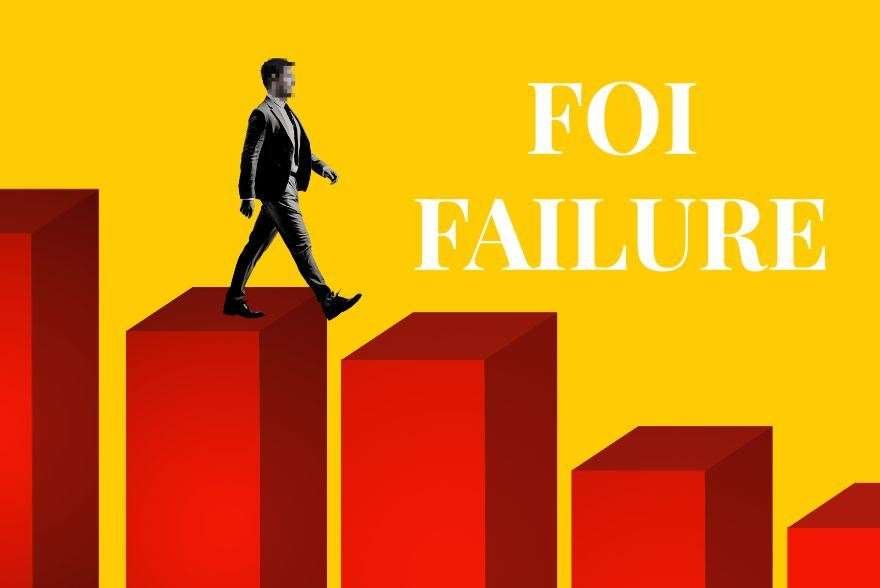


In just the first six months of the year Highland Council was revealed to have broken Freedom of Information law an “inexcusable” and “outrageous” number of times.
The Scottish Information Commissioner ruled against the local authority in 19 out of 20 cases – or 95 per cent – since January after investigations started last year.
Critics are worried at the number of rulings against the council but also at the sheer number of cases being dealt with by the information commissioner.
Recently a group of Caithness Councillors had to battle the local authority for months to find out what truly happened behind the scenes at Avonlea Care Home.
In this, the council is an outlier nationally and it is prompting fears that secrecy has precedence over accountability not evidenced at other councils or NHS boards.
NHS Highland had two decision notices from the commissioner in the same time period, one of which found in the health board’s favour.
To match the same number of cases as the council of 20, the health board would have to go back to 2013, and then only half the decisions went against the NHS.
So the council has a referral rate 10 times that of similar administrators in the severely pressured NHS.
Similar councils have much lower numbers – Argyll and Bute had one decision since January and just one case last year, and 20 cases in total since 2015.
Moray Council has had two cases this year, three last year and to reach 20 cases in total you would have to go back two decades to 2006.
Combined, Scotland’s biggest city councils got just two more ruling this year – Aberdeen (5), Edinburgh (11), Glasgow (6) – than Highland Council.
In most decisions the council was ordered to release the information or risk the commissioner certifying the case with the Court of Session.
Scotland’s highest court could then “inquire into the matter” and “may deal with the authority as if it had committed a contempt of court”.
The most serious cases saw the council refuse to release information or else did not respond at all to FOI requests or to internal reviews into those requests on time.
In one example of the commissioner ruling against the council, a request was turned down for information about councillors and senior officials with council tax arrears.
A similar request about reminders to pay council tax was also refused, leading the information commissioner to say the council had made a mistake in its response.
Public bodies must respond within 20 working days, The Inverness Courier is currently waiting on at least two FOI requests that have exceeded 40 working days.
Councillor Andrew Jarvie, who has tangled with officialdom in the past in trying to access information held by the council, said: “To say that this is an outrageous number of breaches is more than an understatement.
“Historically on annual reports for FOI handling, there have been maybe 0-3 reports to the Information Commissioner per year and between none and half of them would find the council was in the wrong.
“For reference, NHS Highland at the peak of its FOI and bullying scandal had two cases of breaking data law. So let’s be clear that these complaints and decisions are very, very rare.
“For there to be 20 reports to the Information Commissioner, in just six months, on its own says something isn’t right. But for almost all of them to find the council broke the law is nothing short of inexcusable. It begs the question of how on earth could this happen?
“Given some of the issues involved in these breaches, I am concerned that there could be interference in the FOI process or someone giving instructions not to release information.
“This is something that the [council’s] audit committee absolutely must look into urgently, and the external auditors as well. This is an incredibly serious matter, this number of cases where the law has been broken should be impossible.
“The public must have the assurance that whatever is to blame here has been robustly dealt with, and that the council they pay handsomely for, follows the law.”
A Highland Council spokesman insisted that the council is serious about “maintaining transparency and accountability” and its “obligations under FOI legislation”.
He said: “The council’s strategic committees receive and consider reports on performance in dealing with FOI requests on a quarterly basis with a service by service breakdown in addition to corporate reporting.
“In the most recent quarter for which figures are available it was recorded that a total of 578 FOI requests had been received.
“We acknowledge the findings made by the Scottish Information Commissioner in a number of recent cases, many of which related to failures to meet statutory response deadlines rather than the withholding of information.
“The council receives a significant volume of information requests each year. In the financial year 2023/24, the council received a total of 1621 FOI requests. In 2025/26, a total of 2337 FOI requests were received representing an increase of 44.2 per cent in the three years from 2023/24 to 2025/26.”