






On 24 June 2026, the Libyan National Committee for the International Union for Conservation of Nature (IUCN) held an online meeting with the IUCN Centre for Mediterranean Cooperation and Libya’s Ministry of Environment to discuss how to support and develop the Committee’s work. The meeting brought together Maher Mahjoub, Director of the IUCN Centre for Mediterranean Cooperation, Imen Meliane, IUCN Councillor for Africa, El Makee El Agel, from the Nature Conservation Department (Ministry of Environment), and Ibrahim Elkahwage, President of the Libyan National Committee, together with members of the Committee.
“Our priority is to strengthen the Libyan National Committee as the coordinating body for IUCN’s work in the country, building on the experience of our members and giving national experts and young people a central role in conservation,” said Ibrahim Elkahwage, President of the IUCN Libyan National Committee. “This framework gives us a shared roadmap to develop national capacities and turn Libya’s environmental priorities into practical action over the coming years.”
Priorities and challenges discussed
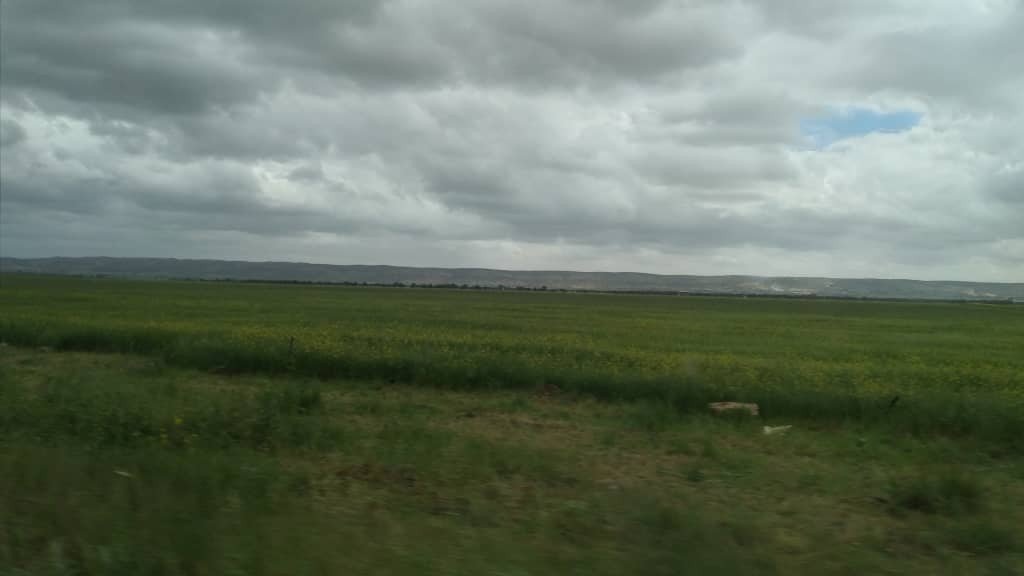
Participants discussed reinforcing the Committee’s role as the coordinating body for Libya within IUCN and improving cooperation among the country’s environmental institutions. The conversation covered biodiversity, the network of national experts, environmental crime and the CITES convention, as well as the importance of local expertise and the involvement of young people in environmental work. Participants also underlined the need to take account of the specific features of Libya’s environment, including rangelands, coastal areas and data management, when developing action plans and general strategies. Among the main challenges identified were a shortage of funding, the need for capacity and skills development, and weak coordination and international participation.
“In my work with National Committees, I do not often see a Committee carry the exercise this far, aligning a national strategy and action plan with the Union’s 20-year Strategic Vision and Programme. That effort deserves recognition, and it deserves the support the Committee has asked for“, said Imèn Meliane, IUCN Councillor and Vice President.
A framework built around three priorities
Following the meeting, both parties set out a Framework for Strategic Technical Cooperation for the period 2026 to 2030, dated 1 July 2026. The framework establishes a long-term partnership to strengthen national conservation leadership, support effective implementation of the IUCN Programme in Libya, and contribute to regional and global biodiversity goals. It identifies three practical priorities for joint work.
The first priority focuses on supporting the development of the Committee’s Strategy and Action Plan for 2027 to 2030, and on preparing initial national action plans for priority species and ecosystems, including the Egyptian tortoise and Libya’s rangelands. This work would be led by Libyan stakeholders, with technical guidance from IUCN, and would be reviewed through a Libyan National Forum for Nature Conservation and Biodiversity.
The second priority sets out a national capacity development programme covering Nature-based Solutions, environmental governance, monitoring and evaluation, and the effectiveness of the National Committee, with dedicated attention to young people and to applying the IUCN Green List standard for protected and conserved areas in Libya.
The third priority aims to strengthen Libya’s role in combating environmental crime and to expand the participation of Libyan institutions and experts in IUCN commissions, specialist groups and regional initiatives. It includes establishing a national working group on environmental crime and delivering an introductory international webinar as a first collaborative activity.
“The IUCN Centre for Mediterranean Cooperation is ready to work more closely with the Libyan National Committee in the years ahead. Libya holds natural resources of great value that remain little known, and that are vital for the livelihoods and wellbeing of local communities. Supporting the Committee and its IUCN Members to protect them is a shared priority”, said Maher Mahjoub, Director of the IUCN Centre for Mediterranean Cooperation.
Next steps
The two sides agreed to hold a meeting at the beginning of 2027 bringing together the National Committee and key national supporting institutions with the support of IUCN, and to coordinate a regional webinar on environmental crime involving IUCN experts and relevant bodies. The framework also proposes endorsing the priority areas, establishing national working groups, and preparing initial drafts of the strategy and action plans.
The Committee reaffirmed its commitment to leading and implementing these initiatives at national level, while drawing on the technical and advisory support of IUCN and its partners. It also stressed the importance of encouraging the membership of relevant national institutions, particularly the Ministry of Environment, in IUCN, in order to strengthen Libya’s representation within the Union. The framework represents an initial roadmap for cooperation between the Libyan National Committee and IUCN over the 2026 to 2030 period, supporting nationally led conservation efforts and creating opportunities for long-term collaboration.
For further information on the IUCN Centre for Mediterranean Cooperation, click here.