







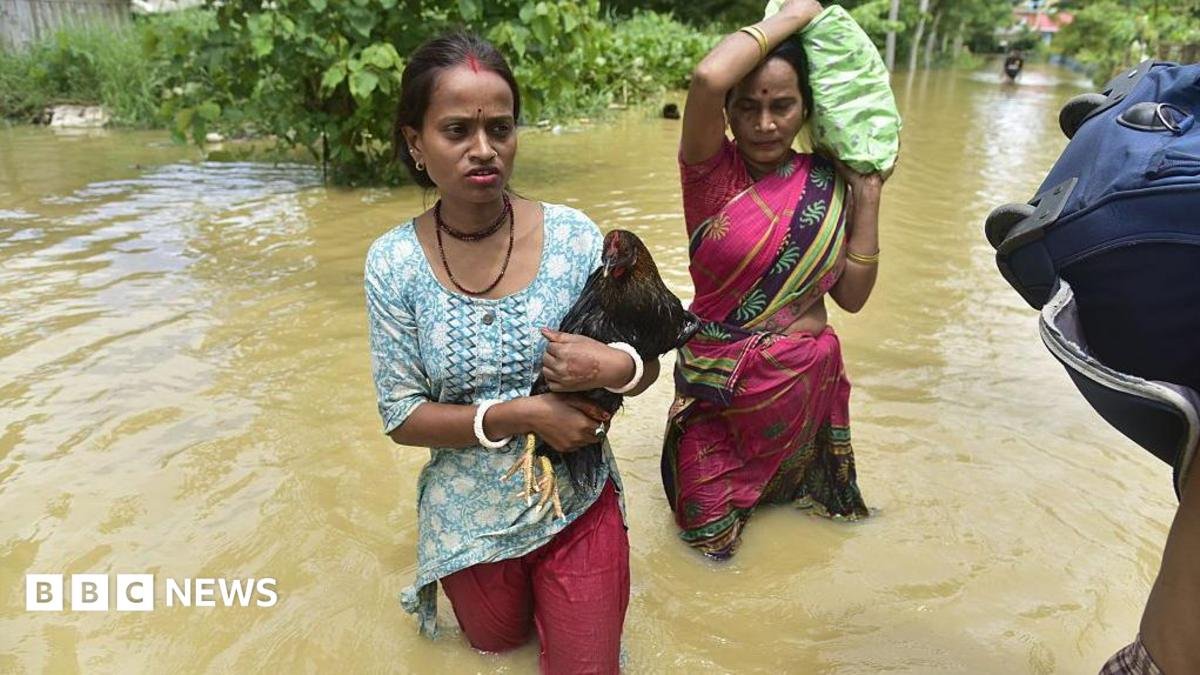
When Shalini Patra watched the rain on 19 July from her home in Jorhat district in the northeast Indian state of Assam, she didn’t know that her life was about to change.
In the afternoon, the 18-year-old suddenly heard the sound of rushing water and people shouting.
“Within minutes, knee-deep water had entered our house,” she recalled.
Patra helped her elderly parents and younger brother reach higher ground before returning to try and salvage some belongings. But by the time she fought her way back through the water, their house had been washed away.
“We had a television, a cupboard and a sofa. Nothing was left. We couldn’t even save a glass to drink water from,” she told BBC Hindi from a relief camp.
“The floods took everything from us.”
Every year, she said, floods swept through her village, Seleng Sumoni Pathar on the banks of the Jhanji River, a tributary of the mighty Brahmaputra, one of the world’s largest rivers.
But this year was different.
Flooding is a recurring part of life in Assam – nearly 40% of the state is classified as flood-prone by India’s National Flood Commission. Assam lies on the vast floodplain of the Brahmaputra, which flows down from the Himalayas and is fed by more than 50 tributaries.
During the annual monsoon, heavy rain across the region increases the volume of water in the river. As the Brahmaputra flows across Assam’s flat plains, it deposits large amounts of sand and silt, reducing the river’s capacity to carry water and making flooding more likely.
But experts say flooding has worsened over time because of upstream deforestation, ageing embankments and heavier rainfall driven by climate change.
Exceptionally heavy rain across parts of neighbouring Nagaland and Assam from mid-July triggered this year’s devastating floods, which minister Pijush Hazarika described as the state’s worst in six decades.
At least 68 people have died in the past four weeks, including 58 in the past week alone, while around 40 remain missing. Government data says more than 600,000 people have been affected, with tens of thousands displaced and living in relief camps.